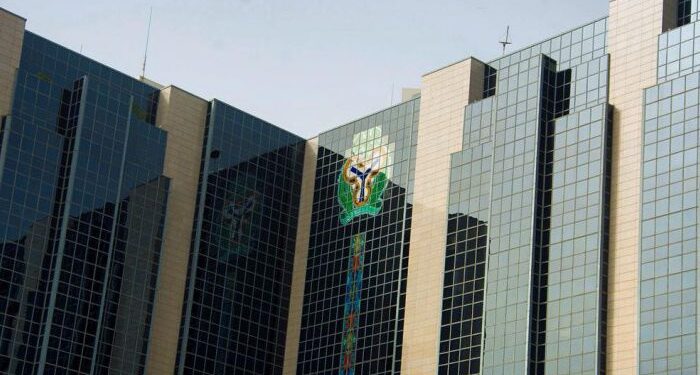

The Federal Government of Nigeria, in partnership with the Central Bank of Nigeria (CBN), has launched the Dis-Inflation and Growth Acceleration Strategy (DGAS), an ambitious economic framework designed to stabilise prices, stimulate industrial productivity, and elevate household and national incomes. The initiative, unveiled by Minister of State for Finance, Doris Uzoka-Anite, at the 2025 CBN Executive Policy Seminar in Abuja, seeks to sustain GDP growth above 7 per cent, reduce inflation to single digits, and double income levels within the next decade.
At its core, DGAS aims to synchronise fiscal and monetary policies in pursuit of non-inflationary and inclusive growth. The framework introduces a single-window coordination platform through which development finance, private investment mobilisation, project incubation, and policy implementation will be harmonised. The approach represents a shift away from fragmented economic planning towards an integrated model capable of balancing short-term stabilisation with long-term structural transformation.
According to the minister, DGAS is anchored on four central pillars: expanding energy access, replicating large-scale industrial successes such as the Dangote Refinery across strategic sectors, re-engineering vocational education to train at least ten million youths annually, and reforming consumer credit systems to boost domestic purchasing power. Together, these measures are expected to catalyse local manufacturing, deepen supply chains, and reduce Nigeria’s vulnerability to external price shocks.
CBN Governor Olayemi Cardoso reaffirmed the apex bank’s commitment to maintaining price stability, enhancing policy credibility, and fostering collaboration with fiscal authorities. He emphasised that DGAS would prioritise industrial competitiveness, expand the services and creative industries as new export frontiers, and channel more financing into productive sectors. Cardoso noted that macroeconomic reforms over the past year, particularly foreign exchange market liberalisation and efforts to unify fiscal and monetary objectives, had laid the groundwork for a new phase of economic acceleration.
The economic rationale behind DGAS is clear: after years of volatile growth and double-digit inflation, Nigeria’s economy requires a coordinated policy framework to restore investor confidence and realign incentives toward productivity. Inflation, which has hovered around 30 per cent in recent quarters, has eroded household purchasing power and constrained business margins. Meanwhile, unemployment and underemployment remain high, particularly among young Nigerians. By targeting both price stability and income growth, DGAS seeks to address these twin challenges simultaneously.
The inclusion of consumer credit reform is especially significant. Nigeria’s credit-to-GDP ratio remains below 20 per cent, one of the lowest in emerging markets. DGAS proposes a structured credit architecture supported by financial inclusion policies and credit bureaus to enable millions of citizens to access affordable loans. If successful, this could invigorate consumption, stimulate small and medium-sized enterprises, and expand the tax base.
Equally transformative is the emphasis on vocational training and industrial replication. Training ten million youths annually reflects the government’s recognition that human capital development must underpin economic modernisation. By linking skill development to industrial corridors and local value-addition initiatives, the strategy aims to bridge the disconnect between Nigeria’s labour force and the demands of a modern, technology-driven economy.
The focus on replicating models like the Dangote Refinery also highlights Nigeria’s intent to leverage successful private-sector ventures as blueprints for broader industrialisation. Encouraging similar large-scale investments in petrochemicals, fertilisers, steel, and renewable energy could not only reduce import dependency but also strengthen export earnings and stabilise the naira.
However, the strategy’s success will depend on disciplined implementation, institutional coordination, and sustained investor confidence. Analysts have often warned that Nigeria’s economic blueprints, though sound in design, have faltered in execution due to policy inconsistency, bureaucratic bottlenecks, and weak monitoring frameworks. The proposed single-window coordination system could mitigate such risks if it genuinely integrates ministries, development finance institutions, and private investors under a transparent governance structure.
The DGAS launch also carries significant macroeconomic implications. A credible disinflation path would lower interest rates over time, improving access to credit for businesses and households. Stable inflation would enhance real income growth, encourage savings, and attract foreign direct investment. Conversely, a failure to sustain coordination between fiscal spending and monetary tightening could undermine progress and trigger renewed inflationary pressures.
International observers are watching closely, particularly given Nigeria’s central role in West Africa’s economic stability. A successful implementation of DGAS could set a precedent for other African economies seeking to balance growth with price stability in an era of global uncertainty.
In essence, the Dis-Inflation and Growth Acceleration Strategy signals Nigeria’s attempt to chart a new course, one that prioritises stability, inclusiveness, and structural depth over short-term fixes. Whether it achieves its lofty goals will depend not only on sound policy design but also on political will, institutional reform, and the collective effort to translate macroeconomic ambition into tangible improvements in the lives of ordinary Nigerians.