
Tanzania is facing renewed political unrest as authorities charged at least 145 people with treason following widespread protests over the country’s recent presidential and parliamentary elections. The move has drawn concern across the region, particularly as several senior opposition figures, including the deputy secretary general of the main opposition party, CHADEMA, Amani Golugwa, have been detained. Police have also issued warrants for nine other party officials, among them secretary general John Mnyika.
According to court filings, the defendants are accused of attempting to obstruct the 2025 general election process and intimidate state institutions, allegations that carry severe penalties under Tanzanian law. Authorities claim that their actions contributed to the outbreak of violence and destruction of public property in the aftermath of the polls. However, opposition members argue that the charges are politically motivated and aimed at suppressing dissent following what they describe as one of the most contentious elections in recent Tanzanian history.
The protests erupted shortly after the National Electoral Commission announced President Samia Suluhu Hassan as the winner with nearly 98 per cent of the vote. The result has been disputed by the opposition, which insists that the process was neither free nor fair. Several prominent opposition figures, including CHADEMA leader Tundu Lissu, were barred from contesting or faced legal battles before the election. Lissu himself was charged with treason earlier in the year, a move that many observers saw as part of a broader effort to weaken the opposition’s ability to participate effectively in the democratic process.
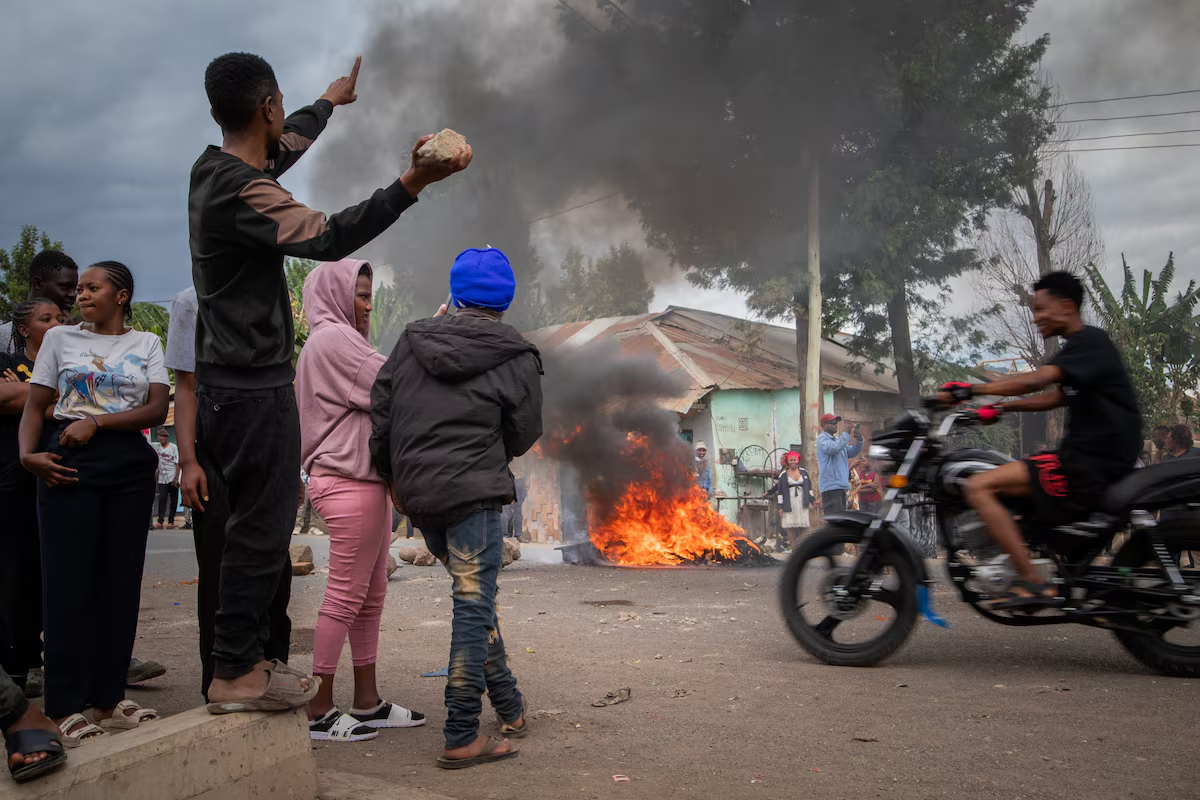
Violence broke out in several cities, with security forces deployed to contain demonstrators. Opposition activists claim that the response from the authorities was excessive, alleging that more than a thousand people were killed or went missing during the unrest. The government has strongly rejected these figures, describing them as exaggerated and designed to incite fear. Despite this, human rights groups within the region have raised alarm over reports of arbitrary detentions, restrictions on the media, and the heavy presence of security forces in opposition strongholds.
Religious leaders and civil society organisations have appealed for calm, calling on both the government and opposition parties to embrace dialogue and national reconciliation. They warn that mass arrests and harsh prosecutions risk deepening mistrust in state institutions and could fuel further instability. The call for peace reflects growing anxiety among Tanzanians who fear that continued political tension may erode the country’s longstanding reputation for relative stability in East Africa.
The political crisis also carries significant economic implications. Tanzania has, in recent years, positioned itself as one of Africa’s fastest-growing economies, with strong performance in mining, agriculture, and infrastructure development. However, prolonged unrest threatens to unsettle investor confidence at a time when the country is seeking to attract foreign capital for its industrialisation agenda. The uncertainty surrounding the elections and the subsequent crackdown could deter international investors, particularly in sectors such as tourism and energy, which rely heavily on perceptions of political stability.
Tourism, which contributes nearly 17 per cent to Tanzania’s GDP and employs hundreds of thousands of people, is particularly vulnerable. Images of violence and reports of political persecution risk damaging the country’s global image as a peaceful destination. Similarly, the extractive industries, which are central to Tanzania’s foreign exchange earnings, may see delays in project approvals or disbursements from development partners pending clarity on the political environment.
There are also concerns about the impact on trade within the East African Community (EAC). Tanzania serves as a key transport and logistics hub for landlocked neighbours such as Rwanda, Burundi, and the Democratic Republic of Congo. Any disruption to governance or transport infrastructure could ripple through regional supply chains, affecting import and export flows across East Africa.
The African Union’s election observers, while stopping short of calling for a rerun, have criticised the electoral process, noting irregularities in vote counting, the exclusion of candidates, and limited transparency. Their findings may influence Tanzania’s diplomatic relations, especially with partners that have historically supported governance and democratic reform initiatives in the country.
President Samia Suluhu Hassan, Africa’s only female head of state, now faces a crucial test of leadership. Her administration’s response to the crisis will likely determine whether Tanzania can restore confidence in its democratic institutions or slide further into authoritarianism. A conciliatory approach that allows for legal due process, greater political inclusion, and open dialogue with the opposition could help stabilise the country and reassure investors.
In the short term, however, the atmosphere remains tense. The treason trials are expected to dominate political discourse for months, and the continued detention of opposition figures has raised fears of a prolonged standoff between the government and its critics. For a nation once celebrated as a model of peace and unity in Africa, the unfolding events mark a worrying turn that could reshape Tanzania’s political and economic trajectory for years to come.