
Nigeria’s Senate has established a six-member ad hoc committee to work with the Federal Ministry of Finance on resolving the issue of unpaid debts owed to local contractors who have completed government projects across the country.
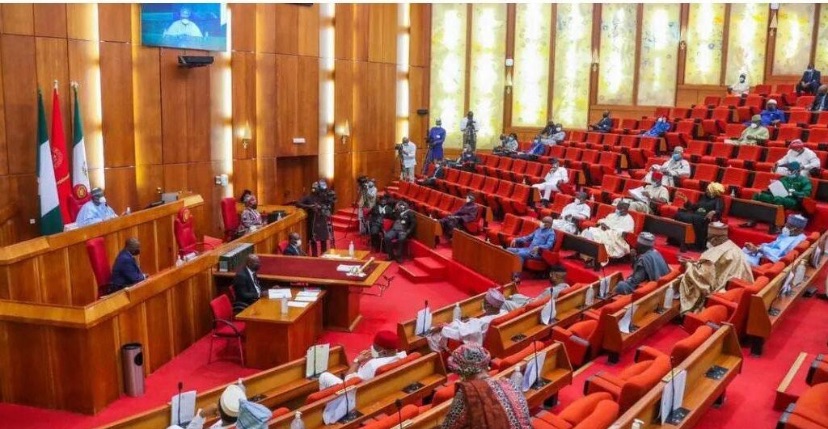
The decision was announced by Senate President, Godswill Akpabio, during a plenary session held on Tuesday after lawmakers met in a closed-door discussion.
According to Akpabio, the newly formed committee will serve as a bridge between the Senate and the Ministry of Finance. Its primary responsibility is to ensure that contractors who have successfully executed government-approved projects receive their outstanding payments.
Leading the committee is Sani Musa, who also chairs the Senate Committee on Finance. Other members include Adetokunbo Abiru, Kawu Sumaila, Sani Bello, Isah Jibrin, and Abdullahi Yahaya.
The Senate President directed the committee to immediately begin discussions with officials from the Ministry of Finance and other relevant government agencies involved in settling contractual debts. He also gave the panel a one-week deadline to submit its findings.
The committee’s report is expected to provide details on the total outstanding debts, efforts already made by the government to clear them, and the likelihood of prompt payment to affected contractors. Lawmakers believe the report will help provide a clearer understanding of the government’s financial obligations and support future legislative decisions on the issue.
The move comes amid growing concerns over the impact of delayed payments on businesses and infrastructure development. Many contractors have complained that unpaid government debts are affecting their operations, limiting their ability to take on new projects and causing financial strain across the construction sector.
The All Indigenous Contractors Association of Nigeria has repeatedly called on the government to settle outstanding claims. The group has organized protests in Abuja and argued that contractors are owed between N3 trillion and N4 trillion in certified liabilities.
However, federal authorities have previously stated that verified debts are lower than the figures presented by contractors. Government records have acknowledged a backlog of about N760 billion related to certain highway projects and legacy contracts.
To address the challenge, provisions were included in the 2026 national budget to support the settlement of verified contractor claims. The government has also assured stakeholders that payments will be handled through a transparent and structured process.
Recently, the Minister of Finance and Coordinating Minister of the Economy, Taiwo Oyedele, reassured indigenous contractors that genuine and verified claims would be paid in accordance with government procedures.
Lawmakers noted that settling verified debts could provide much-needed relief to contractors, boost economic activity, create jobs, and accelerate the completion of critical infrastructure projects across Nigeria. They expressed optimism that the committee’s work would help speed up the payment process and strengthen confidence in government contracts.
The Senate’s intervention is expected to bring renewed attention to the long-standing issue and could pave the way for faster resolution of outstanding obligations owed to local contractors nationwide.