
The Nigerian College of Aviation Technology (NCAT) in Zaria has taken major steps to improve its training facilities and strengthen its position as one of Africa’s leading aviation training institutions. The college has upgraded key infrastructure, secured international accreditations, and expanded its academic programmes to meet global aviation standards.
Speaking during a media briefing in Zaria, the Rector of NCAT, Dr. Danjuma Adamu Ismaila, said the institution has made significant progress despite facing financial challenges. He explained that the current management focused on improving learning conditions and modernising the college soon after taking office.
According to him, several important facilities, including students’ hostels, classrooms, and training centres, have been renovated to create a better environment for learning. He said the upgrades are part of a wider effort to ensure that NCAT remains competitive with aviation training schools around the world.
Dr. Ismaila noted that the college has also improved its academic programmes to align with international best practices. These efforts have helped NCAT maintain its Platinum Membership and Centre of Excellence status while earning accreditation from the Aviation Accreditation Board International (AABI), a respected aviation education body based in the United States.
The rector also announced that NCAT has regained its affiliation with the International Air Transport Association (IATA). This development allows the institution to offer globally recognised IATA-certified courses, giving students qualifications that are accepted across the aviation industry.
In another milestone, the college has become a member of the National Council for Management Development (NCMD), enabling it to offer recognised management and professional development programmes.
Dr. Ismaila said the institution also received accreditation from the National Board for Technical Education (NBTE), making it eligible for funding from the Tertiary Education Trust Fund (TETFund). He described the achievement as an important breakthrough that will support infrastructure projects, staff development, and improved training facilities.
Looking ahead, NCAT is working toward certification by the European Union Aviation Safety Agency (EASA). If approved, graduates from the institution—including pilots and air traffic controllers—will be able to earn internationally recognised licences. This will improve their chances of securing aviation jobs in many countries without the need for additional licensing requirements.
The rector further revealed that the college is close to certifying its Boeing 737 Next Generation (B737-NG) full-flight simulator for commercial use. The simulator is currently the only one of its kind in Nigeria and is expected to improve pilot training while creating a new source of income for the institution.
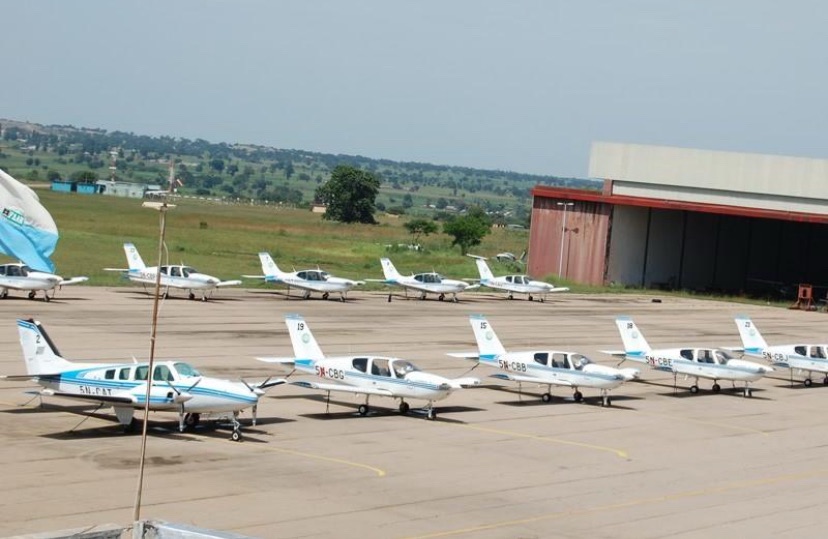
Despite these achievements, Dr. Ismaila acknowledged that funding remains a major challenge. He disclosed that one of the college’s TBM training aircraft is currently grounded because there are not enough funds for maintenance and repairs.
He also pointed to the increasing demand for aviation training across Nigeria. According to him, NCAT currently admits only about 25 pilot trainees every six months because of limited training capacity. He stressed that additional investment is needed to expand the college’s facilities and produce more skilled aviation professionals.
With new international partnerships, improved facilities, and plans for further global certification, NCAT is positioning itself as a stronger player in aviation education. However, addressing funding constraints will be essential if the institution is to meet the growing demand for aviation training and achieve its long-term goals.