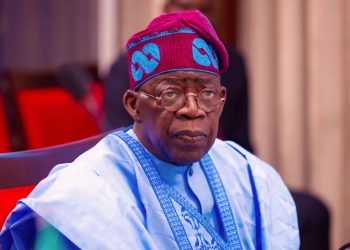

Nigeria’s fiscal reform agenda received a notable push as the Taiwo Oyedele was confirmed by the Senate of Nigeria as Minister of State for Finance. Oyedele, a seasoned tax policy specialist, now sits at the centre of efforts to expand government revenue, strengthen tax administration, and reduce Nigeria’s heavy reliance on borrowing.
President Bola Ahmed Tinubu nominated Oyedele as part of a broader restructuring of the finance ministry. The move is widely seen as an effort to inject technocratic expertise into the management of Nigeria’s constrained fiscal environment. Oyedele’s previous role as chairman of the Presidential Fiscal Policy and Tax Reforms Committee showcased his technical acumen in tax harmonisation and revenue mobilisation.
However, public sentiment reflected in a Business Times poll suggests that optimism about immediate transformative impact is limited. On the question of whether Oyedele’s appointment would boost Nigeria’s tax-to-GDP ratio, opinions were mixed, with only a minority anticipating strong effects. Nigeria’s ratio remains low, around six to eight percent, well below emerging market averages, highlighting structural revenue weaknesses.
The survey further questioned whether Oyedele could accelerate government revenue reforms. Here, 100 percent of respondents expressed doubt, signalling widespread concern that individual expertise alone may not overcome entrenched institutional bottlenecks. Similarly, when asked if his policies would reduce tax evasion, only 20 percent believed the effect would be significant, 40 percent expected moderate improvement, and 40 percent foresaw no impact. The persistence of informal economic activity, weak enforcement, and fragmented tax administration continues to undermine compliance.
Poll responses also indicated skepticism about the broader finance ministry restructuring. One hundred percent of participants believed that Doris Uzoka-Anite’s redeployment would not improve budget planning efficiency. Respondents similarly doubted that Nigeria would rely less on borrowing under Oyedele, with all indicating it is unlikely, reflecting concern about sustained debt pressures despite potential revenue gains.
Implementation capacity emerged as another critical issue. On whether the finance ministry is ready to implement Oyedele’s reforms, 100 percent of respondents said it is not. Weak institutional coordination, overlapping mandates, and inconsistent enforcement mechanisms were highlighted as persistent barriers to effective fiscal management. Investor confidence also scored low in expectations, with respondents unanimously indicating that Oyedele’s appointment alone is unlikely to meaningfully improve sentiment.
The poll additionally addressed the potential impact of tax simplification. All respondents believed simplification alone would not significantly increase compliance or revenue collection, despite longstanding expert recommendations that reducing complexity in Nigeria’s multi-tier tax system is essential. Regarding Oyedele’s technocratic experience and its potential to accelerate fiscal policy execution, opinions were split evenly: half expected faster implementation, while half did not. This reflects the broader tension between technical expertise and the political, institutional realities that shape reform outcomes.
Finally, respondents considered the effect of Senate confirmation on reform pace. All indicated that it would have only a moderate impact rather than being critically important, underscoring that authority alone cannot guarantee effective execution.
Despite measured expectations, Oyedele’s appointment remains a critical step in signalling Nigeria’s intent to strengthen fiscal management. His blend of private sector insight and policy experience positions him to address structural revenue challenges. But translating expertise into measurable outcomes will require institutional support, political will, and enforcement reforms.
The central challenge persists: expanding revenue without stifling economic growth. While Oyedele brings technical capacity and policy credibility, the success of his tenure will ultimately hinge on the ability to implement reforms across fragmented institutions, improve compliance, and reduce reliance on borrowing. The coming months will serve as an early test of whether Nigeria’s fiscal reform agenda can move from design to tangible results.