
Nigeria is targeting up to $500 million in climate financing through the Nigerian Climate Investment Platform (NCIP) to support climate-resilient infrastructure, adaptation measures and projects designed to help communities withstand extreme weather events.
The Federal Government unveiled the platform on May 14, 2025, through the Federal Ministry of Finance in collaboration with the Nigeria Sovereign Investment Authority (NSIA), the National Council on Climate Change (NCCC) and the Green Climate Fund (GCF).
According to the Federal Ministry of Information and National Orientation, the initiative is designed to mobilise domestic and international capital for climate-related investments, including infrastructure, agriculture and other sectors exposed to climate risks.
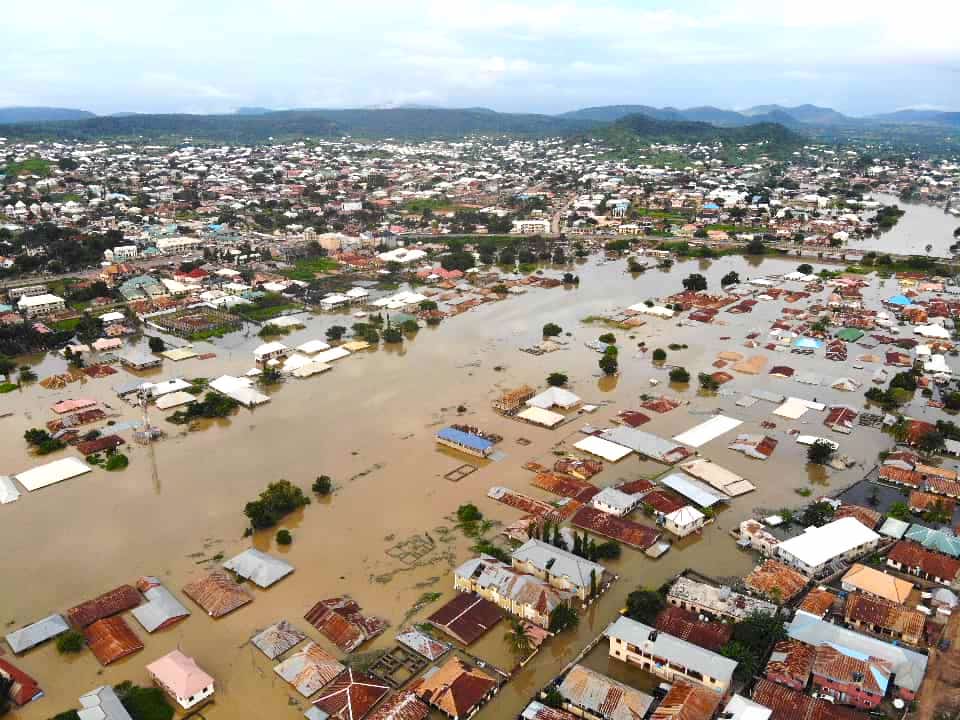
The financing target comes as Nigeria pursues other programmes to address flooding, land degradation, water management challenges and climate vulnerability.
On June 18, 2026, the National Economic Council (NEC) approved ₦83.2 billion for the Anticipatory Action Task Force to mitigate anticipated flooding and other climate-related emergencies.
The approval followed a presentation by the Minister of State for Budget and Economic Planning, Atiku Bagudu, on the need for proactive interventions, particularly during the rainy season.
The PUNCH reported on June 18, 2026, that the council approved the funding after reducing an initial ₦166.42 billion request by 50%. The intervention is intended to support early action against flooding and related disasters rather than relying solely on emergency responses after damage has occurred.
Nigeria is also implementing the Agro-Climatic Resilience in Semi-Arid Landscapes (ACReSAL) project, which focuses on sustainable land management, landscape restoration and community resilience in 19 northern states and the Federal Capital Territory.
The World Bank initially approved $700 million in financing for ACReSAL in December 2021. In September 2026, the project disclosed that additional financing of $500 million was being pursued to expand its interventions. The additional amount should therefore be distinguished from the project’s original financing.
Another initiative, the $500 million Sustainable Power and Irrigation for Nigeria (SPIN) project, is designed to improve irrigation, dam safety and hydropower planning. The Federal Government and the World Bank launched the project in March 2026.
Nigeria’s access to international climate finance also received a boost when the Green Climate Fund accredited NSIA as a direct access entity in March 2026. The accreditation is expected to strengthen the authority’s capacity to mobilise and deploy climate funding for eligible projects.
The initiatives provide different channels for financing climate resilience, but their targets and approved amounts are not interchangeable. Their effectiveness will depend on funding mobilisation, project implementation and the delivery of infrastructure and adaptation measures that reduce the impact of climate-related disasters on communities and economic activity.