
Nigeria’s interest-free student loan scheme offers students a different repayment proposition from systems in the United Kingdom, United States, Kenya and Ghana, where government-backed education loans attract interest under varying conditions.
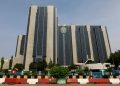
The Nigerian Education Loan Fund (NELFUND) provides eligible students with loans covering institutional fees and upkeep allowances, with repayment scheduled to begin two years after completion of the National Youth Service Corps (NYSC).
The scheme is interest-free, according to NELFUND’s official student loan portal. This means borrowers are not charged interest on the facility, although they remain responsible for repaying the amount borrowed under the programme’s terms.
NELFUND’s Student Loan Disbursement Report, generated on October 3, 2026, showed that the fund had disbursed ₦372.62 billion to students and institutions as of September 29, 2026. The amount comprised ₦192.89 billion in institutional fees paid to 319 beneficiary institutions and ₦179.73 billion in upkeep allowances paid to students.
The fund had also processed 1,659,853 applications since its portal opened in May 2024, according to figures reported by The Guardian on October 3, 2026.
The scale of the programme has made the cost of borrowing an important point of comparison as Nigeria seeks to expand access to tertiary education.
In the United Kingdom, the government announced on April 7, 2026, that maximum interest rates on Plan 2 and Plan 3 student loans would be capped at 6% from September 1, 2026, to August 31, 2027.
However, the rate does not apply uniformly to every UK student loan. The government’s published rates for the 2026/27 academic year show that Plan 5 undergraduate loans carry an interest rate of 4.1%, while Plan 2 and postgraduate Plan 3 loans are subject to the 6% cap.
In the United States, federal student loan interest rates for loans first disbursed between July 1, 2026, and June 30, 2027, stand at 6.52% for undergraduate Direct Subsidised and Unsubsidised Loans.
Graduate and professional students taking Direct Unsubsidised Loans face a rate of 8.07%, while Direct PLUS Loans for parents and graduate or professional students carry a rate of 9.07%, according to the US Department of Education’s Federal Student Aid office.
Kenya’s Higher Education Loans Board (HELB) charges 4% interest annually on its undergraduate loans, alongside a yearly ledger fee of KSh1,000, according to its official website.
Ghana also charges interest on its traditional student loans. The Students Loan Trust Fund announced in August 2026 that the interest rate had been reduced from 12% compounding to 6% simple interest during the study and moratorium periods. During repayment, the rate is approximately 7.3%, based on the Treasury bill rate plus two percentage points, according to the fund.
South Africa further complicates claims that Nigeria is the only African country with an interest-free student loan arrangement.
The National Student Financial Aid Scheme’s 2025 loan guidelines state that its loans are interest-free during the study period, with interest beginning 12 months after a student exits their studies.
The distinction is important, South Africa provides an interest-free period, while NELFUND advertises its loans as interest-free facilities. The available evidence therefore does not support a blanket claim that Nigeria is the only African country with any form of interest-free student lending.
NELFUND was established under the Students Loans Act, 2024, to help eligible students meet the cost of tertiary education. Its long-term impact will depend not only on the volume of loans disbursed but also on effective administration, sustainable funding and repayment compliance.
For Nigerian students, the absence of interest reduces the additional cost associated with borrowing. However, the facility remains a loan rather than a grant, and beneficiaries are still expected to repay the principal in accordance with the scheme’s rules.