
The cost of cooking a pot of jollof rice in Nigeria has increased by 624 percent over the past decade, highlighting the growing burden of food inflation on households across the country, according to the latest Jollof Index released by SBM Intelligence.
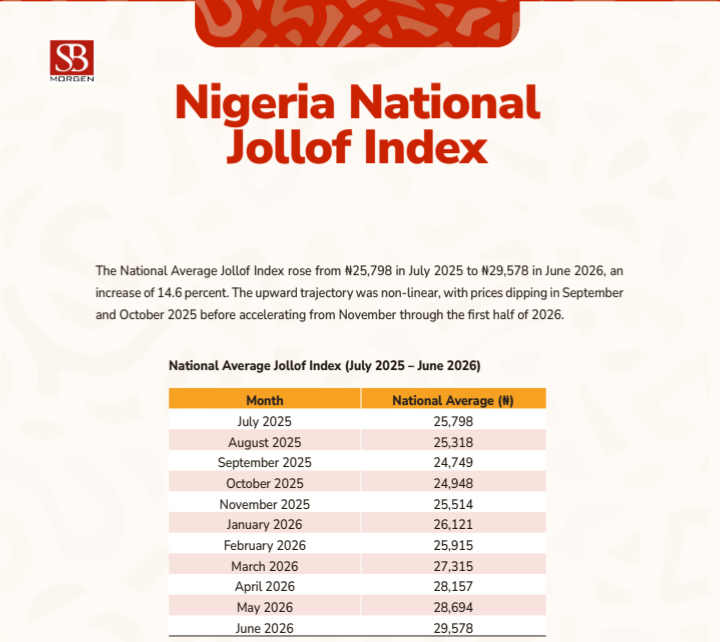
The report, titled Rebasing, Redefining, and the Weather’s Toll on the Pot, showed that the national average cost of preparing a standard pot of jollof rice rose from ₦25,798 in July 2025 to ₦29,578 in June 2026, representing a 14.6 percent increase within one year. The index has climbed sharply from ₦4,087 when tracking began in July 2016. SBM Intelligence said the latest edition of the index was rebased from July 2025 to better reflect how Nigerians currently cook, including replacing turkey with chicken and introducing more standardised ingredient measurements.
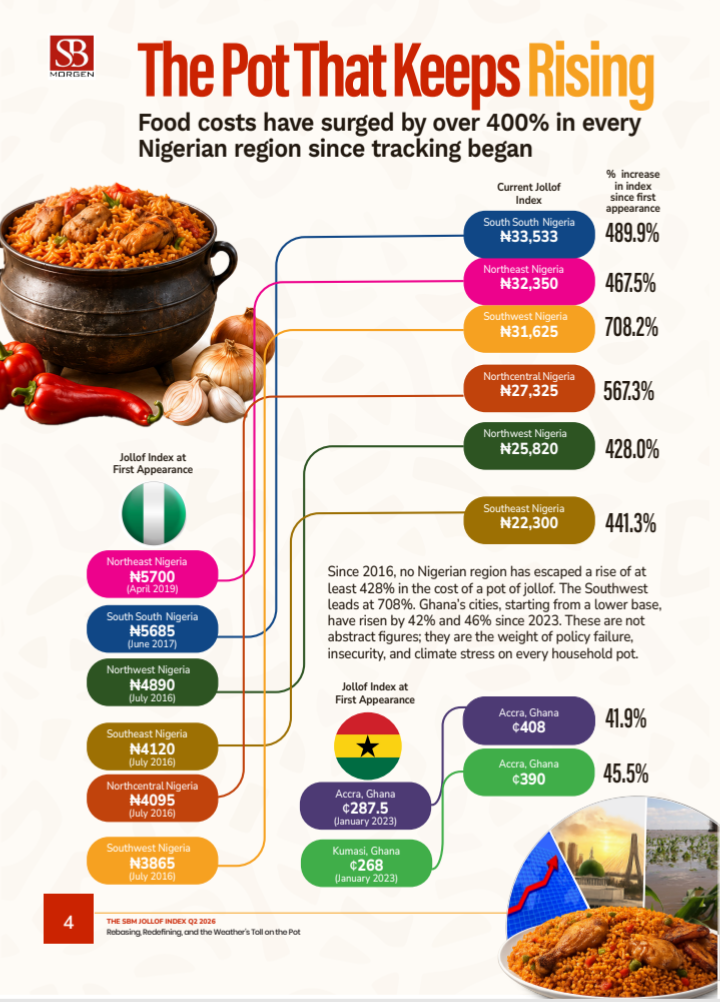
According to the report, food costs have risen by more than 400 percent in every region of Nigeria since the index began. The Southwest recorded the highest long term increase of 708.2 percent, followed by the Northcentral at 567.3 percent, the South South at 489.9 percent, the Northeast at 467.5 percent, the Southeast at 441.3 percent, and the Northwest at 428 percent.
The report noted that while Nigeria’s headline inflation remains around 16 percent, food inflation continues to be driven by local factors such as insecurity, poor transport networks, climate related disruptions and rising logistics costs rather than national trends alone. It also found that protein remains the single biggest contributor to the cost of cooking jollof rice, while the gap between the cheapest and most expensive markets has widened to ₦14,700, reflecting increasing fragmentation in the country’s food supply chain.
Heavy rainfall and flooding were identified as major factors behind rising food prices during the second quarter of 2026. The report said damaged roads, flooded farmlands and delayed harvests disrupted supplies of tomatoes, peppers and other perishables across several states. In Bauchi, tomato prices increased by more than 200 percent in some markets, while traders in Lagos reported that consumers were increasingly replacing fresh tomatoes with carrot based sauces, dried peppers and tomato paste because of rising costs. Similar shortages were reported in Port Harcourt, Calabar, Kano, Ibadan, Onitsha and Abuja.
Regionally, Calabar Municipal emerged as the country’s most expensive market for cooking a pot of jollof rice at ₦34,750, followed closely by Trade Fair and Balogun markets in Lagos at ₦34,700. Awka remained the cheapest market at ₦22,050. Trade Fair and Balogun recorded the sharpest annual increase among all surveyed markets, with prices rising by 49.6 percent between July 2025 and June 2026. Calabar Municipal increased by 36.3 percent, Bayside Mbakpa by 35.9 percent, while Port Harcourt recorded an 18.2 percent rise during the same period.
The report also highlighted how households are adjusting to persistent food inflation. Many families now buy ingredients in smaller quantities, replace meat with cheaper alternatives such as crayfish, eggs or cow skin, reduce the amount of seasoning used and substitute fresh produce with dried or processed alternatives.
SBM Intelligence warned that the country’s food inflation has become a structural challenge that cannot be solved through monetary policy alone. It said insecurity, weak infrastructure, poor storage facilities, inconsistent government policies and increasing climate related shocks continue to undermine food production and distribution.
The report concluded that unless these structural issues are addressed, Nigerian households will remain vulnerable to rising food costs, with the jollof pot continuing to serve as one of the clearest indicators of the country’s economic realities.