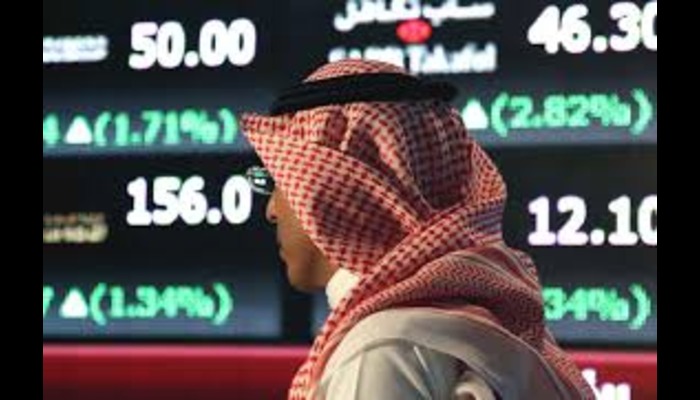

Saudi Arabia has announced that it will open its financial markets to all foreign investors from February 1 2026, a move designed to attract international capital, boost liquidity and integrate the kingdom more fully into the global financial system. The decision, announced by the Capital Market Authority (CMA), eliminates the long-standing regulatory barriers that limited direct participation in Saudi markets to a select group of qualified investors and replaces them with a more open framework that welcomes investors from around the world.
Under the new rules, overseas investors, whether institutional or individual, will be able to buy and sell securities listed on the main Saudi stock exchange — Tadawul — without having to meet the previous Qualified Foreign Investor requirements. These requirements once imposed hefty thresholds and complex qualification procedures that many smaller investors found difficult to meet. From February, those conditions will be removed, allowing much simpler access to Saudi shares and other traded instruments.
The move is part of Saudi Arabia’s broader Vision 2030 economic reform strategy, which aims to diversify the kingdom’s economy away from heavy dependence on oil revenues and to expand its financial sector. By widening access to foreign capital, authorities hope to strengthen market liquidity, deepen financial activity and make the Tadawul more attractive to global portfolio managers and index funds.
As part of the reforms, the CMA has also abolished the regulatory framework governing equity swap agreements. These arrangements previously allowed foreign investors to gain economic exposure to listed securities without holding them directly. With the swap structures removed, overseas investors will now hold shares outright and enjoy full shareholder rights, including voting privileges.
Market reaction has already been noticeable. Trading activity on the Tadawul has picked up on expectations of broader foreign participation, with gains seen across key sectors such as banking, telecommunications and healthcare. Analysts point out that this positive sentiment reflects confidence in the changes, even ahead of them taking effect.
Experts believe the new policy could unlock significant investment flows into Saudi markets. Some estimates suggest that up to $9 billion to $10 billion in additional foreign funds could enter the Saudi capital markets as a result of the reforms, adding to the substantial foreign holdings already in place. By the third quarter of 2025, foreign investment in the Tadawul’s main market had reached around SR519 billion (equivalent to about $138 billion), while total foreign ownership in the broader capital market stood above SR590 billion ($157 billion).
Despite the broad opening, certain ownership limits remain in place. Saudi law still caps the aggregate foreign ownership in a single listed company at 49 per cent, and single foreign investors generally cannot hold more than 10 per cent of any company, except in special cases approved by regulators. These safeguards are intended to balance the benefits of foreign investment with domestic financial stability and oversight.
The decision comes as Saudi authorities pursue a phased approach to financial liberalisation. In recent years, the CMA progressively eased restrictions on certain foreign investors, including residents of Gulf Cooperation Council states and former GCC residents, but direct access had remained restricted under the Qualified Foreign Investor regime. The latest reforms represent a significant leap toward full market openness.
Saudi officials and market observers say the reforms should boost Saudi Arabia’s standing in major global indices and increase its weighting in prominent emerging market benchmarks. This could draw further attention from global asset managers seeking to allocate capital to fast-growing markets with improved accessibility.
While the timing of the reform is welcomed by many investors, some analysts caution that it does not guarantee instant results. The kingdom’s economy is still transitioning away from oil, and global investors remain mindful of broader geopolitical and macroeconomic factors when deploying capital. Nevertheless, the removal of entry barriers is widely viewed as a positive step toward making Saudi Arabia a more competitive and internationally integrated financial hub.
Overall, the opening of Saudi Arabia’s financial markets to global investors marks one of the most significant liberalisation steps in the kingdom’s recent economic history, with potential to reshape investment flows across the Middle East and beyond.