


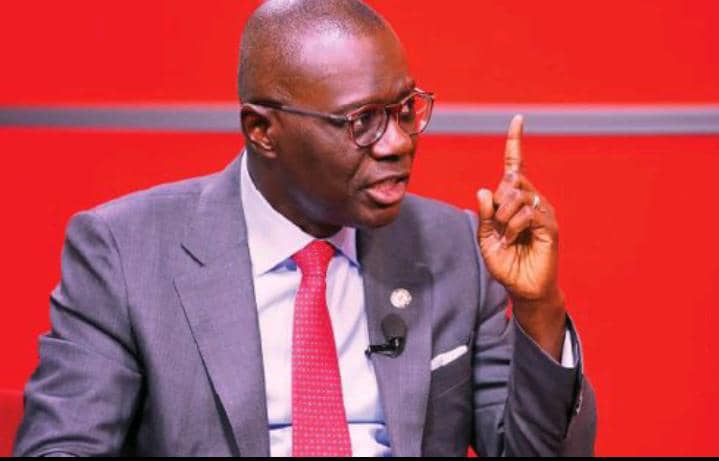

Lagos State Governor Babajide Sanwo-Olu has submitted an ambitious ₦4.237 trillion budget for the 2026 fiscal year to the Lagos State House of Assembly in Ikeja. This is a sharp increase, over ₦1 trillion more than the ₦3.005 trillion proposed for 2025.
He has dubbed the plan the “Budget of Shared Prosperity,” framing it as an inclusive strategy that blends social investment, infrastructure growth, and broad-based economic development. According to the governor: “This budget is proposed at a total size of N4.237 trillion. This budget comprises a total revenue of N3.993 trillion, which has only a deficit financing of N243.332 billion.” He further broke down revenues into ₦3.119 trillion in internally generated revenue and ₦874 billion from federal transfers.
On the spending side, Sanwo-Olu proposes a capital expenditure of ₦2.185 trillion, while recurrent spending is pegged at ₦2.055 trillion, covering personnel, debt repayments, and overheads. In more detail, the overhead budget includes ₦698.891 billion, subventions of ₦201.216 billion, and dedicated funds totaling ₦184.139 billion. Personnel costs are set at ₦440.449 billion, while debt servicing accounts for ₦143.876 billion in recurring charges and ₦383.404 billion toward debt repayment.
Sanwo-Olu’s proposed allocations span many sectors. The largest chunk, ₦1.372 trillion, is dedicated to economic affairs, underlining his administration’s focus on growing the economy. Other key sectors: public service gets ₦847.472 billion, environment ₦235.957 billion, health ₦338.449 billion, education ₦249.132 billion, housing ₦123.760 billion, social protection ₦70.024 billion, public safety ₦147.040 billion, and recreation and culture around ₦54.682 billion.
Once submitted, the proposal will undergo review and debate in the State House of Assembly before it can become law.
Economically, the ₦4.237 trillion budget signals Lagos State’s confidence in boosting internally generated revenue (IGR), projecting ₦3.119 trillion from local sources. The fiscal plan aims to drive infrastructure-led growth and social investment, positioning Lagos as a strong economic engine amid Nigeria’s broader fiscal challenges.


