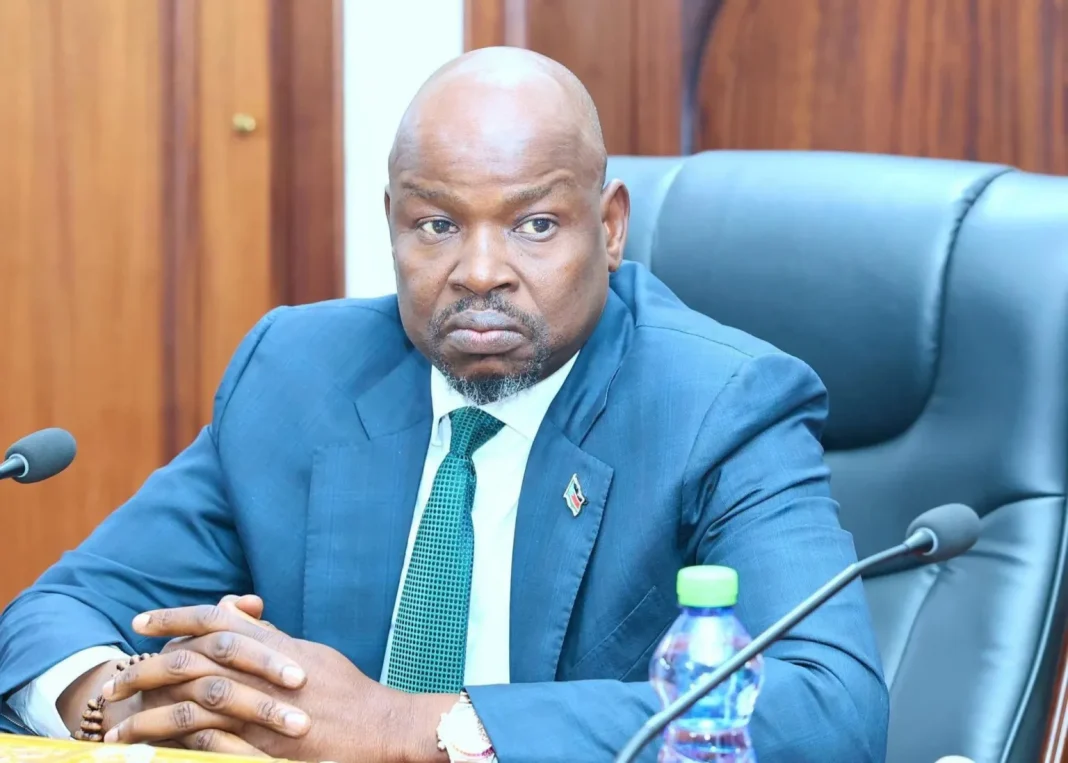

South Sudan’s President Salva Kiir on Wednesday dismissed Vice President Benjamin Bol Mel, stripping him of his position as deputy leader of the ruling Sudan People’s Liberation Movement (SPLM), state television announced. The sweeping decision also saw the removal of the central bank governor and the head of the national revenue authority, both regarded as close allies of Bol Mel, marking one of the most significant political shake-ups in recent years.
The presidential decree, broadcast late on Wednesday evening, offered no official explanation for the dismissals. However, the timing and scope of the action have fuelled widespread speculation about deepening divisions within Kiir’s inner circle and growing unease over his eventual succession.
A Break with a Former Protégé
Benjamin Bol Mel’s dismissal represents a dramatic rupture between Kiir and a man widely believed to have been his preferred successor. A wealthy businessman turned politician, Bol Mel has long been one of the most influential figures in South Sudan’s political and economic landscape. His close ties to the presidency and his leadership of the National Business and Development Corporation had positioned him as a central player in state contracts and infrastructure development.
In recent years, however, Bol Mel’s reputation has been marred by persistent corruption allegations. He has been under United States sanctions since 2017, accused of using his proximity to Kiir to amass vast personal wealth. A United Nations report in September alleged that companies linked to him received more than $1.7 billion in payments for road projects that were never completed. The report deepened scrutiny of Bol Mel’s network and reignited domestic frustration over South Sudan’s enduring governance and accountability challenges.
Power, Patronage and Corruption
Kiir’s latest political purge appears designed to consolidate control at a time when fissures within the ruling party are widening. Analysts say that removing Bol Mel and his allies is not merely an anti-corruption gesture but a strategic move to neutralise potential rivals ahead of an uncertain election timetable. The country’s fragile coalition government has already been destabilised by the arrest of First Vice President Riek Machar in March, who was later charged with treason—an action that reignited fears of renewed armed confrontation between loyalist and opposition factions.
The decision to dismiss Bol Mel also highlights the complex interplay between power and patronage in South Sudanese politics. For years, the allocation of lucrative state contracts and military promotions has been instrumental in maintaining loyalty among political elites and armed actors. By stripping Bol Mel of both his political office and military rank of general—a title Kiir had personally bestowed in September—the president appears to be signalling a recalibration of the power balance within his government.
Fragile Stability and a Stalled Transition
South Sudan, which gained independence from Sudan in 2011, has spent much of its existence mired in internal conflict and political infighting. A five-year civil war between Kiir and Machar, rooted in ethnic and political rivalries, killed an estimated 400,000 people and displaced millions before a tenuous peace agreement was reached in 2018. Yet the implementation of that agreement has stalled, and hopes for national reconciliation and democratic transition have faded.
Elections initially scheduled for 2022 were postponed, then again in 2024, citing logistical and security challenges. The uncertainty surrounding the electoral process has eroded public confidence and fuelled frustration among citizens facing severe economic hardship, food insecurity, and the collapse of basic services.
The removal of Bol Mel—once viewed as a possible stabilising successor—may exacerbate tensions both within the SPLM and among military factions still loyal to different political figures. “This move could unsettle the balance of alliances that has kept the government together,” said a regional analyst based in Nairobi. “It raises the risk of renewed confrontation among factions that still control weapons and territory.”
Economic Repercussions
Beyond its political implications, the shake-up could also deepen South Sudan’s economic woes. The dismissal of the central bank governor and revenue authority head comes at a critical time when the country is struggling to stabilise its currency, control inflation, and manage oil revenues—its main source of foreign exchange.
Oil production has declined sharply due to insecurity and ageing infrastructure, while global price fluctuations have further strained state finances. The abrupt leadership changes may undermine investor confidence and delay fiscal reforms needed to sustain public spending. With international donors already wary of corruption and weak governance, the latest turmoil risks further isolating the country economically.
A Nation at a Crossroads
President Kiir, now 74 and in power since 2011, faces mounting pressure to deliver a credible political transition and restore confidence in state institutions. His decision to remove Bol Mel underscores both his enduring authority and the fragility of the system he presides over. Whether this latest move strengthens Kiir’s control or accelerates political fragmentation remains to be seen. For many South Sudanese, however, the episode serves as another reminder that their nation’s long-promised peace and prosperity remain hostage to elite rivalries and entrenched corruption. As the world’s youngest country once again grapples with uncertainty, the question is not only who will succeed Salva Kiir, but whether South Sudan can finally break free from the cycle of instability that has defined its short and troubled history.