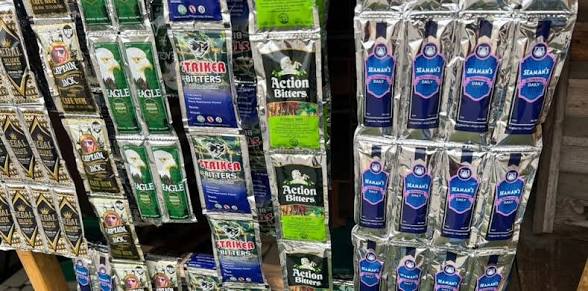

A market survey in parts of Lagos has found that many traders have stopped selling alcoholic drinks in sachets and small bottles following the Federal Government’s ban, but some banned products are still being sold secretly.
The survey, carried out in Abulegba and Fagba, showed that many shop owners have removed the affected products from their shelves since the National Agency for Food and Drug Administration and Control (NAFDAC) began full enforcement of the ban on January 1, 2026.
The ban covers alcoholic drinks sold in sachets, as well as PET plastic and glass bottles smaller than 200ml.
At Fagba, a trader, told thebusinesstimesng, “We don’t sell it anymore.”
Other traders said they had also stopped selling the drinks because they feared NAFDAC inspections, fines and possible closure of their businesses.
However, the survey found that some banned products are still available. A few traders now keep them under counters or in hidden places and sell them only to customers they trust.
Some vendors also said the products now cost more because they are harder to get. Several traders refused to give their full names, saying they were afraid of being reported to NAFDAC.
NAFDAC began enforcing the ban in stages. The first phase, which started in January, focused on manufacturers. In July, the agency began a second phase targeting markets, motor parks, shops, bars and distribution centres.
NAFDAC has also ordered manufacturers and sellers to recall banned sachet and small-bottle alcoholic drinks still in circulation.
The agency’s Director-General, Prof. Mojisola Adeyeye, has warned that businesses caught violating the ban could face heavy fines, closure and criminal prosecution.
The ban follows a 2018 agreement between regulators and manufacturers. It is aimed at reducing young people’s access to cheap alcoholic drinks with high alcohol content.
NAFDAC has said research shows that almost half of underage alcohol users get alcoholic drinks through sachets and small bottles.
Despite the enforcement, banned products are still being sold in some parts of the country. Some traders also claim they are not aware of the ban.
Manufacturers have meanwhile raised concerns about possible job losses and money already invested in producing the affected drinks.
NAFDAC has made it clear that the enforcement will continue until all banned products are removed from the market.