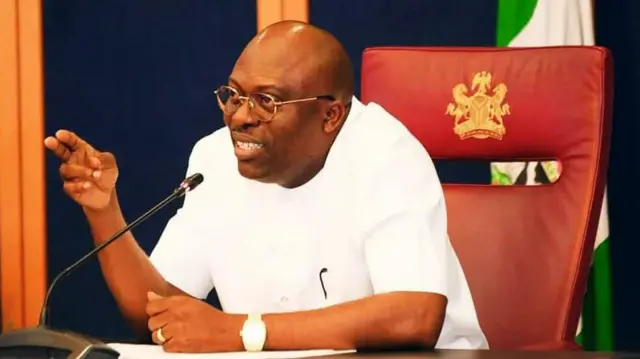

A renewed impeachment move against Rivers State Governor Siminalayi Fubara has escalated a protracted political war, casting a long shadow over the economic stability of Nigeria’s crucial oil and gas heartland. As the Rivers State House of Assembly advances proceedings, the deepening rift between Governor Fubara and his predecessor, the Federal Capital Territory Minister Nyesom Wike, transcends political drama. It poses a direct threat to the operations, investor confidence, and revenue flows from the nation’s most economically vital state.
The immediate economic risks are tangible. Rivers State is the heartbeat of Nigeria’s hydrocarbon industry, hosting major assets of the Nigerian National Petroleum Company (NNPC) and international oil companies. Protracted instability threatens to disrupt the delicate operational environment in the Niger Delta, where community relations and security are paramount. Any disruption to production or export from terminals in Port Harcourt can have an instantaneous effect on national crude output, which is already struggling to meet its OPEC quota. This directly impacts the country’s primary source of foreign exchange earnings at a time of acute dollar scarcity.
Beyond the oil wells, the crisis paralyzes governance and fiscal planning. A state government engaged in a survival battle cannot focus on critical infrastructure, public services, or creating an enabling environment for business. The legislative process in the state is likely to be dominated by the impeachment theatrics, stalling the passage of vital bills, including budgets and development plans. This governance vacuum stifles local business, discourages new investment, and exacerbates unemployment in a state with a large, restless youth population. The comment from a resident, “I am a hustler… Their fight does not concern me,” underscores a dangerous public disillusionment that can further erode the social contract and business climate.
The crisis is a textbook case of Nigeria’s “political economy” challenge, where control of state resources fuels internal party conflicts. The battle for control of Rivers’ vast government resources and patronage networks is at the heart of the Fubara-Wike feud. As a cleric quoted in the original piece noted, the lawmakers are “playing by the script” of a godfather. This perception undermines the very institutions meant to ensure democratic accountability and policy continuity, making long-term economic planning impossible. Investors, both domestic and foreign, require predictability, which is shattered by repeated impeachment threats and a factionalized House of Assembly.
The national economic implications are severe. Nigeria can ill afford instability in its revenue-generating nucleus. The federal government’s budget, already strained by debt servicing and subsidies, relies heavily on allocations from oil revenue. A sustained crisis in Rivers risks creating a double shock: reducing national oil income while simultaneously increasing the state’s demand for federal stabilization support. Furthermore, it sends a catastrophic signal to the global investment community about political risk within Nigeria’s most important economic zones.
While some residents, like a construction worker who declared the move “dead on arrival,” hope for judicial or political resolution, the economic damage accrues with each day of uncertainty. The comment that “the sun just came out” may reflect short-term political optimism, but for the economy, the storm clouds are gathering. For Nigeria’s broader economic health, a swift and constitutional resolution to the Rivers crisis is not just a political necessity but a critical economic imperative.