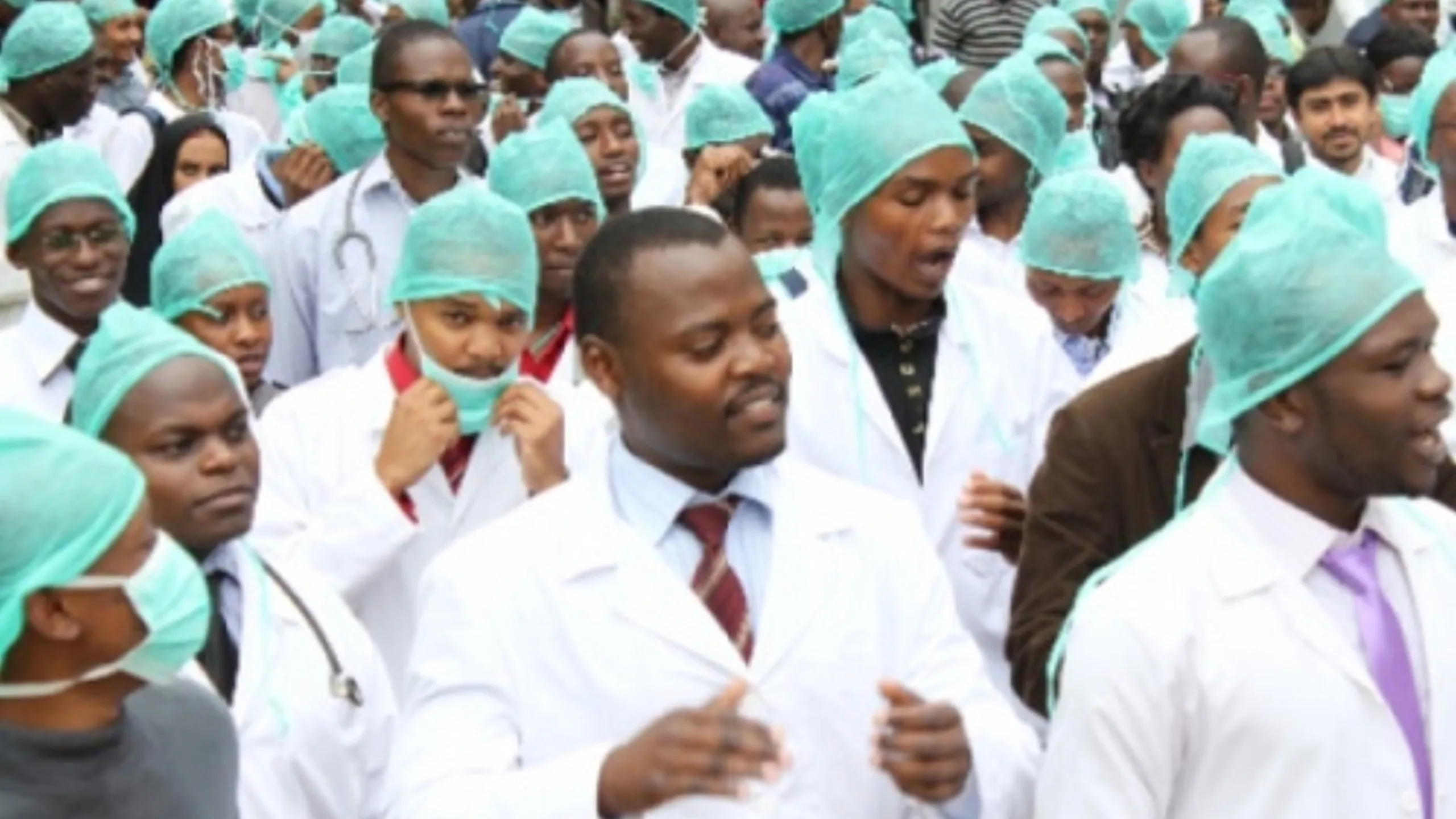

The Nigerian healthcare sector is bracing for a fresh round of disruptions as the National Association of Resident Doctors (NARD) has announced its intention to resume a nationwide industrial action starting January 12, 2026. The strike, tagged “TICS 2.0” (Total and Indefinite Strike), is set to begin at 12:00 am, following a unanimous resolution reached during an Extraordinary National Executive Council (E-NEC) meeting on January 2.
In a communique signed by NARD President Mohammad Suleiman, the association declared that the decision to withdraw services was necessitated by the Federal Government’s failure to implement the terms of a previous agreement. NARD had suspended a 29-day strike on November 29, 2025, after the government pledged to address their demands within four weeks. However, according to the association, that deadline passed with no “visible progress,” leaving the doctors with no choice but to resume their struggle under the mantra, “No Implementation, No Going Back.”
The doctors’ grievances are centered on nine key demands that touch on pay equity, career progression, and basic administrative fairness. Chief among these is the reinstatement of the “FTH Lokoja five”—five doctors whose controversial exit has become a symbol of administrative friction. Other critical issues include the payment of long-overdue promotion and salary arrears, and the full implementation of a professional allowance table. NARD is also demanding official clarification from the Federal Ministry of Health regarding “skipping” and entry-level salary issues, which have caused persistent confusion among hospital chief executives.
The association’s strategy for “TICS 2.0” extends beyond the wards. NARD has planned an aggressive seven-day public engagement campaign starting immediately. Center presidents at all 91 teaching hospitals and medical centers across the country have been directed to brief the media and hold congress meetings. “We want 91 press conferences to saturate the space,” the communique stated, signaling a resolve to keep the health crisis at the forefront of national discourse.
Following the commencement of the strike on January 12, the association will hold center-based protests for four days, followed by regional demonstrations. This will eventually culminate in a national protest coordinated by the National Officers Committee. This tiered approach is designed to maintain pressure on the government while mobilizing public support for what NARD describes as a “struggle for dignity and fairness at work.”
The impending strike poses a severe threat to public healthcare delivery, as resident doctors constitute the primary workforce in tertiary hospitals across Nigeria. Their absence will likely paralyze outpatient clinics, emergency rooms, and surgical theaters. Despite the gravity of the notice, the Federal Ministry of Health and Social Welfare has yet to issue a formal response.
As January 12 approaches, the Nigerian public is left waiting to see if the government will make a last-minute move to avert the total shutdown of its medical facilities. For the doctors, the message remains clear: unless the agreed minimum demands are fully implemented, the strike will proceed as planned, with no room for further suspension. The “No Implementation, No Going Back” stance underscores a deepening distrust between the medical workforce and the state, threatening to plunge the nation’s health system into another period of prolonged instability.