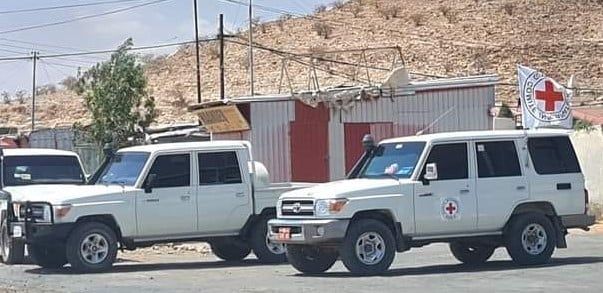

The International Committee of the Red Cross (ICRC) and the Nigerian Red Cross Society (NRCS) have forcefully refuted social media allegations that the humanitarian organisations are providing support to armed groups in Northern Nigeria, describing the claims as false and misleading. The denial comes amid heightened concern over the spread of misinformation that could jeopardise humanitarian operations in regions already grappling with insecurity and displacement.
In a statement issued on Monday in Abuja, NRCS Head of Communications Chima Nwankwo said both organisations were aware of the harmful content circulating online and categorically rejected the allegations. “Both organisations categorically refute these claims, which are false,” Nwankwo stated, adding that such misinformation contradicts the fundamental principles of the Red Cross and Red Crescent Movement and risks undermining its humanitarian mission. “Such misleading information can jeopardise our purely humanitarian work and deny thousands of vulnerable people access to vital aid,” he said.
The refutation carries significant weight given the Red Cross’s long-standing presence in Northern Nigeria, where the organisation has been a critical provider of humanitarian assistance to populations affected by the Boko Haram insurgency and other conflicts. The ICRC and NRCS operate in some of the most insecure areas of Borno, Yobe, and Adamawa states, delivering food, water, medical care, and other essentials to internally displaced persons and host communities. Any perception of partiality could compromise the safety of humanitarian workers and the communities they serve.
Nwankwo explained that the organisations’ priority is to assist the most vulnerable people affected by crises, including armed conflict, while maintaining transparency, independence, neutrality, and impartiality. These principles—neutrality and impartiality in particular—are the bedrock of the Red Cross’s ability to operate in conflict zones. By maintaining dialogue with all parties to a conflict without providing material support to any, the organisation secures access to populations in need that other humanitarian actors cannot always reach.
He further clarified that, in carrying out its mandate, the ICRC engages in humanitarian dialogue with all parties to a conflict where necessary, but “never provides any party with financial, logistical or other forms of support.” This distinction between dialogue and support is crucial to the Red Cross’s operational model. Engagement with armed groups—including non-state actors—is a necessary condition for delivering aid in contested areas, but it is strictly limited to humanitarian coordination and does not extend to material assistance.
The circulation of such allegations at this time is particularly concerning given the fragile security situation in parts of Northern Nigeria. Misinformation targeting humanitarian organisations can have real-world consequences, including endangering aid workers, prompting communities to reject assistance, and disrupting supply chains that thousands depend on. In an environment where humanitarian access is already constrained by insecurity, the spread of false claims can further restrict the delivery of life-saving aid.
Nwankwo urged the public to verify information before sharing it to prevent the spread of misinformation. The statement reflects growing concern among humanitarian and development organisations about the impact of false narratives on social media, which have in some cases led to attacks on aid workers or the suspension of operations in affected areas. For the Red Cross, which relies on the acceptance of all parties to a conflict to operate effectively, maintaining public trust is essential to fulfilling its mandate.
The refutation also serves as a reminder of the broader challenge of misinformation in Nigeria’s information ecosystem. As social media platforms become primary sources of news for many Nigerians, the speed at which unverified claims spread has outpaced the capacity of institutions to correct them. For humanitarian organisations, the consequences of such misinformation are not merely reputational but operational, potentially limiting their ability to reach those most in need.