
By Uchechukwu Ejezie
Early Childhood Development (ECD), spanning pre-primary education, nutrition, health, and early stimulation for children aged 0-5, is widely recognised as one of the highest-return public investments. Yet in Nigeria, financing patterns suggest that the country’s youngest citizens remain structurally underfunded within the public expenditure framework.
Nigeria’s federal education budget has increased substantially in nominal terms over the past three fiscal cycles. Education was allocated ₦1.54 trillion in 2023, rising to ₦3.52 trillion in 2025, and maintained at ₦3.52 trillion in the proposed 2026 federal budget of ₦58.18 trillion (about 6% of total federal spending).
Although this upward trajectory signals growing recognition of education’s importance, two structural issues persist. Education’s share of total federal expenditure remains modest relative to global benchmarks. Also, there is no clearly disaggregated federal budget line dedicated to early childhood education (ECE).
This lack of specificity makes it difficult to quantify how much of the ₦3.52 trillion allocation directly benefits children aged 0-5. Instead, ECD financing is embedded within broader basic education and social programmes.
Within the 2026 education envelope, for example, ₦113.7 billion is earmarked for school feeding, scholarships, and out-of-school children interventions. Of this, ₦42 billion supports the National School Feeding Programme while ₦35 billion targets out-of-school children initiatives.
These programmes, while influencing early learning readiness and participation, are not exclusively designed for pre-primary children.
Per-Child Spending and Participation Gaps
Nigeria’s aggregate public education spending translates into very low per-child allocations when adjusted for population size. Recent estimates suggest government spending averages roughly $23 per capita on education, with states contributing approximately $14 of that figure.
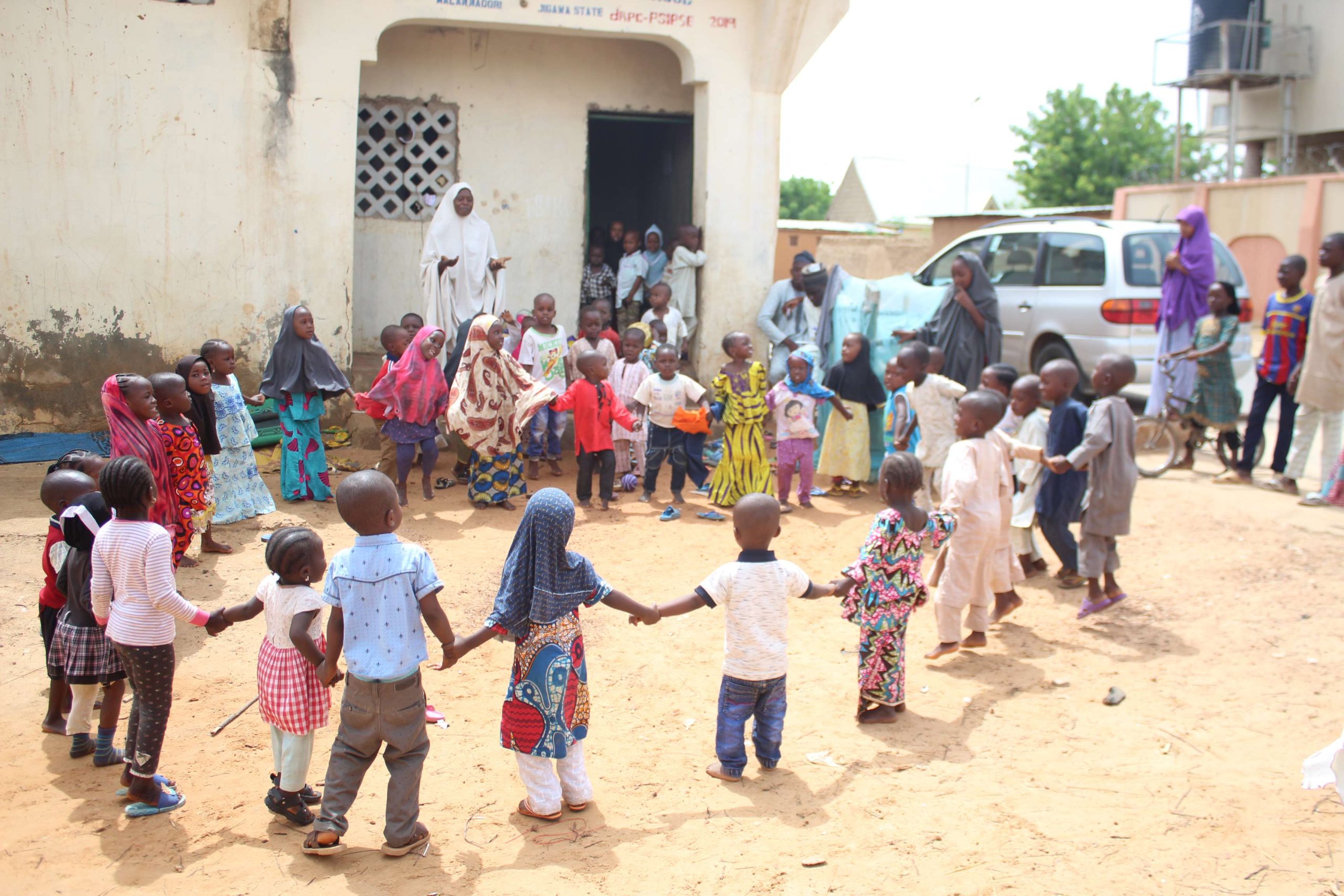
Only about 36% of Nigerian children access early childhood education, meaning nearly two-thirds enter primary school without structured early learning exposure. Given Nigeria’s demographic scale, where over 30 million children are under the age of 5, the fiscal implications of universalising ECD are significant.
Globally, countries that achieve strong foundational learning outcomes typically spend between 0.5% and 1% of GDP specifically on early childhood education. Nigeria does not currently publish a comparable ECD-specific expenditure figure, but total education spending as a share of GDP remains well below international norms.
State Governments: Where Delivery Actually Happens
States carry primary responsibility for basic education service delivery. Their budgetary choices, therefore, have direct implications for ECD access and quality.
Combined state education allocations were approximately ₦2.4 trillion in 2024, rising to about ₦3.6 trillion in 2025. Several states have prioritised education in their 2026 proposals. Enugu State allocated roughly 32% of its total budget to education. Katsina State earmarked ₦156.3 billion (about 17%) for education. Borno State allocated approximately ₦135.4 billion, making education its top sector.
This suggests that at the subnational level, education competes strongly with infrastructure and security. A major concern is that only a few states publish separate pre-primary or ECD line items in their budgets, limiting fiscal transparency for the 0-5 age group.
In terms of execution, reports from recent fiscal years indicate that many states implement only about two-thirds of their education budgets, which means that even when allocations appear substantial on paper, actual spending, particularly on capital investments like early childhood classrooms and teacher training, may fall short. In summary, even as aggregate education allocations are increasing, early childhood remains structurally invisible within the budget architecture. Also, per-child public spending remains low when adjusted for Nigeria’s population size. Finally, state governments lack standardised child-sensitive reporting frameworks.
The proposed 2026 budgets in most states do not fundamentally alter these trends. It confirms a pattern of rising overall spending without corresponding structural reform in how early childhood investments are identified, tracked and protected.
The Way Forward
Strengthening ECD financing in Nigeria requires more than larger numbers. It requires deliberate design. Dedicated budget lines for pre-primary education and early childhood services would make investments visible and measurable. Integrated, child-sensitive expenditure tracking across federal and state levels would improve accountability. Higher execution rates would ensure that allocated funds translate into classrooms, trained teachers, nutrition support and developmental services. Clear performance indicators, tied to school readiness and developmental milestones, would connect spending to outcomes.
For a country where demographic momentum will define economic destiny, the question is not whether Nigeria can afford to invest in early childhood but whether it can afford not to.
Conclusion
For Nigeria, the demographic stakes are high. A large youth population presents an opportunity for economic transformation, but only if foundational skills are developed early. Research consistently shows that deficits in early learning and nutrition reduce lifetime earnings potential and national productivity. The fiscal question, therefore, is not only about allocation size but allocation design.
Uchechukwu Ejezie is an analyst with SBM Intelligence.