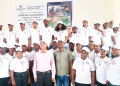

The Plateau State Government has recovered more than 60 public properties, including buildings, vehicles and construction equipment, marking a significant step in a broader effort to reclaim assets allegedly diverted or illegally occupied. The recoveries were disclosed by retired army general Nash Yakubu, chairperson of the Task Force on Recovery of Government Properties, during an interim report presentation to Jerry Satmak, the chief of staff to Governor Caleb Mutfwang, in Jos. An aide to the governor, Precious Yohanna, confirmed the exercise remains active, stating that the task force has recovered over 60 assets so far and continues to recover others.
Yakubu noted that the task force, which has operated for over a year, has made “significant progress” in tracking government-owned properties. Assets that could not be moved to Jos were secured at various local government headquarters, while those within the Jos metropolis were transferred to a central holding facility. He emphasized that the exercise is still ongoing, adding, “Even as we conclude this presentation, further recoveries are underway. The more we recover, the more we uncover.” Citizens’ cooperation has been critical, with the task force adopting a “see something, say something” approach through dedicated telephone lines, an official email address, and television briefings.
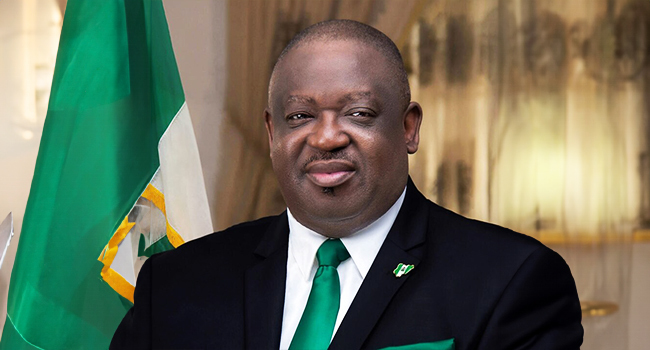
Receiving the report on behalf of the state government, Satmak commended the task force for its diligence and assured continued government support to fully execute its mandate. He reiterated the administration’s resolve to recover all government properties and ensure they are deployed for public benefit. Officials present included the Commissioner for Works, the Commissioner for Lands, and permanent secretaries for housing and works.
From a fiscal perspective, the asset recovery initiative directly supports Plateau State’s broader revenue mobilization efforts. The state recently achieved a historic milestone, surpassing ₦40 billion in internally generated revenue for the first time in 2025, following taxpayer‑friendly reforms and improved administrative efficiency. The Plateau State Internal Revenue Service (PSIRS) attained 94% of its budgeted revenue target, the highest performance level since its inception. Recovering diverted assets reduces the need for replacement capital expenditure, freeing resources for infrastructure and social services. Every vehicle or building retrieved is a public asset that no longer requires taxpayer funds to be repurchased.
The exercise also strengthens the state’s institutional integrity. Diverting public properties erodes governance and imposes hidden costs on citizens. When assets are illegally occupied, the government loses rental income, maintenance expenses accumulate, and development projects stall. A transparent recovery process signals that impunity will not be tolerated, building public trust. For investors, clear enforcement of public property laws reduces perceived political risk. A state that reclaims its assets demonstrates administrative competence, an important signal for capital allocation.
The efficiency of public asset management has direct economic consequences. Nationally, Nigeria faces an estimated $2.3 trillion infrastructure financing gap over the next two decades, with annual needs of roughly $100 billion to raise infrastructure stock to 70% of GDP. At state level, every naira lost to asset diversion widens this gap. By retrieving over 60 properties, Plateau is not only recovering physical assets but also improving the efficiency of public resource utilization, which enhances its capacity to meet developmental targets. If other states emulate this model, the cumulative fiscal impact could be substantial, reducing waste and strengthening the rule of law.