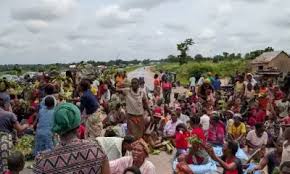

Nigeria is witnessing a troubling surge in the number of internally displaced persons, with humanitarian agencies warning that the crisis is expanding beyond traditional conflict zones and placing millions of lives at risk. Recent data from the office of the United Nations High Commissioner for Refugees indicates that over 3.7 million Nigerians are internally displaced as of March 2026, living across approximately 3,900 camps and host communities nationwide.
Internally displaced persons are people who have been forced to flee their homes by conflict, violence, persecution, or disasters. Displacement in Nigeria has grown immensely over the past decades due to recorded cases of banditry, farmer-herder conflicts, political violence, climate and environmental disasters, insurgency, and terrorism. The most affected states include Borno, Benue, Zamfara, Adamawa, Katsina, Sokoto, Yobe, Bauchi, Kaduna, Taraba, Gombe, Niger, Plateau, Nasarawa, Kano, and Kogi.
In Borno State, the epicentre of the Boko Haram insurgency, 1.7 million people are internally displaced—the highest figure in the country. Benue State follows with 464,543 displaced persons, primarily due to farmer-herder conflicts. Zamfara State has 279,224 displaced persons, Adamawa 219,016, Katsina 206,071, and Sokoto State 181,526. Other states with significant displacement include Yobe with 162,648, Bauchi with 141,816, Kaduna with 115,466, and Taraba with 49,833. The least affected among the listed states is Kogi, with 2,511 displaced persons.
The UNHCR has identified IDPs as among the most vulnerable people in the world, with many trapped in protracted displacement for years or even decades. Many are victims of social and economic issues and often face dangerous conditions even after fleeing for safety. The agency added that the places where most of them settle often lack adequate shelter, food, clean water, or healthcare. Even where such services exist, the sudden influx of people can overwhelm them. Additionally, it can be difficult for displaced people to find work, leaving them without an income to support themselves and their families.
To address the crisis, the World Bank approved $300 million in financing in August 2025 for the Solutions for the Internally Displaced and Host Communities Project. According to Mathew Verghis, the World Bank Country Director for Nigeria, the purpose of the project is to ensure the empowerment and economic inclusion of displaced persons and their host communities. The federal government has also declared a strategic shift from humanitarian relief to long-term economic inclusion for IDPs.
From an economic perspective, the displacement crisis imposes enormous costs on Nigeria’s economy. Displaced populations lose their livelihoods, agricultural production is disrupted in key food-producing regions, and government resources that could be invested in development are diverted to emergency relief. The concentration of displaced persons in camps also creates pressure on local infrastructure and social services in host communities. Without durable solutions that address the root causes of displacement insecurity, climate change, and economic marginalisation the crisis is likely to worsen, further undermining Nigeria’s stability and development prospects.