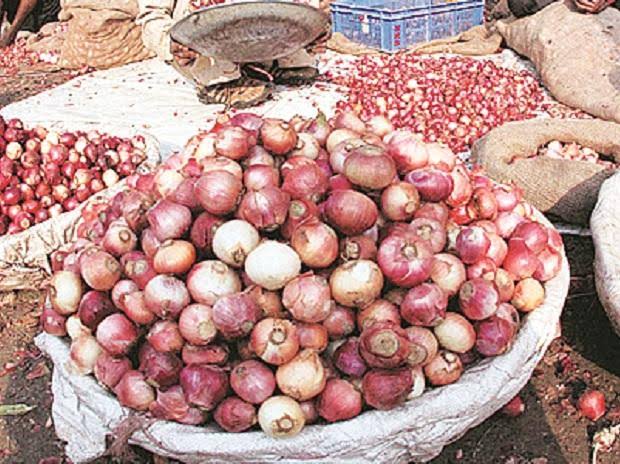

Onion farmers in Nigeria are predicting higher prices during the festive season due to strong demand and limited supply. The National Onion Producers, Processors and Marketers Association of Nigeria (NOPPMAN), Kaduna State chapter, said some farms have not yet been harvested, which is pushing prices up as Christmas approaches.
Mr Amir Adamu, the association’s Secretary in Kaduna, explained that onion prices vary across states. In Kaduna, older onions harvested around July and August are selling for between ₦50,000 and ₦60,000 per bag. Fresh onions from Sokoto, which are in greater demand, are priced between ₦80,000 and ₦100,000 per bag.
Adamu warned that prices may rise further because other states are still preparing to harvest their onions. He added that northern states are experiencing higher costs due to the strong demand. While prices may gradually fall when onions from Kebbi State are harvested in January, any reduction is expected to be small. Earlier in the year, a bag of older onions sold for between ₦30,000 and ₦40,000, but rising demand has made them significantly more expensive.
With the yuletide season nearing, the association expects prices to remain high. Currently, a bag of onions costs between ₦100,000 and ₦130, compared with ₦70,000 to ₦100,000 a few months ago. The association anticipates that more substantial relief may only come between January and March 2026, when additional onions become available from northern farms.
This price trend reflects the seasonal nature of agricultural products, where supply and demand shift depending on harvest times and festive periods. Farmers benefit from higher earnings during peak demand, while consumers face increased costs. The market situation highlights the importance of timely harvesting and distribution to stabilise prices.
As Christmas approaches, both traders and consumers are preparing for the expected price increase, while farmers look forward to better returns for their produce. The situation underlines how seasonal demand and regional production levels can have a major impact on food prices, especially for staple items like onions, which are widely used in Nigerian cuisine.