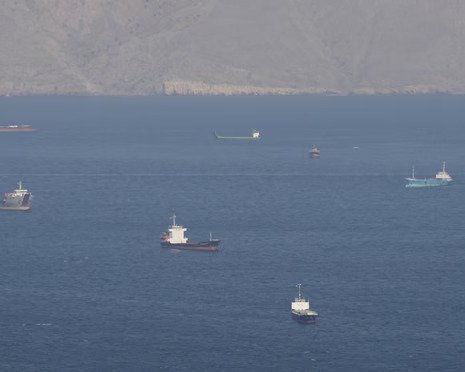

Global oil prices dropped sharply on Friday after Iran announced the reopening of the Strait of Hormuz, easing supply concerns that had driven recent market volatility.
Brent crude, the international oil benchmark, fell by about 9 percent to $89.84 per barrel, its first drop below the $90 mark in two weeks. The decline also represents the first time Brent has traded below $90 since March 30, after previously hovering near $88 per barrel on March 19.U.S. West Texas Intermediate (WTI) crude recorded an even steeper fall, shedding roughly 11 percent to settle at $83.90 per barrel.
The sharp downturn follows confirmation from Abbas Araghchi, Iran’s foreign minister, that the Strait of Hormuz, a vital global oil transit chokepoint had been fully reopened to commercial shipping. In a post on X, Araghchi stated that vessels would now be allowed to pass through the route, although under strict coordination with Iran’s maritime authorities. He added that the arrangement would remain in place only for the duration of a recently agreed 10-day ceasefire between Israel and Lebanon.
The development comes after days of heightened geopolitical tension in the Middle East, during which concerns over a potential disruption to oil supply pushed prices upward. Earlier in the week, the United States Central Command had indicated that a blockade of the strait had been “fully implemented,” raising fears of a prolonged supply squeeze.
Despite the reopening, uncertainty remains in the market.
Donald Trump said the U.S. naval blockade would remain in place “until such time as our transaction with Iran is 100% complete,” suggesting that tensions may not yet be fully resolved.
The Strait of Hormuz is one of the world’s most critical oil shipping lanes, handling a significant share of global crude exports, particularly from major producers in the Middle East. Any disruption to traffic through the narrow waterway typically triggers immediate reactions in global energy markets. Analysts say the latest price drop reflects renewed confidence in supply stability, at least in the short term, following Iran’s decision to allow commercial shipping to resume.
However, they caution that oil markets remain highly sensitive to geopolitical developments in the region, and prices could swing again depending on how the ceasefire holds and whether broader diplomatic negotiations progress.