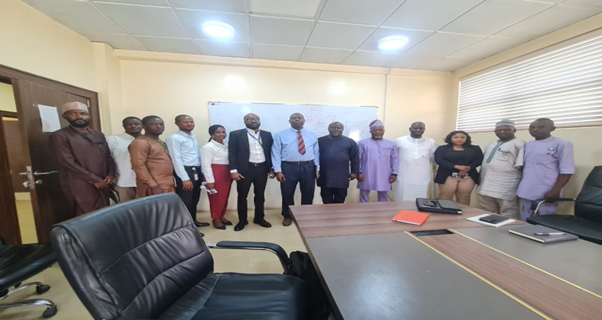

The Raw Materials Research and Development Council (RMRDC) has introduced a new digital platform known as the Nigerian Information Statistical System for Raw Materials and Products (NISSRAMP). The system was officially unveiled in Abuja, with the council explaining that it is designed to give investors and stakeholders easy access to reliable, data-driven information about Nigeria’s raw materials.
Speaking at the event, the Director-General of RMRDC, Prof. Nnanyelugo Ike-Muonso, described the platform as a major step forward in how information about the country’s natural resources is gathered, managed and used. He noted that the initiative reflects the council’s renewed commitment to becoming a leading force in raw materials research across Africa.
He explained that NISSRAMP was created to solve long-standing challenges caused by the lack of accurate and centralised data. According to him, this gap has made it difficult for investors and industry players to make informed decisions.
“NISSRAMP comes as a breath of fresh air for investors, policymakers and industry operators who until now navigated a fragmented landscape with no unified repository of information.
“Before this initiative, stakeholders operated in the dark, there was no single source of truth regarding the availability, location, production capacity, or quality of raw materials across the country.
“Decision-making was often based on incomplete or outdated information, hindering investment and slowing industrial growth,’’ he said.
Ike-Muonso added that the platform goes beyond being just a storage system for data. Instead, it serves as a strategic tool that can support national development by providing real-time insights into raw material availability, production levels and locations.
“It provides real-time information on profiling, production capacity, location and availability,” he said.
He further explained that NISSRAMP would help government officials, researchers and investors make better decisions, identify business opportunities and develop policies based on accurate data. The system is designed to be user-friendly, scalable and well-integrated, with features covering pricing, value chain analysis, production capacity and information on fabricators.
Also speaking, Dr. Cypril Chinweyi, Deputy Director of Statistics and Data Analysis at RMRDC, highlighted the importance of collaboration and technology in national development. He revealed that the platform connects data from the Central Bank of Nigeria, the Nigerian Geological Survey Agency, the Nigeria Customs Service and more than 16 other institutions.
“By linking databases from the Central Bank of Nigeria, Nigerian Geological Survey Agency, the Customs and over 16 other institutions, NISSRAMP creates a holistic view of the raw material ecosystem.
“This dynamic approach replaces the old static methods, ensuring data is always current and compliant with global HS Codes and Nigerian raw material standards,” he said.
Chinweyi also pointed out that the platform would support government policies, especially the requirement for at least 30 per cent value addition to raw materials before export. This, he said, would help boost local processing, create jobs and retain more economic value within the country.
“It will help ensure compliance with the 30 per cent value addition requiremen0; this is crucial for retaining wealth within the economy and creating jobs,’’ he said.
He added that the platform is open to everyone, not just government agencies or large companies. It offers useful data for pricing, research and business planning.
“It is accessible, easy to use and promises to foster inclusive industrial growth,’’ he said.
Chinweyi concluded by noting that as Nigeria aims to strengthen its industrial sector, data-driven initiatives like NISSRAMP show that information is becoming as valuable as oil.
Meanwhile, the consultant behind the platform, Abidemi Adesina, explained that it was built using advanced data analytics and is open to further collaboration. He added that the system uses Artificial Intelligence to ensure security, reliability and future readiness.
“By turning information into actionable insight, the RMRDC has laid a solid foundation for a more transparent, efficient and prosperous future,” he said.