
The government of Ogun State has announced a bold target of generating N500 billion in Internally Generated Revenue (IGR) for the 2026 fiscal year. The aim is to strengthen the state’s economic autonomy and reduce dependence on federal allocations.
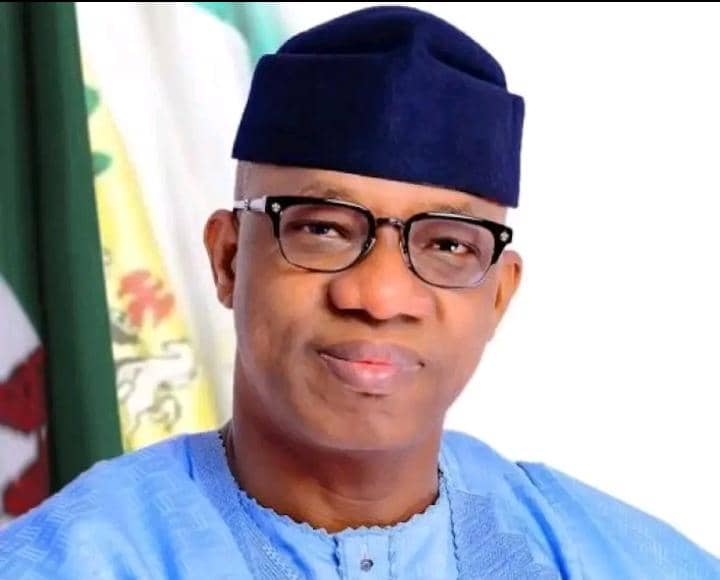
Governor Dapo Abiodun revealed this figure during the Treasury Board meeting for the 2026–2028 Medium-Term Expenditure Framework (MTEF) and Budget held in Abeokuta, the state capital. He emphasised that the state intends to leverage its industrial strengths and geographic positioning to meet the ambitious goal.
“We have set an ambitious target of generating N500 billion in Internally Generated Revenue (IGR) to finance the 2026 fiscal year, as part of our drive to build a stronger and more self-sustaining Ogun State,” the governor said. Looking further ahead, the government’s longer-term objective is to increase annual IGR to N750 billion by 2027, coinciding with the end of Abiodun’s tenure.
Ogun’s strategic advantage lies in its proximity to Lagos and its vast landmass of over 16,000 sq km. The governor stressed, “Ogun must leverage its proximity to Lagos and its vast landmass to achieve this target. Our comparative advantage must be fully harnessed to provide what Lagos cannot offer. Innovation, efficiency, and accountability will be our guiding principles as we strengthen Ogun’s economic base.”
To realise the N500 billion target, the state government has directed the Ogun State Internal Revenue Service (OGIRS) to produce at least N250 billion. In addition, other agencies, including the Ogun Property Investment Corporation (OPIC), the Bureau of Lands, the Ministry of Education, Science & Technology, and the Ministry of Housing, are mandated to significantly contribute.
All Ministries, Departments and Agencies (MDAs) have been instructed to develop “bold, creative, and ambitious” revenue plans tailored to their capacities. The 2026 budget cycle is expected to revolve around innovation-driven governance and fiscal discipline, with the aim of positioning Ogun as a leading sub-national economy in Nigeria.
Beyond raising revenue, the government is also prioritising infrastructure and urban renewal. One of its first major projects is the regeneration of the Kara-Isheri corridor, one of the busiest gateways into the state. “In the same spirit of transformation, we are addressing the urban renewal of Kara, near Isheri, to give that corridor a new look befitting the Gateway State,” the governor said. A specially established inter-ministerial committee will oversee enumeration, compensation and relocation efforts to ensure the redevelopment is both inclusive and humane.
Governor Abiodun reaffirmed his administration’s commitment to building a prosperous, modern Ogun State, one that reflects the ambition, discipline, and resilience of its people.
Boosting its IGR to N500 billion could reduce Ogun State’s reliance on federal transfers, allowing more resources for infrastructure and industrial growth. If successful, this strengthens fiscal autonomy, attracts private investment and enhances regional competitiveness, potentially making the state a key driver of Nigeria’s manufacturing-led economic expansion.