
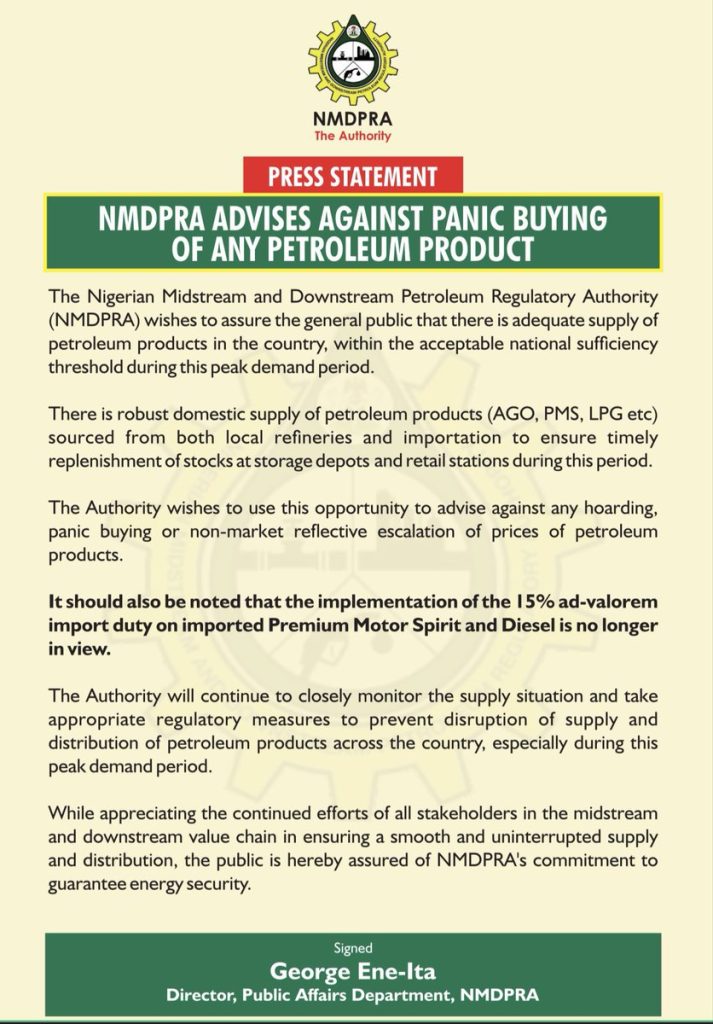
The Nigerian Midstream and Downstream Petroleum Regulatory Authority (NMDPRA) has moved to stabilize the nation’s energy sector, formally declaring that the controversial 15% ad-valorem import duty on imported Premium Motor Spirit (PMS) and Diesel is no longer in view for implementation.
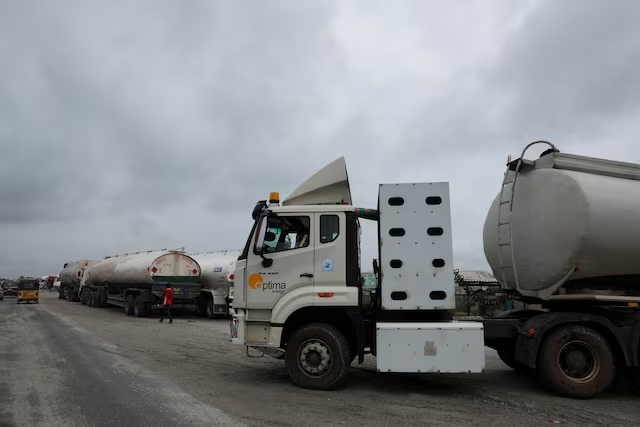
The NMDPRA issued a strong advisory against panic buying or hoarding of petroleum products, assuring the public of an adequate supply to meet the acceptable national sufficiency threshold during the current peak demand period. The regulatory body confirmed that the supply chain remains robust, sourced from a combination of both local refineries and sustained importation efforts, ensuring timely replenishment of stocks at both storage depots and retail stations across the country.
NMDPRA Director of Public Affairs, George Ene-Ita, who signed the press statement, specifically warned against any form of non-market reflective escalation of prices by marketers, asserting that the Authority would continue to closely monitor the supply situation and take appropriate regulatory measures to prevent any disruption in the distribution of petroleum products. The assurance comes amidst perennial fears of scarcity, especially during periods of heightened consumption.
Reversal of Controversial Duty Policy
The decision to declare the 15% ad-valorem duty “no longer in view” marks a significant policy adjustment. The import duty had been approved earlier by President Bola Tinubu, a move that ignited widespread debate among energy sector stakeholders and analysts.
The policy was originally framed by the Federal Inland Revenue Service (FIRS) as a measure designed to foster local refining and enhance energy security. The rationale was that by slightly elevating the landed cost of imported fuel, the government would create a vital pricing advantage for domestically refined products, thereby aligning import costs with domestic realities. Speaking on the initial approval, proponents within the administration described the duty as “corrective, not revenue-driven,” intending to support the long-term industrial goal of import substitution and foreign exchange conservation.
However, the policy faced immediate and sharp opposition from critics who argued that its implementation would place an undue burden on consumers already grappling with high post-subsidy pump prices.
Divergent Voices on Policy Impact
The NMDPRA’s latest directive effectively stalls a measure that experts warned could have pushed fuel prices higher by approximately ₦99 per litre, raising fears of spiraling inflation.
One voice, reflecting the government’s initial supportive stance, emphasized the need for a resilient refining base. This school of thought accepted the measure as a necessary protectionist action aligning with the administration’s economic reforms post-subsidy removal. They viewed it as a mechanism to signal governmental support for domestic value addition and bolster the economics of local refining operations.
Conversely, a strong opposing voice highlighted the inherent risks of implementing the duty while state-owned refineries remained non-operational. Critics claimed the policy’s timing and structure “risks entrenching a near-monopoly position” for dominant private players, such as the Dangote refinery, which currently handles the majority of the nation’s local refining output. The concern was that, without essential safeguards like transparent pricing mechanisms and genuine competition, this policy could evolve into a “structural distortion,” potentially replacing the former subsidy regime with a new dependency defined by market concentration and diminished consumer welfare.
By declaring the duty non-implemented, the NMDPRA appears to have heeded the calls to prioritize stability and affordability, especially as the nation navigates currency volatility and distribution challenges. The Authority’s commitment remains focused on maintaining smooth supply and distribution channels to guarantee energy security throughout the demand period.