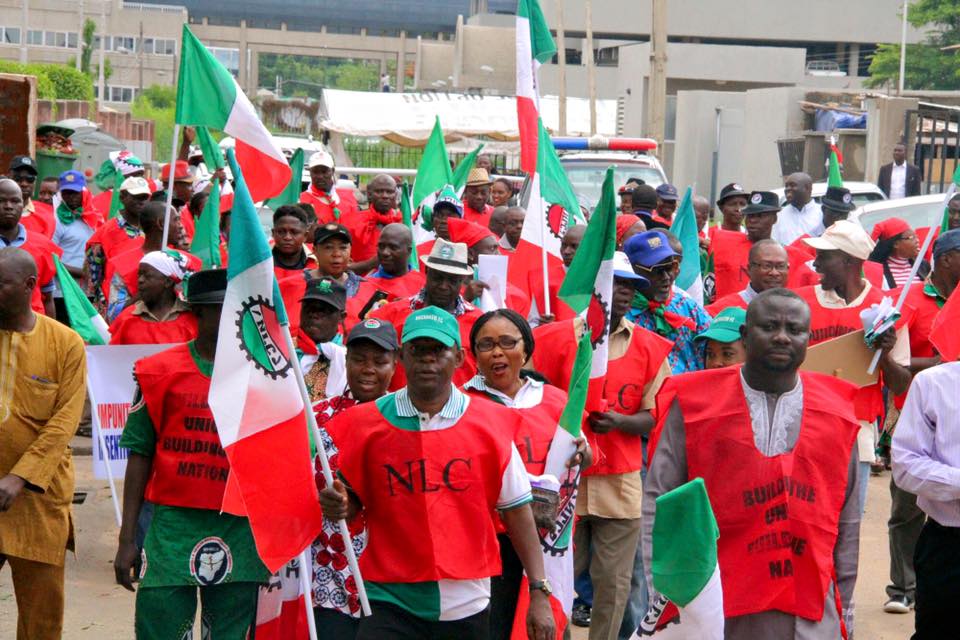

The Nigeria Labour Congress (NLC) staged a nationwide protest on Wednesday to draw attention to the escalating insecurity across Nigeria, but the demonstration in Abuja, the nation’s capital, witnessed a notably low turnout.
Despite the gravity of the issues raised—ranging from rampant banditry to the kidnapping of workers—the mobilization in Abuja did not match the scale of previous labor demonstrations. Protesters convened at the NLC secretariat and marched through the city under the watchful eyes of security operatives, including personnel from the Nigeria Police Force, the Department of State Services (DSS), and the Nigeria Security and Civil Defence Corps (NSCDC).
Joe Ajaero, the President of the NLC, led the charge, emphasizing that the protest was a necessary intervention to awaken the federal government to its responsibilities. He argued that the prevailing insecurity is not only a threat to lives but also a significant economic saboteur, driving away potential investors and crippling local businesses.
“Insecurity is affecting even investors coming into this country,” Ajaero stated during the demonstration. He highlighted the personal toll on the workforce, noting that workers and their children have increasingly become victims of kidnapping for ransom. “The children who are kidnapped are the children of workers. Unless the government is interested in giving us what is called an insecurity allowance… most of the workers kidnapped borrow money to pay for their ransom,” he added.
The protest proceeded despite a meeting held the previous day between labor leaders and President Bola Tinubu in Abuja. While that dialogue may have aimed to address labor grievances, the union resolved to continue with the planned action to publicly register their dissatisfaction with the security situation.
In contrast to the subdued atmosphere in Abuja, labor members in other states also took to the streets. In Lagos, protesters marched from Ikeja to the Government House in Alausa, while similar demonstrations were reported in Rivers and Taraba states, where workers demanded decisive action against banditry rather than mere rhetoric.
The NLC president reiterated that criminal elements are eroding the nation’s value system. He called for a collective rejection of the “culture of banditry,” urging the government to strengthen its security apparatus to ensure that such abnormalities do not continue to define the Nigerian experience. The low turnout in the capital, however, suggests a complex public mood, potentially influenced by protest fatigue or the heavy security cordon deployed around the city’s key administrative zones.