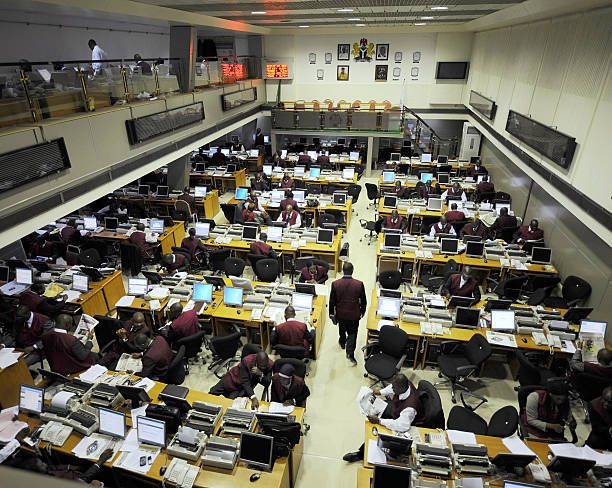

Nigeria’s return to the global investment stage is beginning to feel less like a distant promise and more like a cautious revival. After a period of uncertainty, the country’s reclassification as a Frontier Market is not just a technical upgrade, it is reshaping how investors see the economy and how the market responds in real time.
At its core, the shift signals a renewed sense of credibility. Economist Mr. Adedayo Sekoni explains that the reclassification has already lifted market sentiment, sending a strong message to global investors that Nigeria is improving in transparency and accessibility. This renewed perception is proving powerful. Foreign participation is gradually returning, liquidity is improving, and local investors are responding with renewed confidence. In many ways, the psychological boost alone has been enough to trigger increased activity and stronger valuations across major sectors.
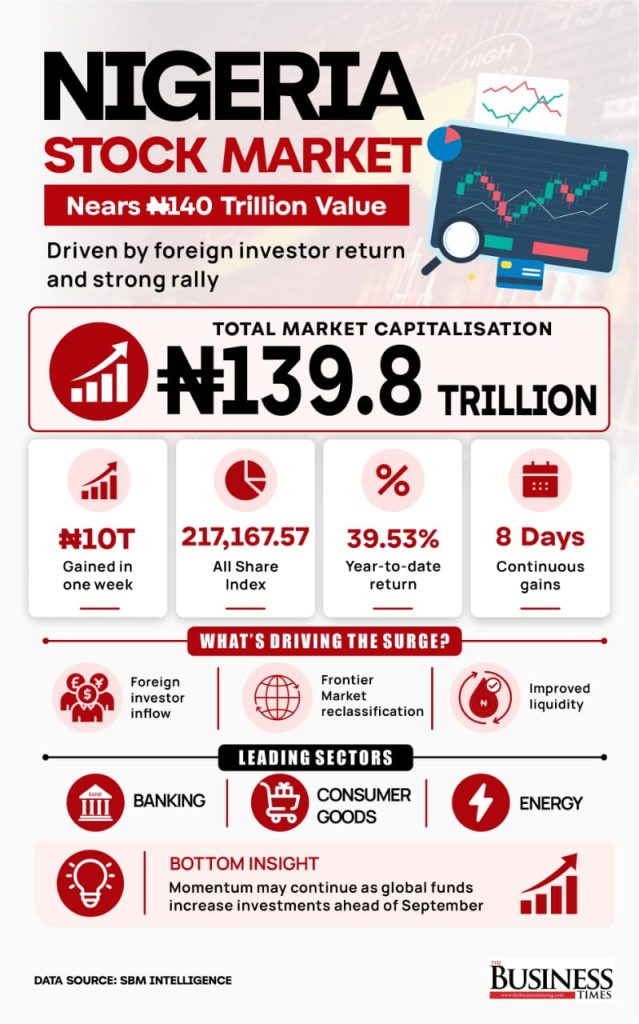
This growing optimism is reflected in the rapid surge in market value. Within a short period, the Nigerian stock market added about ₦10 trillion, a jump Sekoni attributes to a mix of renewed foreign inflows and strong demand for fundamentally sound stocks. Banking reforms, improved corporate earnings, and attractive valuations have made equities more appealing. At the same time, limited alternative investment options have pushed domestic investors toward the stock market, creating a powerful combination of demand and positive sentiment that has fueled a sharp rally.
The sectors attracting the most attention are not surprising. According to Sekoni, foreign investors are particularly drawn to banking and consumer goods. These sectors offer scale, liquidity, and relatively stable returns, qualities that make them easier to understand and assess. Nigerian banks, for instance, are benefiting from higher interest rates and recent currency reforms, while consumer goods companies reflect steady, population-driven demand. For international investors testing the waters, these industries serve as familiar and relatively safer entry points.
Behind this renewed momentum is a broader structural story. Nigeria’s reclassification by FTSE Russell follows a detailed evaluation process involving its Index Governance Board, advisory committees, and feedback from institutional investors. The decision reflects measurable progress, particularly in the evolution of the Nigerian Exchange Group and its trading systems. Over time, upgrades in trading infrastructure, settlement processes, and disclosure standards have helped create a more efficient and transparent market environment.
These improvements are backed by the FTSE Quality of Markets framework, where Nigeria achieved “Pass” ratings across key pillars such as regulatory oversight, capital repatriation, brokerage competitiveness, tax structure, and settlement efficiency. The adoption of a T+2 settlement cycle aligns Nigeria with global standards, reducing risk and improving liquidity. For investors, these are not abstract metrics, they directly influence how easily capital can move in and out of the market.
Still, progress comes with conditions. The September 2026 implementation of the Frontier Market status is expected to deepen activity further, especially if it brings clearer policy direction and easier access for foreign investors. Sekoni notes that structured inflows from funds tracking Frontier Market indices could follow. However, he also cautions that any uncertainty around execution or policy consistency could trigger short-term volatility, as global investors tend to react quickly to policy signals.
This highlights a broader reality: the current growth trajectory, while promising, is not guaranteed to be smooth. Inflation, currency instability, and policy uncertainty remain significant risks. Sekoni believes the rally can continue if corporate earnings remain strong and reforms are sustained. But any negative shocks, particularly around foreign exchange liquidity, could slow momentum. In other words, the market’s future will depend heavily on how well Nigeria manages its macroeconomic challenges.
Some of those challenges are already well known. Despite improvements, concerns remain around foreign exchange liquidity, transaction costs, and the absence of a robust derivatives market for risk hedging. While custody and clearing systems have improved, they still require further refinement to meet the expectations of large institutional investors. Addressing these gaps will require coordinated efforts across regulators, monetary authorities, and private sector players.
For Nigeria to fully capitalize on its renewed status, consistency will be key. Sekoni emphasizes that attracting and retaining foreign investors goes beyond classification. It requires stable policies, improved FX liquidity, and stronger market transparency. Ease of capital entry and exit remains critical, alongside regulatory strength and investor protection. Equally important is clear and consistent communication from policymakers, which helps build trust and reduce the uncertainty that often discourages long-term investment.
Industry leaders echo this sentiment. The leadership of the Nigerian Exchange Group has described the reclassification as a result of sustained collaboration across the capital market ecosystem, emphasizing continued commitment to strengthening infrastructure, improving transparency, and expanding investor access.
The Frontier Market designation also carries practical benefits. Inclusion in global indices increases Nigeria’s visibility, potentially attracting both passive and active investment flows. Yet, as Sekoni and others suggest, this is not a guarantee of sustained capital. It is an opportunity, one that must be backed by credible execution.
Ultimately, Nigeria’s return to Frontier Market status is both a validation of progress and a test of endurance. It restores a level of global confidence, reopens channels to international capital, and positions the country for renewed investor interest. But it also raises expectations.
The real challenge lies ahead: turning this renewed attention into lasting economic value.