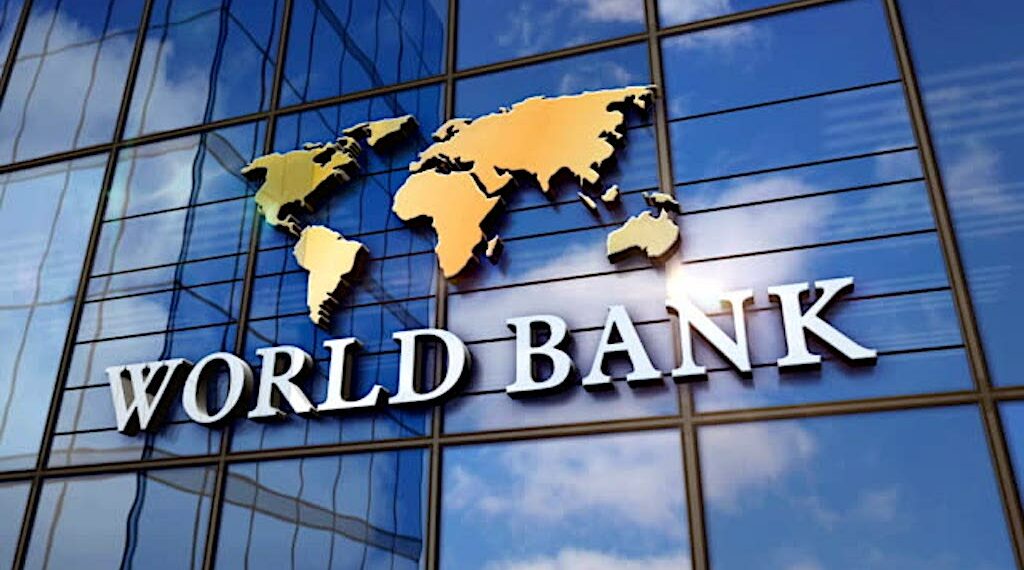

Nigeria’s outstanding debt to the World Bank surged by $2.08 billion over the course of 2025, reaching a new high, according to a report tracking the country’s external borrowing as of March 2026. The increase underscores mounting fiscal pressure on Africa’s largest economy as it struggles to balance infrastructure financing needs with shrinking fiscal headroom.
Data obtained from the World Bank’s quarterly external debt database show that total exposure to the lender’s International Development Association (IDA) and International Bank for Reconstruction and Development (IBRD), the institution’s concessional and market-rate lending arms, respectively rose to approximately $16.7 billion by year-end 2025, up from $14.6 billion at the start of the period.
The $2.08 billion jump reflects a combination of new disbursements for ongoing projects in power, transportation, and pandemic-resilience programs, as well as the capitalisation of accrued interest on existing facilities. Officials familiar with the matter said nearly 40% of the increase stemmed from exchange-rate adjustments following the naira’s continued managed float, which has depreciated roughly 25% against the dollar since mid-2024.
For the Nigerian authorities, the trajectory poses a delicate balancing act. Finance Minister Wale Edun has repeatedly signalled that the government prefers multilateral funding over commercial Eurobonds, which carry double-digit coupon rates, but the rising stock of World Bank debt still adds to overall public liabilities. Total public debt stood at ₦121.7 trillion ($87.3 billion) as of December 2025, according to the Debt Management Office, with external debt constituting about 38%.
Analysts warn that while IDA loans remain relatively cheap, annual interest rates of 1.25% to 1.75% servicing costs are compounding as the stock grows. “Nigeria is not in an immediate distress zone, but the pace of accumulation is concerning,” said Razia Khan, chief economist for Africa at Standard Chartered. “Each new dollar of borrowing requires greater naira resources to repay, squeezing domestic spending on health and education.”
The March 2026 report also notes that total World Bank commitments to Nigeria are expected to rise further this year, with four new projects under negotiation in the digital infrastructure and agricultural sectors. However, disbursements have slowed due to delays in meeting co-financing conditions, including domestic counterpart funding.
Pressure is building from the International Monetary Fund, which in its latest Article IV consultation recommended that Nigeria accelerate non-oil revenue mobilisation to reduce reliance on any form of external debt. Without fiscal consolidation, analysts say Abuja risks a cycle where an ever-larger share of the budget goes simply to service past obligations a pattern seen across several sub-Saharan African economies in recent years.
The central bank, for its part, has signalled no change to its gradualist foreign exchange policy. Governor Yemi Cardoso reiterated in February that “access to multilateral buffers remains strategic,” but market participants increasingly view the debt trajectory as a quiet test of Nigeria’s credibility ahead of potential Eurobond refinancing needs in 2027.
As of this month, the World Bank had not responded to a request for comment on Nigeria’s exposure. The African Development Bank and Islamic Development Bank also hold significant Nigerian obligations, though the World Bank remains the largest single multilateral creditor.