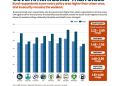
Nigeria’s headline inflation eased for a fifth consecutive month in August, falling to 20.12% year-on-year from 21.88% in July, according to data released by the National Bureau of Statistics (NBS) on Monday. The slowdown, while welcome, comes with important caveats: a significant part of the decline is linked to recent changes in how inflation is calculated.
The NBS in 2024 rebased the Consumer Price Index (CPI), shifting the reference period for prices to 2024 and updating the weighting of goods and services based on 2023 consumption patterns. This replaced the long-standing base year of 2009, which had grown increasingly outdated. Rebasing is a routine statistical exercise that helps reflect current spending habits more accurately, but it can also make historical comparisons appear more favourable.
On a month-on-month basis, inflation grew by 0.74% in August, compared with 1.99% in July. The CPI itself rose modestly to 126.8 in August from 125.9 in July, underlining that prices are still rising, though at a slower pace.
Food inflation key to households
Food inflation, the most critical component for ordinary Nigerians, slowed markedly. It stood at 21.87% in August 2025, compared with 37.52% in August 2024. Monthly food inflation also eased to 1.65%, down from 3.12% in July. The NBS has pointed to the rebasing as a technical factor in the sharp decline, but relatively good harvest conditions in some regions have also helped.
Despite the statistical easing, market prices for staples such as rice, beans and vegetable oil remain high. Traders in Lagos and Abuja say consumers continue to cut back on purchases, with many families forced to switch to cheaper substitutes.
Policy implications
The easing of inflation provides some breathing space, but it does not fundamentally alter Nigeria’s policy dilemma. The Central Bank has already tightened interest rates in recent years to contain price growth and shore up the naira, and the slower headline rate may reduce pressure for further immediate hikes. However, talk of rate cuts remains premature. With inflation still at 20 per cent, far above the single-digit levels long considered desirable for stability, monetary policy is unlikely to shift dramatically in the near term.
What remains clear is that structural pressures continue to drive prices. High transport and energy costs feed directly into consumer spending, while insecurity in key farming regions continues to disrupt food supply. Added to this are exchange rate fluctuations and exposure to global commodity markets, all of which mean that any relief in the inflation figures must be interpreted cautiously.
Outlook
The government has repeatedly emphasised boosting food production and supporting smallholder farmers as central to tackling inflation, aiming to reduce dependence on imports and stabilise prices. Yet the scale of the challenge remains significant. Fiscal capacity is constrained by volatile oil revenues, rising debt service obligations, and limited foreign reserves, leaving little room for large-scale intervention.
For households, the statistical easing of inflation does not necessarily translate into lower costs of living. Food and transport prices remain elevated, and wage growth has lagged behind. The gap between official figures and daily market realities underlines how inflation, even when slowing, continues to erode purchasing power and strain livelihoods.