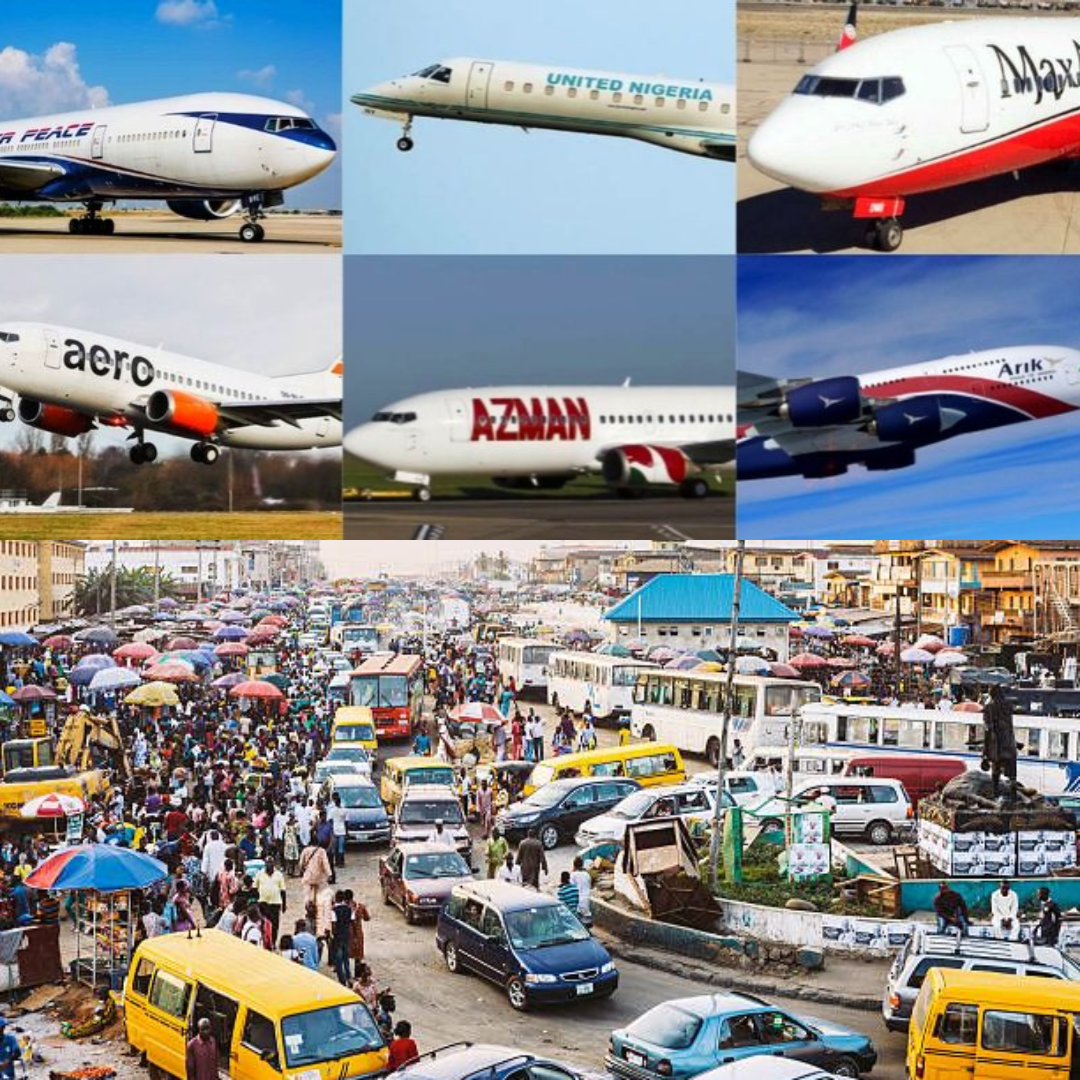

I flew three times last week. Lagos to Asaba, Asaba to Abuja, Abuja to Lagos. Only one departed on schedule: XE Jet, Abuja to Lagos, on Wednesday, 23 September. The other two were late, and one was late in the way Nigerian air travel specialises in. On 18 September, my 1:30pm United Nigeria flight from Lagos to Asaba finally left at around 6pm. Passengers were angry, and the anger had a specific shape. They accused the airline of quietly merging two flights because passenger numbers were thin. Whether that happened or not, the suspicion tells you what the travelling public has learned to expect. I sued Aero Contractors in 2018 over a delayed flight. The case went nowhere, and I eventually abandoned it. That is the system: you can sue, but you cannot win, and you cannot afford to keep trying.
The scene at Nnamdi Azikiwe International Airport that occurred on September 26 showed where that leads. Passengers booked on an 8pm Air Peace flight to Lagos, already delayed for hours, learned late that evening the flight was cancelled. They blockaded the boarding gate and adopted a “nobody leaves” policy. If they were not flying, nobody else would. Passengers on other airlines found themselves trapped in the concourse. Air Peace blamed Jet A-1 scarcity and the sunset restriction at Maiduguri. Neither constraint is new, and both are real. An airline that schedules a route into a curfew airport on a day when fuel supply is strained, and then expresses surprise when it misses the window, is describing a decision it made and lost.
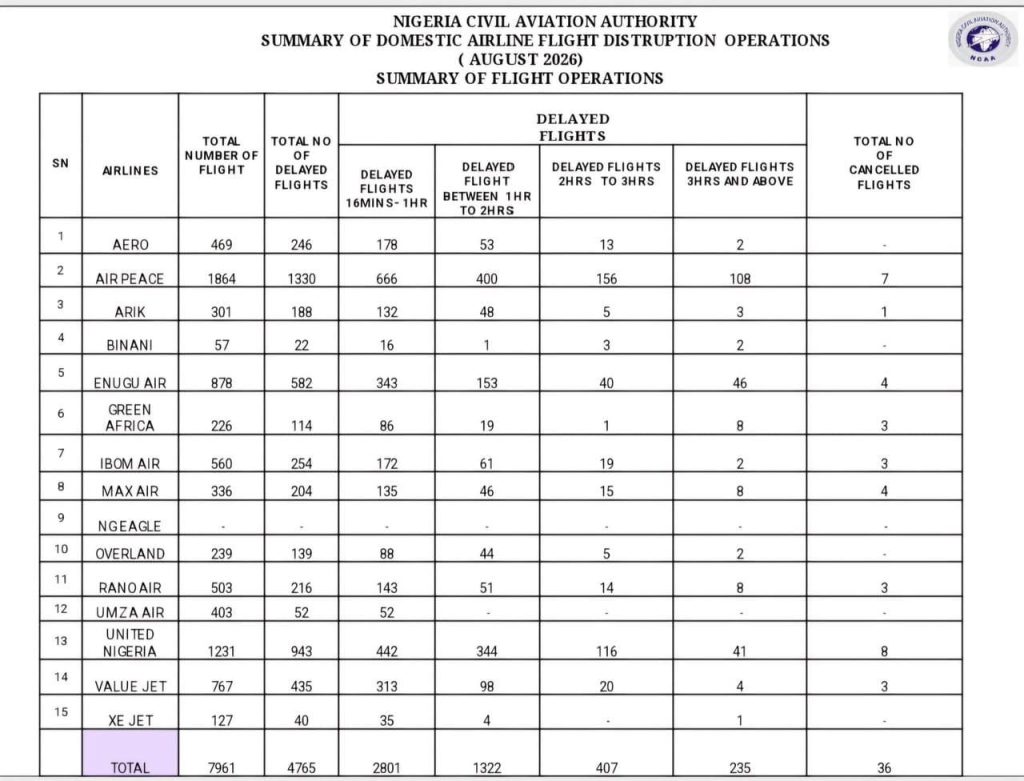
The Nigerian Civil Aviation Authority published the arithmetic in August. Of 7,961 domestic flights, 4,765 were delayed. That is 59.9 percent! Only 36 were cancelled, suggesting airlines prefer to hold aircraft on the ground rather than scrub the schedule. Air Peace delayed 1,330 of 1,864 flights. United Nigeria delayed 943 of 1,231 flights, a rate of 76.6 percent. Nationally, 642 flights were delayed by two hours or more. But the lackadaisical treatment is not restricted to air travel.
On Tuesday, 15 September, I left a meeting in Anthony Village at 4:15pm with the fuel reserve light already on, so I bought 30 litres. By the time I parked in Magodo, the reserve light was on again. I got home two minutes after midnight. As I wrote that night, I may as well have set fire to the money. SBM Intelligence has been documenting this for years. Our 2020 study, Transportation in Lagos, tracked commuter routes out of Ikeja across major corridors. Ikeja to CMS took 64 minutes outbound and 65 minutes return. Ikeja to Ikorodu took 80 minutes outbound. Ikeja to Badagry took six hours 39 minutes outbound and four hours 28 minutes back. Ikeja to Epe, four hours 28 minutes outbound. Even the water route from Ebute to Falomo and CMS took an hour and 17 minutes outbound and two hours and a minute return. Lagos has under 5,000 kilometres of paved roads, and the waterways authority recorded only about 1.2 million monthly water commuters, a fraction of total transit volume, hampered by neglected jetties and federal-state jurisdictional friction.
The report benchmarked per capita economic costs against Cairo, New Delhi and Dhaka, and showed how long commutes force workers into weekday boarding near business districts. Our 2025 video essay, Nigeria’s roads: A crisis in infrastructure, traced the national picture. Agricultural corridors suffer when food transit stretches from hours into days over cratered highways, spoiling perishable goods and compounding food inflation. We surveyed interstate truck and bus operators and found frequent tyre punctures, ruined suspension systems and mechanical breakdowns. The secondary consequence is that vehicles stranded on isolated corridors become vulnerable to kidnapping and highway robbery. We highlighted the Bauchi-Kano corridor, the Lagos-Sagamu expressway, and arterial gridlock in Lagos and Port Harcourt. Elevated vehicle operating costs, accelerated wear, and excess fuel consumption from stop-and-go driving over potholes are passed down the retail chain. The Danne Institute puts Lagos traffic congestion at roughly ₦4 trillion annually in lost productivity, wasted fuel and missed business opportunities, about four per cent of GDP.
The average commuter spends 2.21 hours in traffic daily, and the city loses about 14.12 million productive hours each day. Aviation contributes between $1.7 billion and $2.5 billion to GDP annually and supports over 216,000 jobs. But the transport sector as a whole contributes less than three percent of GDP, and poor transport infrastructure adds an estimated 30 to 40 percent to the cost of doing business. The Chartered Institute of Transport Administration has warned that the $1 trillion economy target by 2030 is impossible without fixing this. They are being polite. It is not difficult; it is impossible. The evidence from elsewhere is not ambiguous.
China’s high-speed rail network has pulled inland cities into the national economy, with corridor cities growing 1.2 percentage points faster than the national average. Every 100 million yuan invested has generated more than 200 million yuan in surrounding GDP. The Jakarta-Bandung railway cut a three-hour journey to 46 minutes. Indonesia’s Brantas Tarum Barat project found that every rupiah invested generated 2.59 rupiahs in economic value. The ECOWAS Bank for Investment and Development expects the Bauchi roads and bridges programme to return 14 to 16 percent annually and create 7,000 jobs.Nigeria has spent over $200 billion on infrastructure since 2000 and remains a country where a businessman cannot move between two cities in a day without losing the day.
The transport sector is the engine of every modern economy. Ours is idling on the road and stranded at the gate, and until that changes, the growth we keep promising ourselves will remain a press release.
About the Author
Cheta Nwanze is CEO at SBM Intelligence.