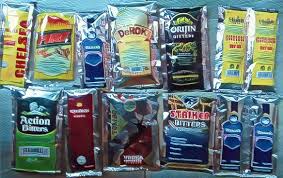

The National Agency for Food and Drug Administration and Control (NAFDAC) has confirmed that the total ban on the production and sale of alcoholic beverages in sachets and small PET bottles below 200ml will be strictly enforced starting January 2026.
NAFDAC Director-General, Prof. Mojisola Adeyeye, made the announcement at a press conference in Abuja, reaffirming the agency’s unwavering commitment to public health. She stated that the responsibility to safeguard the nation’s wellbeing remains sacrosanct. The enforcement action will ensure full compliance with the December 2025 phase-out deadline, which was agreed upon to allow manufacturers to reconfigure facilities and exhaust existing stock.
The move, she explained, is fully aligned with a recent Senate directive and is supported by the Federal Ministry of Health and Social Welfare. Prof. Adeyeye stressed that the measure underscores NAFDAC’s statutory duty to shield vulnerable groups, particularly children and young adults, from the harmful consequences of excessive alcohol consumption.
“This ban is not punitive but protective,” Prof. Adeyeye said. “It aims to secure the health and future of our children and youth, based on scientific evidence and global public health standards.” She warned that the proliferation of high-alcohol-content beverages in small, cheap containers makes them affordable and concealable, contributing to addiction, misuse, and reckless behaviour among minors and commercial drivers. This problem has been linked to severe social vices, including increased domestic violence, road crashes, and school dropouts, which destabilise families and communities nationwide.
While the ban on sachet and small bottle alcohol is primarily a public health measure, it has significant economic implications that informed the five-year phase-out period. The production of sachet and small bottle alcohol currently provides employment and tax revenue; however, NAFDAC argues that the societal costs associated with misuse far outweigh these short-term economic gains. The negative economic effects of widespread, cheap alcohol consumption include a significant loss of human capital: increased addiction and premature deaths due to excessive alcohol use reduce the productive workforce, leading directly to lower national output and decreased economic growth. There is also a substantial healthcare burden: alcohol-related diseases, injuries, and mental health issues place a preventable and immense financial strain on the public healthcare system, diverting resources that could be used for other critical health challenges. Furthermore, pervasive misuse among commercial drivers and workers contributes to road accidents, reduced efficiency, and absenteeism, resulting in significant productivity loss that directly impacts logistics and overall business activity. Prof. Adeyeye firmly stated that NAFDAC “could not continue to compromise Nigerians’ wellbeing for short-term economic gains,” emphasising that a nation’s true wealth lies in the health of its people. The ban is rooted in a December 2018 Memorandum of Understanding (MoU) signed by NAFDAC, the Federal Ministry of Health, and the Federal Competition and Consumer Protection Commission (FCCPC) with industry groups, including the Association of Food, Beverage and Tobacco Employers (AFBTE) and the Distillers and Blenders Association of Nigeria (DIBAN). While the initial deadline was January 2024, it was extended to December 2025. Prof. Adeyeye clarified that only spirit drinks packaged in sachets and small PET or glass bottles below 200ml are affected. She urged all stakeholders—manufacturers, distributors, and retailers to comply fully, warning that no further extension would be granted. NAFDAC plans to collaborate with relevant agencies to intensify national sensitisation campaigns on the social and health risks linked to alcohol misuse, ensuring that only safe, wholesome, and properly regulated products are available to Nigerians.