
The National Agricultural Land Development Authority (NALDA) has inked a Memorandum of Understanding (MoU) with Agbeyewa Farms Limited, pledging a joint-venture on land development and cassava cultivation at the Renewed Hope Mega Farm Estate in Irele, Ekiti State.
At the signing ceremony, NALDA’s Executive Secretary, Cornelius Adebayo, said the partnership is designed to “accelerate cassava production, enhance food security, and strengthen the country’s position in the global cassava value chain.” He emphasised that while Nigeria produces roughly 65 million metric tonnes of cassava annually, the country’s take from the $3.65 billion global cassava trade has been marginal, barely around $1 million.
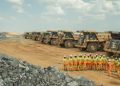
Under the agreement, NALDA will clear 5,000 hectares of land for Agbeyewa, enhancing the farm’s existing 3,000-hectare operation in Ekiti, with parallel projects slated for Delta and Kwara states. As Adebayo put it: “Government cannot run enterprises. Our job is to provide the enabling environment for private investment to thrive.” Meanwhile Agbeyewa’s Managing Director/CEO, Oscar Seyi Ayeleso, described the collaboration as “a dream come true,” pointing out that the farm had produced yields of 35 tonnes per hectare last year and is targeting 40 tonnes in the current cycle.
The model emphasises large-scale farming, in-grower systems, and farm-estate clusters, strategies aimed at boosting yield and enhancing Nigeria’s export competitiveness in the cassava sector. Notably, Agbeyewa has already created over 2,300 jobs, including 444 managerial roles and 1,100 farmers, while engaging National Youth Service Corps (NYSC) members as trainees.
Technical Adviser to the NALDA Executive Secretary, Olusegun Owolabi, described the MoU as a “strategic partnership aimed at resource sharing, innovation, and risk-management,” positioning it as a blueprint for future cluster-projects across other agricultural domains like poultry, livestock and greenhouse estates.
By scaling production and targeting value-addition to derive derivatives such as starch, sorbitol and flour, the partnership can help Nigeria shift from raw output to higher-value exports, potentially capturing a much larger share of the global $3.65 billion cassava market and boosting both rural incomes and foreign earnings.