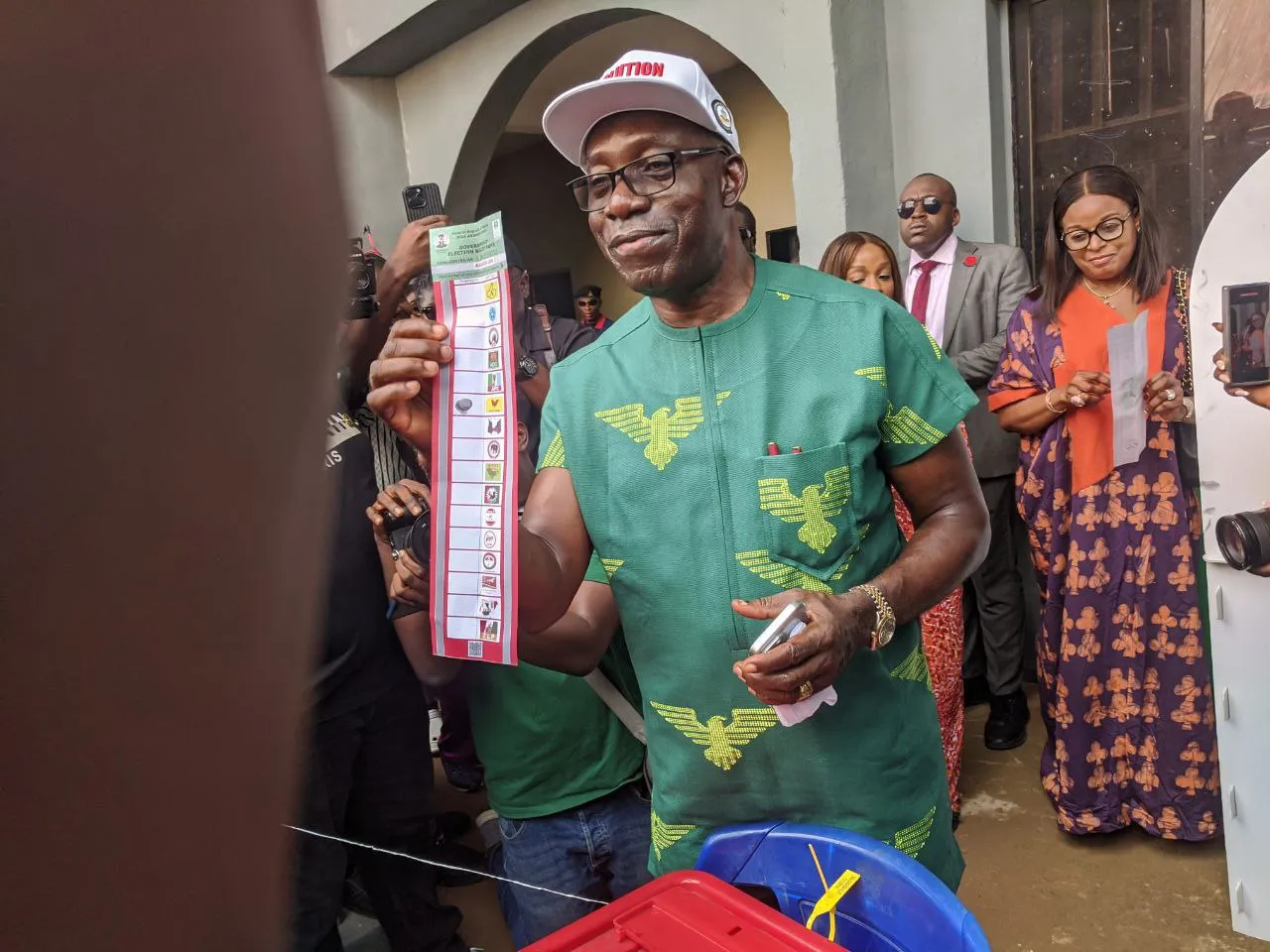

Charles Soludo of the All Progressives Grand Alliance (APGA) has been re-elected as governor of Anambra State, achieving a comprehensive victory across all 21 local government areas in Saturday’s off-cycle election. Announced in Awka on Sunday by returning officer Edoma Omoregie, Soludo received 422,664 votes, comfortably outpacing his closest rival, Nicholas Ukachukwu of the All Progressives Congress (APC), who garnered 99,445 votes. Paul Chukwuma of the Young Progressive Party (YPP) followed with 37,753 votes, while George Moghalu of the Labour Party secured 10,576 votes. The election was conducted across 5,718 polling units.
While the result underscores APGA’s entrenched political dominance in the state, the election itself was beset by logistical challenges. Delays in voting, glitches in the Bimodal Voter Accreditation System (BVAS), and widespread allegations of vote buying were reported. Candidates acknowledged receiving reports of vote trading in various constituencies, though they attributed these to the activities of rival parties. Despite more than 2.8 million registered voters in Anambra, turnout remained relatively low, with only 598,229 voters accredited and 584,054 valid votes recorded.
Soludo’s re-election carries significant implications for Anambra’s economic trajectory. The state has long been considered one of Nigeria’s commercial hubs, with a vibrant trade sector, growing tech ecosystem, and substantial inflows from remittances. Continuity in leadership could offer stability for ongoing infrastructure projects, particularly in urban centres such as Awka and Onitsha, where investment in transport, housing, and power distribution remains critical. Investors and local businesses may find reassurance in the predictability of APGA’s governance, although the perception of electoral irregularities may temper confidence among more cautious stakeholders.
The low voter turnout reflects broader political disengagement, which may have economic consequences. Limited civic participation can affect the legitimacy of government policies, particularly those aimed at structural economic reforms or social service delivery. For instance, initiatives in agriculture, small and medium-sized enterprise development, and local manufacturing require public buy-in to achieve maximum impact. With only a fraction of registered voters actively participating, the government may face challenges in mobilising community support for development programmes.
From a fiscal perspective, the state government’s ability to generate revenue through taxation, licensing, and public-private partnerships will be closely monitored. Soludo’s administration has previously emphasised fiscal prudence and investment in key sectors, including education, health, and technology. A second term offers the opportunity to deepen these strategies, potentially leveraging Anambra’s strategic location in southeastern Nigeria to attract domestic and foreign investment. However, ongoing national economic pressures, including inflation, currency volatility, and energy supply constraints, may limit the pace of growth despite political stability at the state level.
Moreover, the election highlights the persistent challenges in Nigeria’s electoral processes. The reported BVAS malfunctions and logistical delays underline the need for continuous improvement in election management to enhance transparency and public confidence. Strengthening electoral integrity is not only a democratic imperative but also an economic one, as investors increasingly consider governance and institutional reliability in assessing market risks.
Soludo’s emphatic win is also likely to reinforce APGA’s dominance in local governance and political structures, potentially influencing policy continuity across key sectors. A cohesive political landscape can accelerate decision-making on urban planning, industrial development, and cross-border trade within the region. This, in turn, could positively impact employment, commercial activity, and infrastructure development, providing a buffer against some of the broader national economic uncertainties.
In conclusion, the Anambra governorship election has reaffirmed Charles Soludo’s leadership and APGA’s stronghold in the state. While challenges in electoral management and voter engagement persist, the result presents an opportunity for sustained policy implementation and economic development. How the administration navigates these opportunities amidst ongoing national economic pressures will determine the extent to which political continuity translates into tangible growth and prosperity for the people of Anambra.