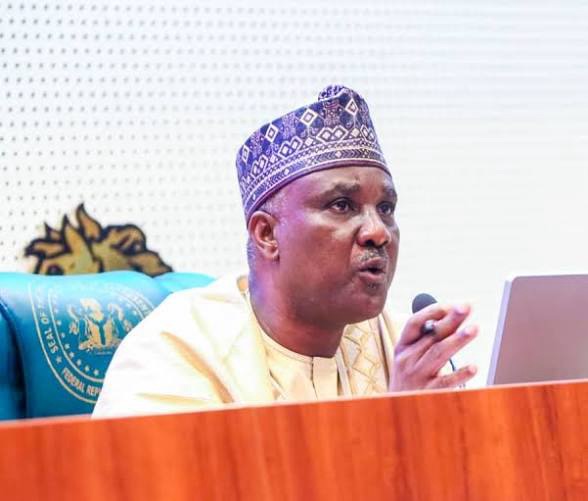

Nigeria’s ambition of becoming a $1 trillion economy will only be achievable if government decisions are guided by accurate, reliable, and timely data, Speaker of the House of Representatives, Hon. Abbas Tajudeen, has said.
Speaking during a public hearing on the Statistics Bill 2025 in Abuja on Monday, Abbas stressed that credible statistics are essential for national development and effective governance. The hearing was organised by the House Committee on National Planning and Economic Development.
According to the Speaker, no country can achieve sustainable growth without dependable data. He explained that governments rely on statistics to formulate policies, allocate resources, monitor projects, measure progress, and assess the impact of development programmes.
Abbas noted that the proposed Statistics Bill 2025 is designed to modernise Nigeria’s statistical system and make it more efficient, responsive, and relevant to current realities. He said the legislation would improve coordination among government agencies responsible for data collection and management while ensuring that official statistics are consistent and useful for decision-making.
The Speaker explained that the bill would help create a unified national data system capable of producing more detailed and frequent statistics. He added that this would reduce duplication of efforts, lower the cost of data collection, and lessen the burden on citizens and businesses that participate in surveys.
He further stated that the bill seeks to strengthen data quality assurance processes, encourage the use of digital technologies for data collection and dissemination, and provide sustainable funding for the National Bureau of Statistics (NBS).
According to Abbas, the proposed law aligns with global best practices and reflects the realities of a rapidly changing digital world where data has become one of the most valuable resources for economic planning and development.
Also speaking at the event, the Statistician-General of the Federation and Chief Executive Officer of the National Bureau of Statistics, Adeyemi Adeniran, expressed support for the bill, describing it as a major step toward strengthening Nigeria’s National Statistical System.
Adeniran said the legislation would improve the country’s ability to generate reliable and timely data needed for effective governance, economic planning, and national development.
He assured stakeholders that the NBS remains committed to working with relevant institutions and partners to ensure the successful implementation of the bill once it becomes law.
The Statistician-General pointed out that the current Statistics Act, enacted in 2007, had served Nigeria well over the years. However, he noted that the data landscape has changed significantly since then, making it necessary to update the legal framework governing official statistics.
He highlighted the growing importance of digital technologies, administrative databases, geospatial information systems, big data, machine learning, and artificial intelligence in modern data collection and analysis.
According to him, the Statistics Bill 2025 provides an opportunity to establish a stronger legal foundation for the production, coordination, and use of official statistics across the country.
Chairman of the House Committee on National Planning and Economic Development, Hon. Gboyega Isiaka, also emphasized the importance of reliable information in nation-building.
He said governments can only plan effectively when they have a clear understanding of the challenges and realities facing citizens. While acknowledging the achievements of the NBS under the existing law, Isiaka noted that a review had become necessary to address the demands of the 21st century, especially with the rise of artificial intelligence, machine learning, and big data technologies.
He expressed confidence that the proposed legislation would help position Nigeria’s statistical system to meet future development needs and support the country’s long-term economic goals.