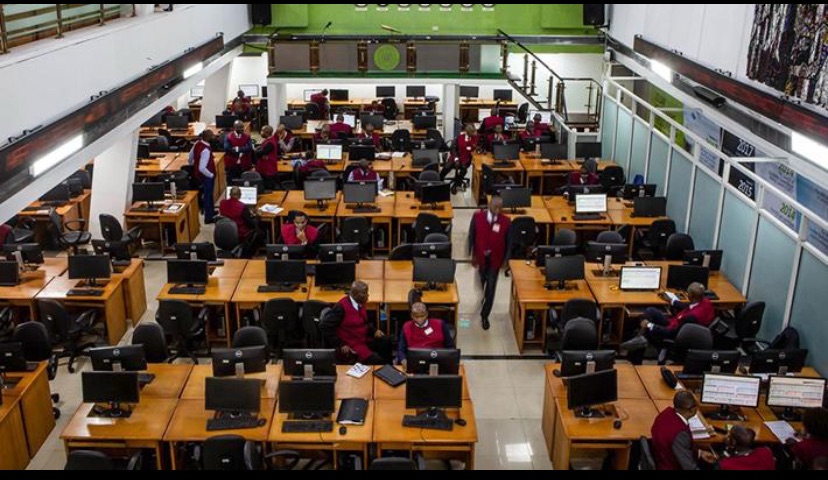

After several weeks of strong gains in May 2026, the Nigerian stock market experienced a slight decline last week as many investors began selling shares to secure profits from earlier price increases.
Market analysts explained that the selling pressure mainly affected major blue-chip and mid-sized companies, especially firms that had recently paid dividends to shareholders. Investors who had benefited from the rally decided to cash out their earnings, leading to a drop in stock prices across several sectors.
A review of trading activities on the Nigerian Exchange Limited (NGX) showed that some major companies recorded noticeable losses during the week. Shares of BUA Cement dropped by 3.5 percent, while GTCO declined by 1.2 percent. Dangote Sugar lost 4.4 percent, NASCON fell by 5.4 percent, and UACN declined by 5.0 percent.
As a result of these declines, the NGX All-Share Index (ASI), which measures overall market performance, slipped by 0.24 percent week-on-week. The index closed at 249,540.75 points compared to 250,339.92 points recorded in the previous week.
The market downturn also affected the total value of listed stocks. Market capitalisation, which represents the total value of all listed companies on the exchange, fell by more than N366 billion. It closed at N260.077 trillion at the end of the week.
Despite the decline, the market still maintained positive returns overall. Month-to-date returns slowed to 3.0 percent, while year-to-date returns stood at 60.4 percent, showing that the market has still performed strongly since the beginning of the year.
Trading activity also weakened significantly during the week. Total trading volume dropped by 50.2 percent, while the total value of traded shares declined by 56.6 percent compared to the previous week. This reflected reduced investor participation and cautious trading sentiment.
Sector performance was mixed across the market. The Insurance Index recorded a decline of 1.8 percent, while the Industrial Goods Index dropped by 1.2 percent. The Consumer Goods Index also fell by 0.8 percent. However, the Banking Index managed to rise slightly by 1.1 percent, while the Oil and Gas Index gained 0.1 percent.
Meanwhile, developments in the global oil market also influenced investor sentiment. Crude oil prices fell sharply after comments by former United States President Donald Trump suggested that negotiations involving Iran were nearing completion.
Analysts at InvestData Consulting Limited stated that although the drop in oil prices reduced fears of prolonged supply disruptions in the Middle East, investors remain cautious because of ongoing geopolitical tensions in the region. Concerns about possible disruptions around the Strait of Hormuz and global oil supply continue to affect energy markets worldwide.
The analysts added that movements in crude oil prices remain very important to Nigeria because they directly impact foreign exchange earnings, government revenue, and the country’s overall economic stability. Investors are therefore expected to keep monitoring oil prices, exchange rate movements, and monetary policy decisions in the coming weeks.
Experts at Cordros Capital also predicted that the stock market may remain relatively calm in the near future unless a major positive event boosts investor confidence. However, they noted that some investors may begin buying fundamentally strong stocks again as prices become more attractive after the recent pullback.