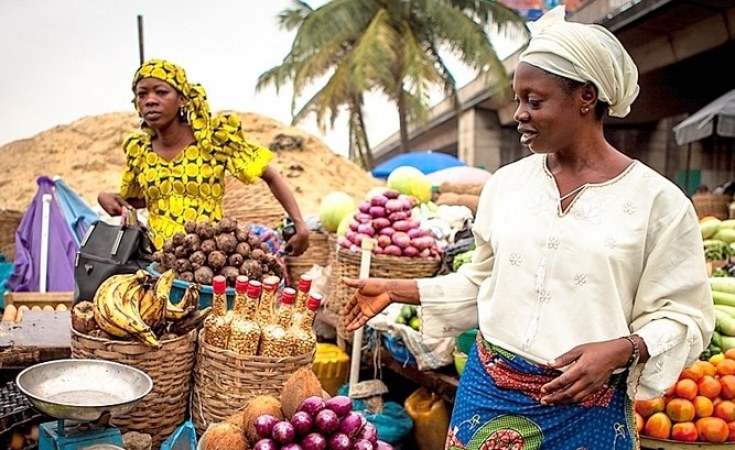

Across Nigeria’s markets and communities, millions of women entrepreneurs continue to finance and expand their businesses through informal savings groups, underscoring the growing role of community-based finance in bridging a longstanding gap in access to formal credit.
Nigeria has one of the world’s highest rates of female entrepreneurship. According to the International Finance Corporation (IFC), women own about 41% of the country’s micro businesses and around 30% of registered small and medium-sized enterprises (SMEs). Mastercard’s Empowerment for All report also found that 83% of Nigerian women either own a business or plan to start one, reflecting the country’s strong entrepreneurial culture.
Despite their significant contribution to economic activity, access to formal finance remains a major challenge. The IFC estimates that women-owned SMEs across Africa face an annual financing gap of about $42 billion, driven by barriers including limited collateral, shorter credit histories, high borrowing costs and stringent lending requirements.
Industry data suggest women borrowers generally perform well when they secure credit. According to Moniepoint’s analysis of its lending portfolio, women borrowers recorded loan default rates about 2.5 times lower than men, highlighting what many experts describe as a mismatch between lending risk perceptions and actual repayment performance.
To bridge the financing gap, many women continue to rely on traditional rotating savings and credit associations (ROSCAs), known as ajo in southwest Nigeria, esusu in parts of the south and southeast, and adashi in northern Nigeria. Members make regular contributions into a common fund, with each participant receiving the pooled savings in turn, providing working capital without the collateral and documentation often required by banks.
Financial technology firms are increasingly adapting these traditional savings models to promote financial inclusion. Companies such as Bankly have developed digital savings platforms that formalise informal thrift collections, helping users build financial records that can improve their access to formal financial services over time.
Development finance institutions are also expanding support for women-led businesses. The Development Bank of Nigeria (DBN), in partnership with Sterling One Foundation, recently launched the Women Investment Readiness Accelerator (WIRA), a programme aimed at providing business development support, mentorship and improved access to financing for women entrepreneurs.
Research suggests that closing the gender gap in economic participation could deliver substantial economic benefits. McKinsey Global Institute estimates that advancing gender equality could add as much as $316 billion to Africa’s gross domestic product under an accelerated growth scenario.
As Nigeria seeks to deepen financial inclusion and stimulate private-sector growth, improving access to affordable finance for women-owned businesses remains a key policy priority. Strengthening links between informal community finance, fintech innovation and the formal banking system could help unlock the growth potential of one of the country’s most entrepreneurial segments.