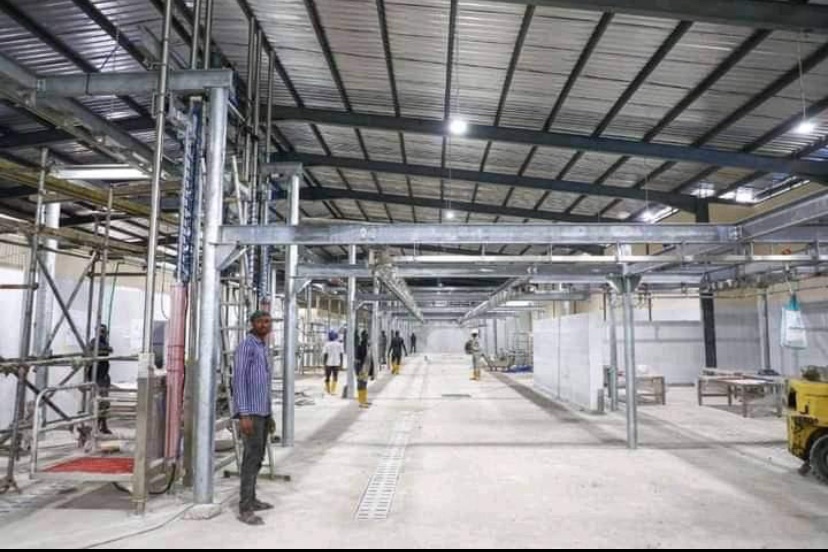

The Federal Government has officially started the construction of a modern abattoir in Jos, Plateau State, as part of efforts to transform Nigeria’s livestock industry and improve meat production standards across the country.
The project, which will have the capacity to process up to 500 bulls daily, is expected to play a major role in strengthening the livestock value chain, improving food safety, creating thousands of jobs, and increasing economic activities in the sector.
Speaking during the groundbreaking ceremony, the Minister of Livestock Development, Idi Mukhtar Maiha, described the project as a significant investment aimed at modernising meat processing in Nigeria. He explained that the facility would provide a hygienic and efficient environment for meat production while meeting international standards.
According to the minister, the new abattoir will help address challenges in the livestock sector by introducing modern processing methods and encouraging value addition. He noted that the facility is expected to create between 7,000 and 10,000 direct and indirect jobs once operational.
The employment opportunities will span several areas, including livestock farming, veterinary services, transportation, cold-chain logistics, meat processing, leather manufacturing, and marketing. This is expected to improve livelihoods and support economic growth within Plateau State and beyond.
Maiha further explained that the facility would function as an integrated livestock processing centre. Beyond meat production, it will also make use of animal by-products that are often wasted. Materials such as hides, skins, bones, blood, and fats will be converted into useful commercial products.
These by-products will be processed into leather goods, fertilisers, ingredients for animal feed, and biogas, creating additional revenue streams and reducing waste within the livestock industry.
The minister said Plateau State was chosen for the project because of its strong agricultural potential and active livestock sector. He also highlighted the state’s favourable climate and the presence of the National Veterinary Research Institute (NVRI) in Vom as major advantages that support livestock development.
Representing Plateau State Governor Caleb Mutfwang at the event, government officials described the partnership between the state government and the Federal Ministry of Livestock Development as a major step toward unlocking the full economic potential of the livestock sector.
The governor reiterated the state’s commitment to promoting ranching and modern livestock management systems. According to him, these efforts are designed to transform livestock production into a key driver of economic growth and sustainable development.
Also speaking at the ceremony, the National Project Coordinator of the Livestock Productivity and Resilience Support Project (L-PRES), Dr. Sanusi Abubakar, stated that the facility would be built to meet international standards in hygiene, food safety, animal welfare, and environmental protection.
He added that the project would improve meat quality, attract private investment, encourage business growth, and strengthen livestock value chains across the region.
The abattoir is being funded through the World Bank-supported Livestock Productivity and Resilience Support Project and will be implemented by the Plateau State Government.
When completed, the facility is expected to serve as a major regional centre for livestock processing, storage, distribution, and value-added meat production, helping to position Plateau State as a leading hub for Nigeria’s livestock industry.