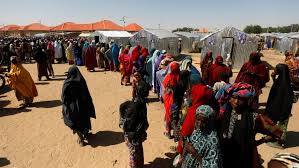

Nigeria has made a robust pledge to intensify its efforts in supporting the millions of refugees, asylum seekers, migrants, and internally displaced persons (IDPs) within its borders, as the nation grapples with a significant humanitarian crisis. This commitment was made public at the 76th session of the Executive Committee (ExCom) meeting of the United Nations High Commissioner for Refugees (UNHCR), where over 150 nations presented their updates on refugee affairs.
Speaking on behalf of the country, Dr Yakubu Kofarmata, the Permanent Secretary of the Ministry of Humanitarian Affairs and Poverty Reduction, supported by the National Commission for Refugees, Migrants and Internally Displaced Persons (NCFRMI), highlighted Nigeria’s focus on implementing long-term, sustainable solutions for its displaced populations. The Permanent Secretary confirmed the acute scale of the displacement, noting that as of September 2025, Nigeria is currently hosting more than 142,000 refugees and asylum seekers. Additionally, the country has facilitated the documentation of over 24,000 returnees and spontaneous returns. Crucially, Dr Kofarmata reported that the domestic population of internally displaced persons now exceeds 6.7 million people.
Acknowledging the size of this challenge, the government is keen to adopt fresh, inventive strategies to deliver efficient, high-quality services to those who have been forced to flee their homes. Substantial progress has already been made in strengthening the protection of refugees by granting them access to crucial national services. A significant part of this work involves streamlining documentation. With support from the UNHCR, authorities have been working diligently throughout 2025 to finalise the outstanding backlogs in refugee registration and status determination. The aim is to complete this comprehensive process by December 2025.
One of the most transformative measures being adopted to improve the lives of these vulnerable people is the provision of agricultural land. State authorities across six Nigerian states—Akwa Ibom, Nassarawa, Benue, Cross River, Katsina, and Taraba—have collaborated closely with the Ministry of Humanitarian Affairs and Poverty Reduction and the UNHCR to lease vast plots of land to IDPs, refugees, and returnees. A total of 2,705 hectares has been allocated for various agricultural activities, including solar-powered irrigation crop production, fisheries, and poultry breeding. This support is intended to achieve more than just sustenance; it is designed to restore dignity, promote sustainable livelihoods, and guarantee stability of movement, making the displaced less reliant on fluctuating international donor funding. For IDPs and returnees, this farming programme promises to be a genuine game-changer in promoting active solution initiatives.
Furthermore, concerted efforts are underway to ensure that all displaced groups—including refugees, asylum seekers, stateless persons, returnees, and IDPs, alongside their host communities, even those in remote locations—are successfully enrolled onto the National Identity Number (NIN) system. This enrolment is vital, as it allows individuals to open bank accounts, access telecommunication services, register children for school, and utilise other essential social services, thereby granting them the same rights and access as any other citizen.
Despite its firm commitment, Nigeria used the international platform to call for greater global solidarity and enhanced collective action in five key areas. The country acknowledged that the sheer scale of modern displacement necessitates more than just resilience from host nations; it demands deeper global support and creative methodologies. Nigeria called for people-centred, timely responses, investment in digital platforms to protect data while empowering refugees, and a renewed effort towards responsibility-sharing to alleviate the disproportionate pressure on frontline host countries. Finally, the country stressed the need for advanced durable solutions, promoting education and livelihoods, and ensuring the active involvement of both the private sector and development partners in delivering sustainable humanitarian solutions.