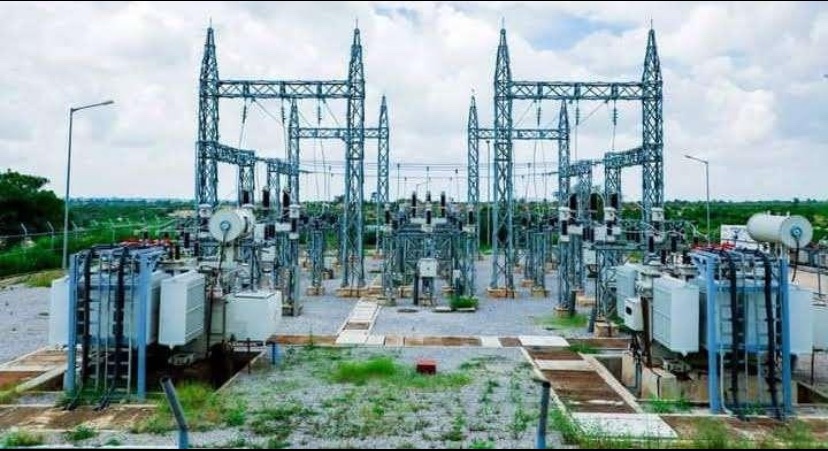

The Federal Government has announced plans to increase the amount of electricity Nigeria can reliably generate and transmit to 8,000 megawatts (MW) by the end of 2027, as part of a wider effort to improve power supply across the country.
The Minister of Power, Joseph Tegbe, disclosed this on Wednesday, August 26, 2026, during the launch of the Renewable Energy Assets Management Company (RAMCO) by the Rural Electrification Agency in Abuja.
Tegbe said the government’s immediate target is to reach 6,500MW by the end of 2026, before increasing the level to 8,000MW in 2027.
He noted that although Nigeria has significant power generation assets, the country is currently struggling to transmit about 5,000MW effectively.
According to the minister, the government wants the country to move beyond simply generating electricity and focus on delivering power reliably to homes and businesses.
Tegbe expressed confidence that Nigerians could begin to experience more consistent electricity supply, including the possibility of round-the-clock power, as reforms in the sector continue.
He described Nigeria’s electricity situation as a long-standing contradiction, saying the country has abundant energy resources and installed infrastructure but has not been able to provide dependable electricity to citizens.
The minister said the newly launched RAMCO would play an important role in ensuring that renewable energy projects remain functional and sustainable after they are installed.
Although RAMCO will initially focus on renewable energy assets, Tegbe said the model could eventually be expanded to cover the wider electricity grid.
He explained that the government wants electricity infrastructure to be managed with greater professionalism, discipline and accountability, with performance measured not only by the amount of electricity supplied but also by how reliable and sustainable the supply is.
Another major part of the government’s plan is the expansion of mini-grids. Tegbe said communities without access to transmission infrastructure would increasingly be served through mini-grid systems powered by renewable energy.
The government also plans to develop a more flexible electricity network that combines traditional grid power with embedded generation, distributed renewable energy, energy storage and other technologies suited to different communities and economic areas.
Tegbe said the objective goes beyond simply reducing darkness in Nigerian homes. He said reliable electricity is essential for expanding manufacturing, attracting investment and supporting emerging industries such as artificial intelligence and data centres.
The minister pointed out that AI-driven businesses and data centres require large amounts of electricity, making dependable power increasingly important to Nigeria’s digital economy.
He said the government was already receiving requests from investors interested in locating data centres close to power plants because of their high energy requirements.
Earlier, the Managing Director of the Rural Electrification Agency, Abba Aliyu, thanked President Bola Tinubu for supporting the agency’s efforts to provide renewable electricity to institutions, including universities and teaching hospitals.
Aliyu explained that RAMCO was created to ensure that renewable energy assets remain operational and continue delivering value long after they are installed.
The government’s latest target signals a shift towards not just increasing electricity generation, but building a power system capable of supporting households, businesses, industries and Nigeria’s growing digital economy.