The Nigerian Securities and Exchange Commission has formally launched a specialised Market Liquidity Working Group to address persistent weaknesses in the nation’s capital market and to widen investor participation. This unit has one clear mandate: to design and implement technology-based solutions that expand the investor base by up to 20 million people, particularly by converting passive savers into engaged market participants.
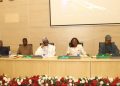
At the inauguration ceremony in Abuja, SEC Director-General Emomotimi Agama emphasised that stronger market participation is vital for deeper liquidity and more resilient capital markets. He noted that despite substantial growth in aggregate market capitalisation, active engagement remains restricted to a small subset of institutional and retail investors, limiting efficient allocation of capital.
The DG identified this narrow investor base as a structural impediment: it hampers price discovery, contributes to volatility, and limits the market’s usefulness as a mechanism for financing long-term economic activity. Broadening participation, he argued, will improve liquidity, foster confidence, and support Nigeria’s economic growth.
Agama directed the new working group to prioritise digital platforms and partnerships with fintech firms as key conduits for attracting new entrants to the market. He stated plainly: “I want you to explore how technology can onboard the next 20 million investors, turning passive savers into active market participants.”
In support of these efforts, the Commission highlighted ongoing initiatives such as the dematerialisation of share certificates and other measures designed to simplify access to investment products. These reforms aim to reduce friction points that historically deter participation from a broader cross-section of the population.
A significant legislative backdrop to this strategic push is the recently enacted Investments and Securities Act 2025. The DG pointed to this law as a cornerstone for regulatory clarity, especially regarding digital assets now under SEC oversight. “We must determine how to channel the speculative energy currently going into unproductive gambling into liquid, productive investments within regulated exchanges,” he said, underlining the need to redirect capital into formal market instruments.
While market capitalisation has more than doubled in recent periods, rising from roughly N55 trillion to over N123 trillion, Agama warned that headline figures conceal uneven liquidity across listed securities. Many stocks remain thinly traded, and broad participation is required to address this imbalance and to enable smoother entry and exit for investors.
Agama described the capital market as a critical engine for national development, capable of channeling savings into infrastructure, industry, and job creation when functioning effectively. He emphasised that building an inclusive investor base is not optional but essential for transforming the Nigerian capital market into a robust platform that mobilises long-term capital for economic advancement.
The working group, comprised of representatives from exchanges, custodians, fund managers, dealers, and other market operators, has been tasked with producing actionable recommendations that will deepen liquidity and make investment opportunities more accessible to ordinary Nigerians.
The Commission’s announcement comes against the backdrop of recent strong performance in equity markets. The Nigerian equities market posted solid gains, with key indices crossing significant milestones and trading volumes rising, signalling growing investor interest that the SEC aims to amplify through its strategic interventions.