


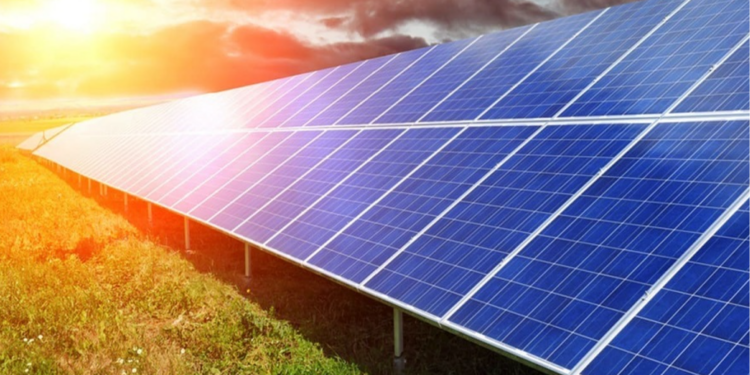

Energy and climate experts are warning that Nigeria could miss out on an estimated $2.5 billion opportunity in the global carbon market unless it accelerates investments in solar energy and backs them with strong policy incentives.
They argue that the country’s sluggish pace in expanding large-scale solar installations is not only limiting energy access for millions of households but also depriving the nation of foreign exchange that could help stabilise its struggling economy.
Solar as a lifeline for power and pockets
In an economy where diesel prices have more than doubled in the last two years, solar energy represents a practical escape route for small businesses and households facing rising electricity costs.
According to renewable energy consultant, Dr Sunday Okoro, every tonne of carbon dioxide avoided through solar generation can be traded internationally as carbon credits.
“If Nigeria can mainstream solar projects across homes, industries, and communities, it could generate substantial income through carbon credit sales,” he said. “That would translate into more stable electricity costs and job creation across the renewable sector.”
Experts note that the nation sits on one of the highest solar irradiation belts in the world, yet installed solar capacity remains under 2 percent of total power demand. Widespread adoption, they say, could sharply reduce dependence on diesel generators that now power nearly 60 percent of small businesses.
Mrs Aisha Bulila, Managing Director of SolarTech Renewables, lamented that poor policy execution continues to hinder growth in the renewable space. “If the government scales up solar infrastructure and offers tax reliefs, we’ll see cheaper power for households and greater economic productivity,” she said.
Unlocking carbon finance to drive growth
Beyond power generation, carbon finance offers Nigeria a new stream of foreign earnings. The global carbon credit market, valued at over $100 billion annually, rewards countries that cut emissions.
Policy analyst, Mr Ibrahim Danjuma, explained that by quantifying and verifying emissions avoided through solar projects, Nigeria could earn significant foreign exchange from carbon trading. “If we properly account for avoided emissions, solar expansion can easily bring in billions in carbon credits every year,” he said.
Industry players agree that carbon finance could make solar power more commercially viable, enabling developers to attract foreign investors and expand rapidly. Clean energy investor, Temidire Fajuyi, described it as “the bridge between environmental sustainability and economic profitability.”
The economic reality for ordinary Nigerians
For millions of Nigerians, erratic power supply and high generator costs continue to drain household income. With petrol now selling at above N700 per litre in some states, many families spend a growing share of their earnings just to keep the lights on.
“Every solar panel that replaces a generator helps save money that would otherwise go into fuel,” said Mrs Bulila. “It’s not just a climate story; it’s an economic one.”
Experts believe that a well-structured carbon finance market could bring down the cost of solar installations, making clean energy affordable for low-income households and small businesses.


