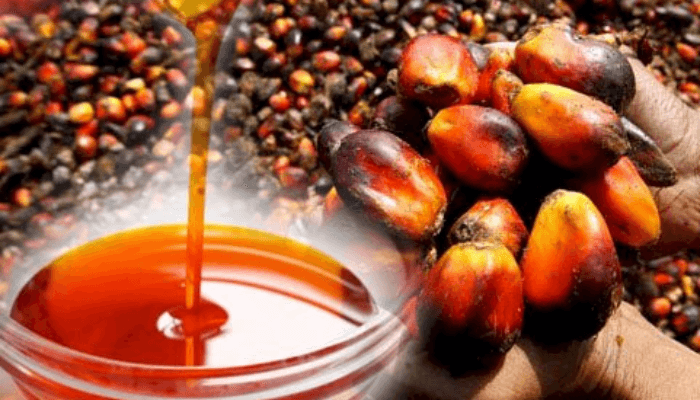

Nigeria’s persistent palm oil supply deficit continues to fuel informal cross-border trade despite government efforts to protect domestic producers through import restrictions and border enforcement.
Although Nigeria is Africa’s largest producer of crude palm oil, domestic output has consistently lagged demand. According to industry and international agricultural estimates, the country produces about 1.5 million metric tonnes (MMT) of crude palm oil annually, while consumption exceeds 2.5 MMT, leaving a supply gap of roughly one million tonnes that is met through imports and informal cross-border trade.
Malaysia and Indonesia remain Nigeria’s principal external suppliers, while additional volumes enter the country through neighbouring Benin and Cameroon, both legally and through unofficial channels. Trade experts and regional studies have long identified the Benin-Nigeria corridor as a major route for trans-shipment, where palm oil imported into Benin may be re-exported informally into Nigeria, bypassing official customs procedures. Similar studies indicate that a significant share of palm oil produced in Cameroon’s border regions also finds its way into Nigerian markets through informal trade networks.
The structural supply deficit has persisted despite Nigeria’s vast oil palm resources. The country has more than three million hectares under oil palm cultivation, yet productivity remains among the lowest in major producing nations. More than 80% of production comes from smallholder farmers, many of whom rely on ageing plantations, low-yield seedlings and traditional processing methods that limit output and increase production costs.
Industry groups have also warned that domestic processors continue to operate below installed capacity due to insufficient supplies of fresh fruit bunches and the high cost of production. Meanwhile, fluctuations in international crude palm oil prices and exchange rate movements continue to influence the competitiveness of imported palm oil in the Nigerian market.
Analysts say addressing informal imports will require more than tighter border surveillance. They argue that expanding domestic production through replanting programmes, improved seedlings, mechanisation, better processing facilities and increased access to finance for smallholder farmers would help narrow the supply gap over the medium term.
Until local production grows sufficiently to meet domestic demand at competitive prices, Nigeria is expected to remain reliant on imported palm oil, while informal cross-border trade is likely to persist despite government efforts to strengthen the formal market and support local producers.