
Nigeria is taking steps to address the shortage of crude oil supplied to local refineries as the country works to increase domestic fuel production and reduce its dependence on imported petroleum products.
The Nigerian Midstream and Downstream Petroleum Regulatory Authority (NMDPRA) said it will begin discussions with the Nigerian Upstream Petroleum Regulatory Commission (NUPRC) to resolve challenges affecting the supply of crude oil to refineries operating within the country.
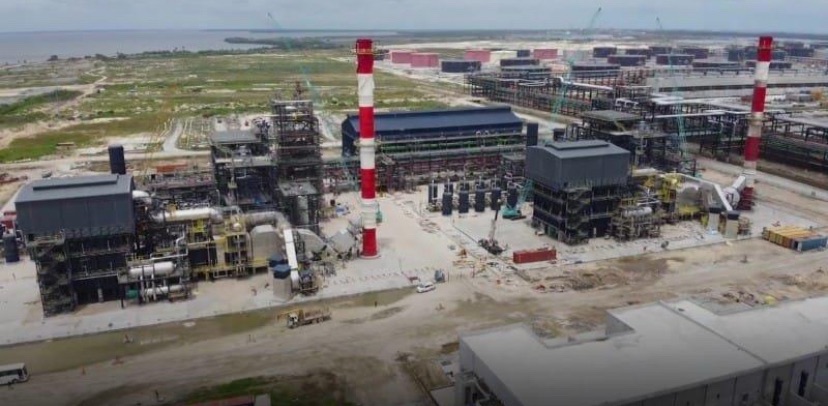
The move comes as Nigeria’s total installed refining capacity has reached about 1.125 million barrels per day, according to the NMDPRA. A major part of this capacity comes from the Dangote Petroleum Refinery, which has a nameplate capacity of 700,000 barrels per day.
NMDPRA Director General Rabiu Umar said improving crude supply is essential if Nigeria wants to make full use of its growing refining capacity.
He explained that the Federal Government’s long-term plan is to process more of the country’s crude oil locally instead of exporting crude and importing refined petroleum products.
“Every molecule” of the three million barrels per day Nigeria hopes to produce in the coming years, Umar said, is expected to be refined domestically.
The plan, however, faces a major challenge: Nigeria’s current crude oil production is still far below the proposed three-million-barrel target.
The NUPRC estimated Nigeria’s crude production at about 1.73 million barrels per day in June, meaning production would have to rise significantly before the country could realistically refine all its crude locally.
To improve supply, the NMDPRA and NUPRC are expected to strengthen the enforcement of domestic crude supply obligations. Under Nigeria’s petroleum regulations, oil producers are required to supply a portion of their crude output to local refineries.
The policy is seen as important for the survival and expansion of Nigeria’s refining industry. Without enough crude, even large refineries may struggle to operate consistently at their full capacity.
The Dangote refinery has already changed Nigeria’s downstream petroleum market by increasing local production of refined products. The facility has also contributed to Nigeria becoming a net exporter of some refined petroleum products.
However, concerns remain about the country’s heavy dependence on one major private refinery. Dangote is also considering further expansion, which could increase its refining capacity to about 1.4 million barrels per day.
Meanwhile, Nigeria’s government-owned refineries in Port Harcourt, Warri and Kaduna remain part of the country’s strategy to expand domestic refining. Together, the facilities have potential capacity of more than 300,000 barrels per day, but they have struggled to operate efficiently.
The Federal Government has spent billions of dollars on efforts to rehabilitate the state-owned refineries over the years. NNPC Limited is now looking for private partners under a performance-based arrangement, where contractors would be paid based on actual refinery output.
If successful, the approach could help Nigeria avoid repeating past rehabilitation efforts that delivered limited results.
For Nigeria, securing enough crude for local refineries will be just as important as building refining capacity. Without steady crude supply and higher oil production, the country’s ambition to become largely self-sufficient in refined petroleum products could remain difficult to achieve.