
Nigeria’s push to expand Liquefied Petroleum Gas (LPG) use is facing a critical test: whether supply infrastructure can grow quickly enough to support rising demand.
The challenge is no longer simply producing enough cooking gas. Storage capacity, transportation, distribution networks and retail infrastructure must also expand as more households and businesses switch to LPG.
Nigerian Midstream and Downstream Petroleum Regulatory Authority (NMDPRA) data showed that LPG supply rose to 5,332 tonnes per day in July 2026 from 5,100 tonnes per day in June. Domestic sources accounted for 4,373 tonnes per day, or about 82% of total supply, while imports contributed 959 tonnes per day, according to the data reported by The PUNCH on September 3, 2026.
Despite the increase in supply, national stock sufficiency remained a concern. BusinessDay reported on September 2, 2026, that LPG stocks stood at 16.3 days of sufficiency in July, below the NMDPRA’s 30-day minimum threshold. The regulator’s data also put Nigeria’s 2026 daily LPG demand benchmark at 3.9 kilotonnes, while actual July consumption reached about 4.4 kilotonnes per day.
The figures highlight a supply-chain problem. A market can have adequate production volumes while individual locations experience shortages if storage and transportation capacity cannot move the product efficiently from supply points to areas of demand.
LPG distribution depends heavily on specialised road tankers to move bulk product from coastal terminals, refineries and processing plants to inland facilities. Delays in transportation can therefore affect availability even when national supply remains relatively strong.
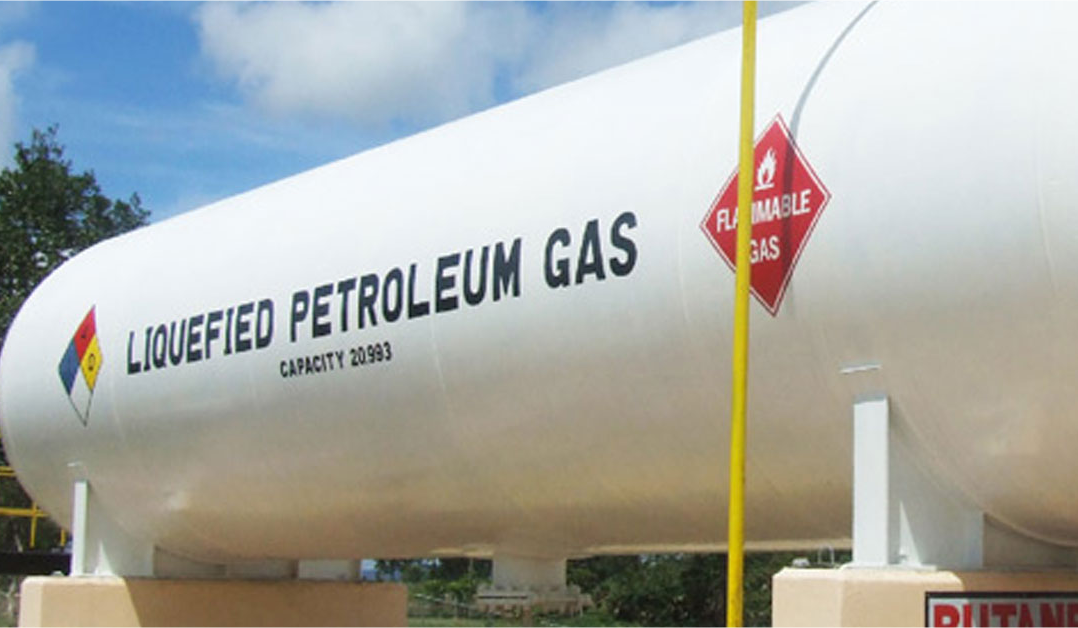
Storage is another pressure point. The July stock figure of 16.3 days shows that Nigeria has limited room to absorb a major disruption in supply. Recent international volatility demonstrated the exposure of the market. The PUNCH reported on September 17, 2026, that Nigeria’s LPG demand fell to a seven-month low of 123,000 tonnes in June as lower domestic production and import constraints affected the market. Imports subsequently rose to 46,000 tonnes that month from 3,000 tonnes in May.
The final bottleneck is closer to the consumer. Small refill outlets can struggle to handle sudden increases in demand, particularly where customers must wait while their own cylinders are weighed and refilled.
Nigeria’s emerging cylinder-exchange model offers one way to address that problem. The Federal Government’s National Grassroots LPG Penetration Programme uses a Depot-Hub-Node model in which consumers can access pre-filled cylinders through nearby refill points. Voice of Nigeria reported in August 2026 that the programme targets refill points within one to two kilometres of communities and uses digital tracking for cylinders and refills.
Private-sector initiatives are also adopting the model. In July 2026, The PUNCH reported that KiakiaGas and GAS360 were expanding a cylinder-exchange system designed to allow households to exchange empty cylinders for pre-filled ones, reducing manual refilling and waiting times.
For Nigeria’s LPG transition to remain sustainable, investment therefore has to extend beyond production. More storage, specialised transport capacity, decentralised distribution depots and faster cylinder-exchange systems will be needed to ensure that growing demand does not simply create new queues at LPG outlets.
The central challenge is clear: increasing LPG adoption without expanding the infrastructure that moves the fuel from producer to consumer risks shifting the energy bottleneck rather than eliminating it.