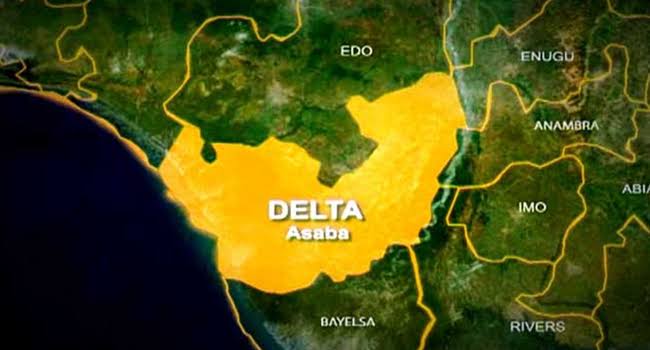

Delta State Government has approved a proposed ₦1.237 trillion budget for the 2027 fiscal year, with emphasis on infrastructure development, economic empowerment and the completion of ongoing projects across the state.
The State Executive Council approved the ₦1,236,874,981,081 Appropriation Bill at its meeting presided over by Governor Sheriff Oborevwori at the Government House Annex in Warri on Monday, November 9, 2026.
Commissioner for Works (Rural Roads) and Public Information, Charles Aniagwu, announced the approval while briefing journalists after the meeting, saying the proposed budget would provide the financial framework for executing ongoing projects and new development programmes in 2027.
The bill will now be transmitted to the Delta State House of Assembly for legislative consideration.
The proposed budget is about 28.5% lower than the state’s approved ₦1.729 trillion budget for 2026, reflecting the administration’s plan to adopt a more realistic spending framework and align expenditure with available revenue.
Commissioner for Economic Planning, Sonny Ekedayen, had disclosed during a stakeholders’ engagement in Asaba on October 30 that the government was targeting a smaller budget to avoid relying heavily on savings and borrowing.
He said the proposed spending plan would allocate approximately ₦806.87 billion, representing 65.23%, to capital expenditure, while ₦430 billion, or 34.77%, would go to recurrent expenditure.
Ekedayen also projected internally generated revenue of between ₦300 billion and ₦350 billion and said the government would not resort to borrowing to finance the 2027 budget.
The administration’s spending priorities are guided by its MORE Agenda, which stands for Meaningful Development, Opportunities for All, Realistic Reforms, and Enhanced Peace and Security.
Infrastructure remains a major component of the proposed spending plan, with road construction, rehabilitation, education facilities, judicial infrastructure and community development projects expected to receive attention across the state’s three senatorial districts.
The government is also pursuing economic empowerment initiatives aimed at supporting small businesses and improving residents’ purchasing power.
Aniagwu recalled that the state had approved social investment programmes providing eligible beneficiaries with up to ₦250,000 to strengthen their businesses, inject money into local communities and stimulate economic activities.
On electricity, the commissioner disclosed that the state had entered into a partnership with Sapele Power to deploy turbines brought into the state by previous administrations.
The arrangement is expected to generate approximately 120 megawatts of electricity for injection into the national grid.
The Executive Council also approved several infrastructure projects, including road construction and rehabilitation across different local government areas, alongside additional residential accommodation for judges and other public facilities.
The proposed 2027 budget must receive legislative consideration and approval before it can become the state’s appropriation law.