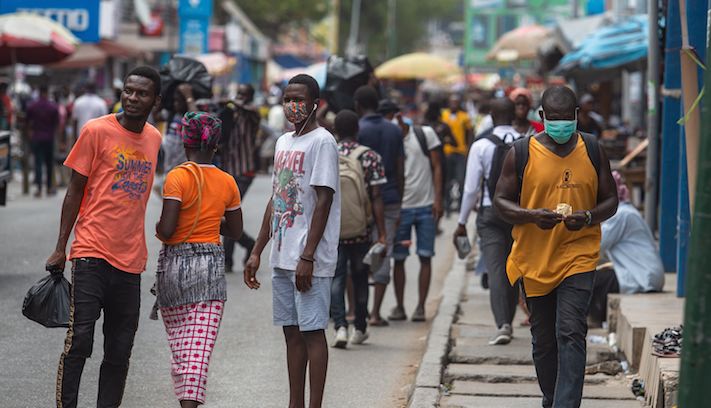

When the Federal Government removed the petrol subsidy in May 2023, the consequences were not restricted to civil servants, private-sector employees or any particular group of Nigerians. The decision affected virtually everyone, regardless of occupation, income level or employment status.
From commercial drivers and market traders to teachers, artisans, farmers, small business owners and salaried employees, Nigerians had to adjust to a new economic reality in which transportation became more expensive and the cost of doing business increased.
The removal of the subsidy was a nationwide economic decision, and its consequences were equally widespread.
However, more than three years later, the question of who deserves government assistance has become increasingly difficult to ignore.
On October 27, 2026, the Federal Government reached an agreement with organised labour to provide public service workers with a monthly transport allowance of ₦70,000 for six months, beginning in November.
The intervention followed negotiations with the Nigeria Labour Congress (NLC) over workers’ welfare and the rising cost of living.
While the allowance may provide some relief to public servants, it raises a fundamental question about fairness and the distribution of government support in a country where millions of people outside the public service are experiencing the same economic pressures.
Why should the consequences of subsidy removal be shared nationally while a specific transport intervention is restricted to government workers?
Consider the amount involved. ₦70,000 is not an ordinary figure in Nigeria’s current wage environment. It is equivalent to the national minimum wage established in 2024.
The government is therefore offering an additional monthly payment equivalent to an entire minimum-wage salary to eligible public service workers, specifically to cushion transportation costs.
But do all these workers need the allowance equally?
I would argue that a significant number of federal government employees, particularly those in higher salary categories, may not need an additional ₦70,000 transport allowance as urgently as millions of low-income Nigerians struggling to survive outside the public service.
This is not an argument against improving the welfare of civil servants. Government workers deserve decent wages, affordable transportation and working conditions that allow them to live with dignity.
However, public policy should also consider differences in income, economic vulnerability and the actual burden households face.
A senior government official earning considerably more than the minimum wage and a private-sector worker earning ₦80,000 or ₦100,000 may face similar transport costs. Yet, under the current arrangement, one may qualify for the additional allowance while the other receives nothing from this particular intervention.
The same applies to a small business owner who spends thousands of naira transporting goods, a market woman who travels daily to purchase stock, an artisan who moves between customers and an unemployed graduate who must still spend money searching for opportunities.
These Nigerians did not escape the consequences of subsidy removal simply because they do not work for the Federal Government.
Commercial drivers also face higher operating costs. Their passengers pay more for transportation, while traders transfer increased logistics expenses into the prices of goods. Ultimately, households that have no access to additional allowances or negotiated welfare packages absorb much of the pressure.
There is also a question about the informal economy, which provides livelihoods for millions of Nigerians but has no organised labour structure capable of negotiating a transport allowance with the Federal Government.
Who speaks for these people when government interventions are being designed?
The N70,000 agreement emerged from negotiations between the government and organised labour. Public servants have unions and established channels through which they can demand better welfare conditions. That is a legitimate part of industrial relations.
But the ability of one group to negotiate successfully should not make its economic challenges more deserving of attention than those of other Nigerians.
This is where my concern about economic segregation comes in.
We appear to be moving towards a situation in which access to economic relief is increasingly determined by employment category rather than the level of hardship people experience.
The subsidy removal did not ask whether someone was a civil servant before increasing the cost of transportation. It did not exempt private-sector employees, traders, farmers or unemployed Nigerians from higher living expenses.
Why, then, should the response to those consequences be so selective?
The government could explore more inclusive interventions, including targeted transport support for low-income households, assistance for vulnerable informal-sector workers and measures that reduce the cost of moving goods and people.
Such programmes would not necessarily require every Nigerian to receive the same amount. Rather, assistance could be structured around income, vulnerability and demonstrated need.
The objective should be to ensure that people who bear the consequences of economic reforms are not forgotten when relief measures are introduced.
Government workers deserve their ₦70,000 allowance. But millions of Nigerians outside the public service also deserve to be considered.
If the hardship was national, why is the relief not more inclusive?