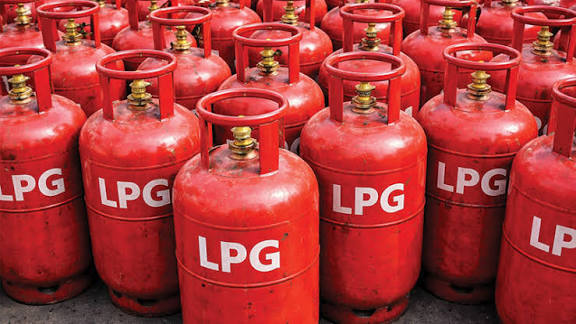

A senior Nigerian government official has dismissed claims that locally produced Liquefied Petroleum Gas (LPG), commonly known as cooking gas, is being exported at the expense of domestic consumers, amid mounting concerns over rising prices across the country.
The clarification comes as households and businesses grapple with higher cooking gas costs, prompting questions about whether domestic supply is being diverted to more lucrative international markets.
Speaking on the issue, government representatives maintained that LPG produced within Nigeria is primarily targeted at local consumption and that current price increases are largely driven by market fundamentals rather than export activities. Officials argued that factors such as foreign exchange volatility, transportation costs, infrastructure constraints, and shifts in global energy markets continue to influence domestic LPG pricing.
Nigeria, Africa’s largest oil producer, has in recent years sought to increase LPG adoption as part of a broader strategy to reduce dependence on traditional fuels such as firewood and kerosene. The government has repeatedly identified cooking gas as a critical component of its clean energy transition agenda, with the goal of expanding access to affordable and environmentally friendly household energy.
Despite these efforts, consumers have faced periodic price spikes. Industry analysts note that although domestic LPG production has improved significantly, supply chain inefficiencies and distribution bottlenecks continue to limit the full benefits reaching end users. The cost of transporting LPG from production facilities to retail outlets remains a significant contributor to final consumer prices.
Market participants also point to exchange-rate pressures as a key factor. While a portion of LPG is produced locally, pricing within the sector is often influenced by international benchmarks and dollar-denominated costs. As a result, fluctuations in the value of the naira can have a direct impact on domestic prices.
The government’s denial of LPG exports is likely aimed at reassuring consumers and investors that domestic energy security remains a priority. Energy stakeholders have consistently called for increased investment in storage facilities, transportation infrastructure, and processing capacity to strengthen local supply chains and stabilize prices.
Industry experts argue that sustained growth in domestic LPG consumption will depend not only on expanding production but also on improving affordability. Higher prices risk slowing the transition to cleaner cooking fuels, particularly among low-income households that remain sensitive to energy costs.
Looking ahead, analysts say the success of Nigeria’s gas sector reforms will be measured by the government’s ability to balance growing demand with reliable supply while ensuring that cooking gas remains accessible to millions of households. As energy demand continues to rise, maintaining price stability is expected to remain a key policy challenge for authorities and industry operators alike.