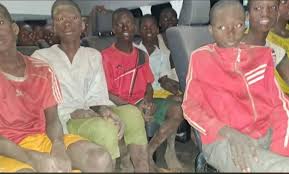

One hundred children who were among a large group kidnapped from a Catholic boarding school in Niger state, Nigeria, have been released, though the fate of the remaining 165 students and staff remains uncertain.
Channels Television reported the release on Sunday, but did not specify whether the children were freed through negotiation or military action. A United Nations source later confirmed to the AFP news agency that the children had arrived in the capital, Abuja, and are scheduled to be handed over to local government officials in Niger state on Monday.
The kidnapping occurred in late November when gunmen attacked St Mary’s boarding school in Papiri, initially seizing 315 students and staff, some as young as six years old. Approximately 50 students escaped shortly afterwards, but until Sunday there had been no update on the others.
This incident is part of what the UN describes as a “surge in mass abductions” across Nigeria, a crisis that has plagued the nation since the 2014 Boko Haram kidnapping of 276 schoolgirls in Chibok. The identity of the perpetrators in the latest attack remains unclear, but kidnappings for ransom have evolved into a highly lucrative criminal enterprise in the country.
The rise of this kidnapping economy presents a significant obstacle to Nigeria’s development. Families are often forced to liquidate assets, including farmland and savings, to pay ransoms, transferring wealth from impoverished communities to armed gangs. This not only deepens poverty but also destabilises entire regional economies and fuels the cycle of insecurity by providing groups with funds to acquire sophisticated weapons.
In response to the deepening crisis, Nigerian President Bola Tinubu has declared a national state of emergency on security, ordering the army and police to recruit 20,000 additional personnel. The situation is also attracting intense international scrutiny.
On Sunday, French President Emmanuel Macron announced increased support for Nigeria at President Tinubu’s request. Mr Macron wrote on X that France conveyed its “solidarity in the face of the various security challenges, particularly the terrorist threat in the North.” He added, “We call on all our partners to step up their engagement. No one can remain a spectator.”
The crisis also comes amid pressure from US President Donald Trump, who has labelled the killing of Christians in Nigeria a “genocide” and threatened military intervention, further highlighting the global concern over the ongoing violence in the nation.