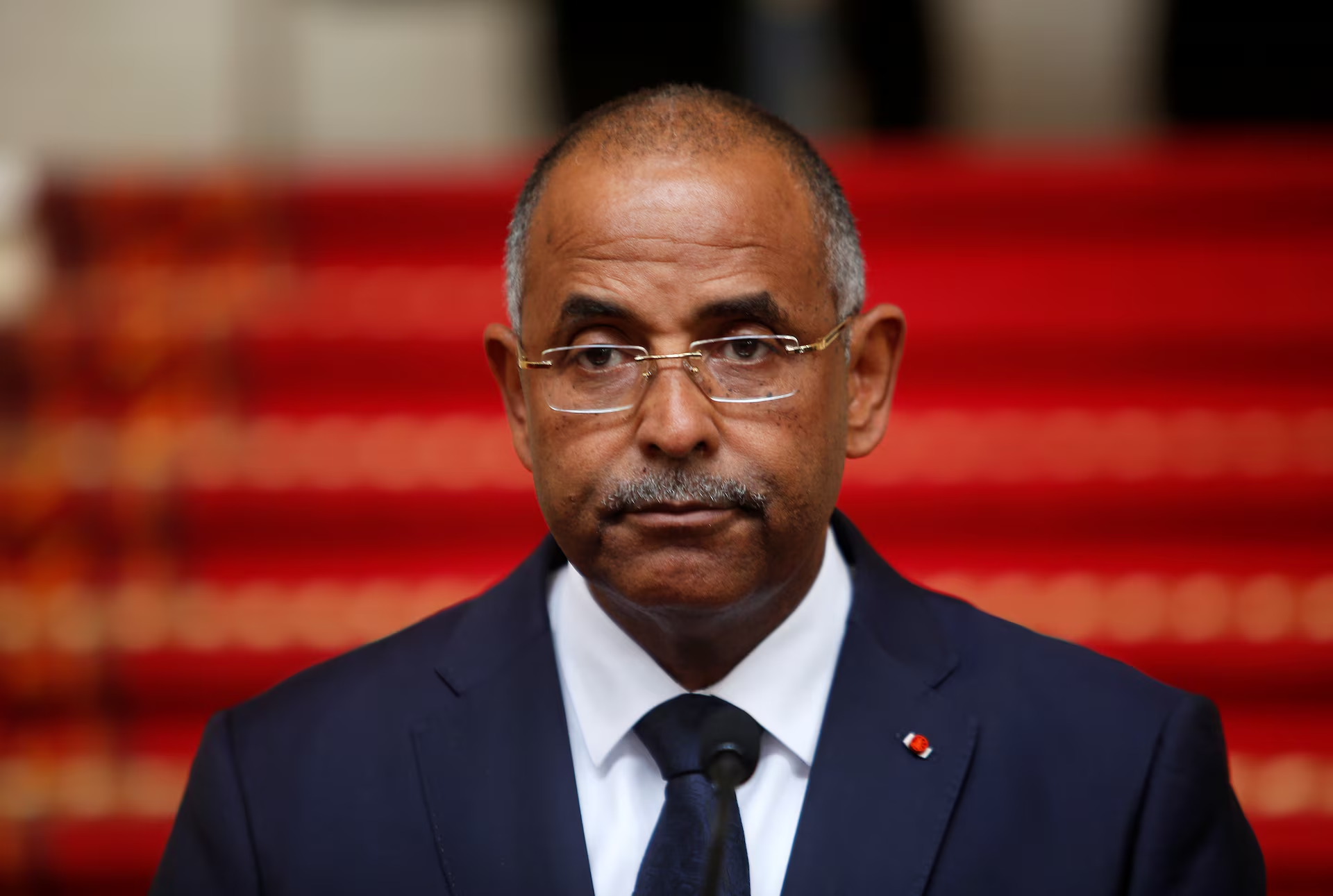

Ivory Coast’s parliament on Saturday elected Patrick Achi, a former prime minister from President Alassane Ouattara’s ruling party, as speaker, consolidating the party’s dominance nearly a month after legislative elections held in late December. Achi, 70, secured 85% of the votes cast by the 253 lawmakers present during the first sitting of the new assembly in Abidjan, the country’s commercial capital. The chamber remains firmly under the control of Ouattara’s Rally of Houphouëtists for Democracy and Peace (RHDP).
Achi is a seasoned technocrat with a background in international finance, having previously worked at the International Monetary Fund and studied at Stanford University. He also served as prime minister and played a pivotal role in orchestrating Ouattara’s successful re-election campaign in October, which secured him a controversial fourth term in office. His election as parliamentary speaker positions him as a key figure in shaping legislative priorities and guiding the government’s economic and political agenda over the coming years.
Observers note that the appointment comes at a critical juncture for Ivory Coast, as Ouattara, 84, prepares to name a new cabinet later this month. Analysts believe the composition of the incoming government will be closely scrutinised for succession signals within the ruling party, with Achi’s elevation potentially positioning him as a trusted ally in managing continuity or transition.
The political consolidation under the RHDP has immediate implications for Ivory Coast’s economic policy and investment climate. A cohesive ruling party reduces legislative uncertainty, potentially expediting reforms in areas such as infrastructure, energy, and private sector development. Investors often favour stability in governance, and the RHDP’s parliamentary dominance could encourage confidence in ongoing projects, including public-private partnerships and foreign investment initiatives, particularly in the country’s expanding oil, cocoa, and financial sectors.
At the same time, the centralisation of power raises questions about checks and balances, especially given the controversy surrounding Ouattara’s fourth term. Civil society groups and opposition parties have expressed concern over limited avenues for political dissent, which could influence investor perception and social cohesion. Maintaining political stability while balancing inclusivity will be crucial for sustaining economic growth and attracting international capital.
Achi’s technocratic background and experience in economic policy signal that the government is likely to continue prioritising macroeconomic stability, debt management, and structural reforms. During his previous tenure as prime minister, Achi oversaw initiatives aimed at improving public finance management and strengthening the country’s fiscal framework. Analysts suggest that his leadership in parliament may facilitate the passage of legislation necessary to support investment-friendly policies, fiscal reforms, and regulatory updates that enhance Ivory Coast’s standing as one of West Africa’s fastest-growing economies.
The broader context of the RHDP’s dominance also has regional implications. Ivory Coast, as the largest economy in the West African Economic and Monetary Union (WAEMU), plays a pivotal role in regional trade, infrastructure development, and financial integration. A stable and coherent government, reinforced by loyal parliamentary leadership, could help accelerate cross-border initiatives in energy, transport, and digital finance, benefiting both domestic and regional markets.
However, the path ahead is not without challenges. Despite macroeconomic growth averaging around 6–7% in recent years, the country faces ongoing social and political pressures, including youth unemployment, inequality, and localised protests. Parliamentary cohesion under Achi’s leadership may help streamline government responses to these issues, but it also places the responsibility squarely on the ruling party to ensure policies are inclusive and sustainable.
Patrick Achi’s election as speaker consolidates the RHDP’s control over Ivory Coast’s political landscape at a crucial moment in Ouattara’s fourth term. With his technocratic expertise, close ties to the president, and central role in economic management, Achi is well positioned to influence legislation and policy implementation. For investors and regional observers, the move signals continuity and stability, but it also underscores the importance of monitoring governance, succession planning, and social cohesion as the country navigates both economic and political challenges.