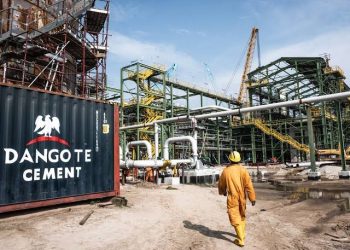

Nigeria’s ability to benefit from the African Continental Free Trade Area (AfCFTA) will depend on its capacity to manufacture competitive goods rather than simply having access to African markets, the Nigerian Export-Import Bank (NEXIM) has said.
The bank’s Managing Director and Chief Executive Officer, Abubakar Bello, made this known at NEXIM’s Stakeholders’ Engagement Forum in Abuja on Thursday, November 26, 2026, held to mark the bank’s 35th anniversary. Bello said Nigeria must strengthen local production, expand manufacturing and process its raw materials into finished products if businesses are to compete effectively across the continent.
He noted that the country continues to export raw materials while importing finished goods that could be produced locally, limiting the economic value it gains from its resources.
“We produce cocoa but import chocolates. We grow cotton but import textiles,” Bello said.
He added that having access to a larger market would not automatically translate into export success without competitive production.
“Trade agreements open markets, but competitiveness determines who succeeds in those markets,” he said.
The Minister of State for Industry, Senator John Owan Enoh, also stressed the importance of building manufacturing capacity before focusing on expanding trade opportunities.
“The factory comes before the border post,” Enoh said, adding that “An agreement can lower a tariff, but it cannot fill a container.”
Similarly, the Minister of Finance and Coordinating Minister of the Economy, Taiwo Oyedele, said Nigeria’s ability to convert access to the African market into economic gains would depend on the competitiveness of local businesses. He said, “Market access creates an opportunity. Our competitiveness will determine how much of that opportunity we convert into prosperity.”
The Special Adviser to the President on Economic Affairs, Dr Tope Fasua, also warned that expanding market access without improving local production could expose Nigerian businesses to increased competition without guaranteeing export growth.
“Market access without productive capacity is an invitation to import, not an assurance of export success,” Fasua said.
Despite the opportunities presented by AfCFTA, Nigeria continues to face challenges with manufacturing capacity and export diversification. Bello cited figures from the African Development Bank showing that intra-African trade increased by 5.5% in 2025 to approximately $213.8 billion. Nigeria’s non-oil exports reached a record $6.1 billion in 2025, while its total formal trade with African countries, including oil, rose by 21% to $9.02 billion.
However, Enoh said intra-African trade accounts for only about 14% of Africa’s total trade, compared with 60% in the European Union and 50% in Asia. He also cited Manufacturers Association of Nigeria figures showing that the country’s manufacturing capacity utilisation stood at 59.5%, below Morocco’s 81% and South Africa’s 76%. According to Enoh, Nigeria recorded ₦27 trillion in exports in the second quarter of 2026, with crude oil accounting for less than half of the total. The country also exported diesel worth ₦1.32 trillion and aviation fuel valued at ₦975 billion to other African countries.
To address financing challenges, Bello disclosed that NEXIM had provided more than ₦800 billion in funding to over 1,300 non-oil exporters since its establishment in 1991. The interventions have supported approximately 110,000 industrial jobs. The bank has also partnered with the Small and Medium Enterprises Development Agency of Nigeria (SMEDAN) to mobilise ₦42 billion for small businesses operating within the export value chain.
Other initiatives include a proposed non-interest banking window in collaboration with the Islamic Development Bank and efforts to expand financing opportunities for small businesses. Enoh also disclosed that the export phase of the National Single Window was expected to commence on December 14, providing a platform to simplify trade documentation and export procedures.
The Central Bank of Nigeria is equally supporting trade digitisation and cross-border payments through the Pan-African Payment and Settlement System, which Enoh said connects 28 African countries. CBN Deputy Governor for Financial System Stability, Lamido Yuguda, who represented Governor Olayemi Cardoso at the forum, stressed the importance of complying with export documentation requirements and repatriating export proceeds within prescribed timelines.
Yuguda said Nigeria’s external trade performance would depend on productivity and competitiveness rather than policy declarations alone.
“A strong external sector cannot be built by decree. It must be earned through productivity and competitiveness, one business, one transaction, one container and one market at a time,” he said.
The discussions highlight a major challenge for Nigeria’s participation in AfCFTA: opening access to African markets is only one part of the process. Expanding local manufacturing, improving export financing and reducing production costs will be necessary for Nigerian businesses to compete and benefit from the continental trade agreement.