


Eleven major manufacturing companies listed on the Nigerian Exchange (NGX) spent a combined ₦841.99 billion on energy across their operations in the first nine months of 2026, with Dangote Cement and BUA Cement accounting for nearly 95% of the total. The figures highlight the enormous cost of powering industrial operations amid persistent electricity supply challenges.
The expenditure by the 11 listed firms increased by 7.4% from ₦784.08 billion recorded in the corresponding period of 2025.
An analysis of the companies’ unaudited financial statements for the nine months ended September 30, 2026, reported by The PUNCH on November 26, showed that the spending covered electricity, diesel, petrol, gas, and related utility expenses incurred in factory and administrative operations.
Dangote Cement and BUA Cement jointly accounted for ₦797.44 billion, representing 94.7% of the combined expenditure. The remaining nine manufacturers spent ₦44.55 billion, an increase of 21.2% from ₦36.75 billion recorded a year earlier.
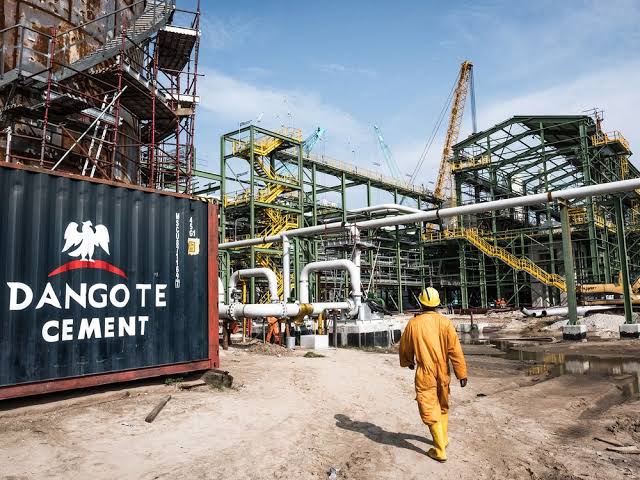
Dangote Cement remained the largest energy spender, with its group fuel and power expenses, spanning its Nigerian and pan-African operations, rising by 2% to ₦580.49 billion from ₦568.97 billion in the first nine months of 2025.
BUA Cement recorded a considerably sharper increase, as its energy expenditure climbed by 21.6% to ₦216.95 billion from ₦178.36 billion. The increase of ₦38.59 billion was the largest absolute rise among the companies analysed.
The figures reflect the substantial energy requirements of cement manufacturing, which depends on fuel and electricity to operate kilns, crushers, grinding mills and other heavy industrial equipment.
The pressure is not limited to cement producers. UAC of Nigeria recorded a 172.1% increase in electricity and power expenses to ₦13.24 billion from ₦4.87 billion, the sharpest percentage increase among the companies reviewed.
BUA Foods also recorded a 32.8% rise in diesel, fuel and electricity expenditure to ₦938.98 million from ₦707.13 million.
Champion Breweries’ energy and water expenses increased by 20.8% to ₦2.54 billion, while Dangote Sugar Refinery reported a 22.3% increase in petrol and oil costs to ₦317.50 million. The remaining five manufacturers reviewed accounted for the balance of the non-cement energy expenditure.
The rising expenditure comes against the backdrop of growing reliance on alternative electricity sources as manufacturers struggle with unreliable national grid supply.
The Director-General of the Manufacturers Association of Nigeria (MAN), Segun Ajayi-Kadir, disclosed that manufacturers’ expenditure on alternative energy increased from ₦781.68 billion in 2023 to ₦1.11 trillion in 2024 and ₦1.34 trillion in 2025.
In a report on the impact of economic reforms on industrial performance published by The PUNCH on June 3, 2026, MAN attributed the rising burden to factors including electricity tariff adjustments, fuel costs and persistent instability in power supply.
The association said electricity tariffs for Band A customers had increased from about ₦68 per kilowatt-hour to between ₦209 and ₦225, without resolving the problem of unreliable supply.
MAN also warned that higher production costs were weakening manufacturers’ competitiveness. According to the association, manufacturing capacity utilisation declined from 61.3% in the first half of 2025 to 57.7% in the second half.
The latest energy expenditure figures underline the uneven financial burden across the manufacturing sector. Although Dangote Cement and BUA Cement dominate total spending because of their scale and energy-intensive operations, smaller manufacturers are also experiencing significant increases in their power-related expenses.
For Nigerian businesses, the consequences extend beyond electricity bills. Higher energy costs increase production expenses, put pressure on profit margins and limit the resources available for expansion and investment.
Unless electricity supply becomes more reliable and affordable, manufacturers are likely to remain heavily dependent on self-generated power, with the additional costs potentially feeding into the prices of goods paid by consumers.