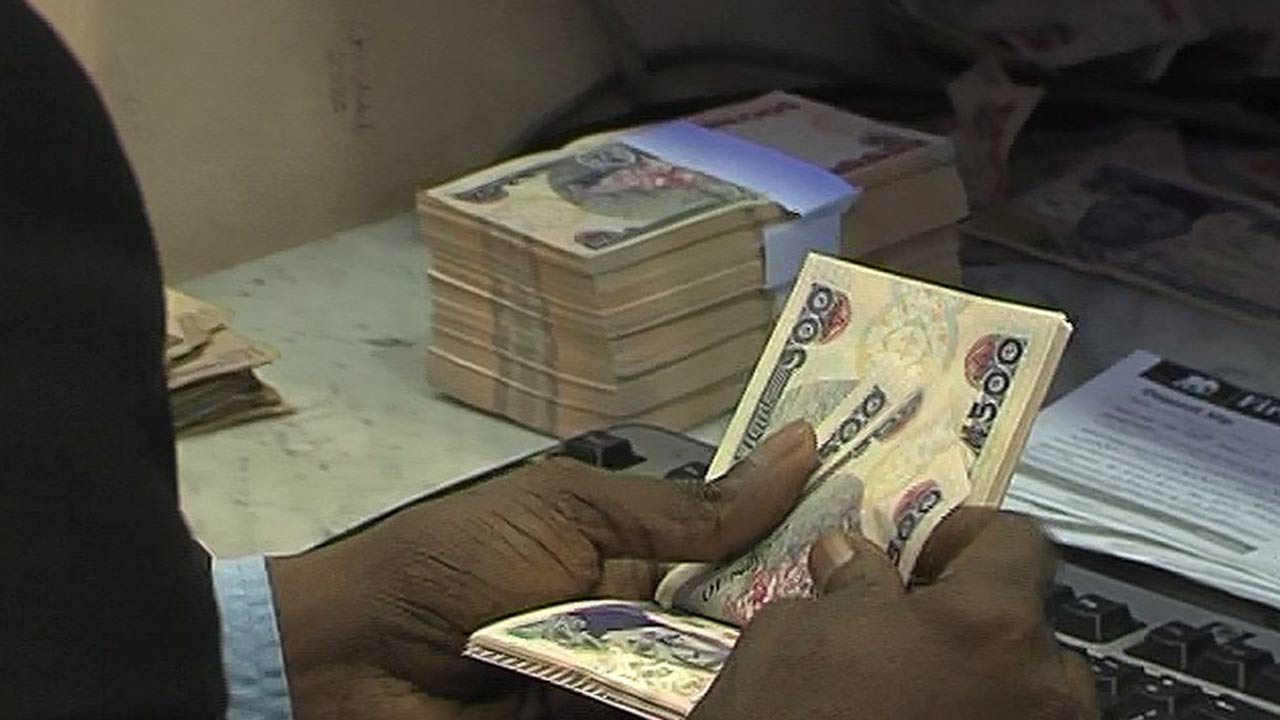

Nigeria’s naira posted a modest gain at the official foreign exchange market on Thursday, November 26, even as external reserves continued to decline, underscoring persistent dollar demand ahead of the year-end holidays and the 2027 general elections.
According to Central Bank of Nigeria (CBN) data, the currency appreciated 0.31%, or ₦4.36, to close at ₦1,387.89 per dollar, up from ₦1,392.25 on Wednesday.
The official uptick did not carry over to the parallel market, however, where the naira held flat around ₦1,450 per dollar, Daily Post reported. That ~₦62 spread means businesses and individuals sourcing dollars outside official windows continue to face steeper exchange costs.
Meanwhile, gross external reserves dropped by roughly $1.15 billion from their late-October peak of $55.26 billion to settle at $54.11 billion as of November 25, according to the CBN’s daily external reserves movement table. While the buffer remains well above the $44.51 billion recorded in the same period of 2025, the multi-week drawdown has raised questions about external liquidity and the apex bank’s capacity to defend the currency amid rising dollar demand.
Analysts remain divided on what is driving the strain. Speaking to The PUNCH, Muda Yusuf, Chief Executive Officer of the Centre for the Promotion of Private Enterprise, warned that election-related spending, capital flight, and uncertainty over economic reforms are compounding pressure on both the naira and external reserves.
CBN Governor Olayemi Cardoso pushed back against structural concerns during Tuesday’s Monetary Policy Committee briefing, characterizing the volatility as largely seasonal. He attributed the demand spike to year-end portfolio adjustments, corporate hedging, and pre-election expenditure, adding that pressure should moderate heading into 2027 on the back of strong diaspora remittances and a favorable current account balance.
For manufacturers and importers with foreign-currency obligations, the divergence between markets shows that official-rate stability does not guarantee cheaper imports or seamless dollar access when alternative sourcing remains necessary. Market watchers will closely track reserve levels, the official-to-parallel spread, and holiday liquidity in the weeks ahead to see whether the naira’s tentative recovery can hold.